November 9, 2020
3
MIN READ

The Ideal Startup CFO with Xavier Sansó

Finance

We talk to Xavier Sansó, founding Partner at Metrix Partners, a boutique advisory firm which provides fractional CFO and financial services to the startup community.

Lots of things have to fall into place for a startup to scale.

The nitty-gritty details will vary depending on the company, but one thing every successful startup needs is a great CFO.

To find out more about what makes the ideal startup CFO, we talked to Xavier Sansó, founding Partner at Metrix Partners, a boutique advisory firm which provides fractional CFO and financial services to the startup community.

Xavier Sansó, founding Partner at Metrix Partners

The CFO role in a startup

“Founders and investors are becoming increasingly convinced that a CFO is one of the key roles to be filled,”claims Sansó.

And he's right. But it's not always easy to find the right people because, according to Sansó, startups are places that require “very specific technical skills, a flexible attitude and the ability to cope with ambiguity and change.”

It's not your traditional CFO role.

An ideal startup CFO needs a grand vision of the business, not just its financials. Aside from finance skills, the startup CFO will be a true business partner that knows the industry they operate in as well as its clients and vendors.

And this is very important: she will need a strategic approach to the commercial and operations side of the business.

Sansó makes a very interesting point by relating the startup craziness to finance. He believes that this chaotic environment constantly forces the business plan, forecasts and budgets to change almost constantly. And that is something you can’t do to traditional CFOs because that goes completely against their playbook.

Something that we also wanted to highlight is how Xavier believes that CFOs should deal with short vs long term:

"You also need to pay a lot of attention to how you balance the different conflicting interests, especially if you run the function with low financial resources as it is usually the case. By this I refer to the fact that shareholders will typically want a very strategic orientation for the function, but day to day matters also need to be taken care of."

But above all, he thinks that "the best CFO’s are cost neutral, from the point of view that his/her cost is paid by business optimizations, cost savings, key negotiations and other things with a financial impact."

Xavier's SaaS software recommendations for finance teams

The difference between a good finance team and a brilliant one is oftentimes in the tools they use.

It's usually the CFO’s responsibility to ensure that the company has the right CFO Suite in place to be able to generate real-time metrics, track cohorts and be ready for financial due diligence for the next funding round.

Sansó gives us some recommendations such as “a billing platform such as Stripe, Braintree or PayPal that also integrates the key subscription metrics, with enough segmentation and drill-down capabilities”.

He also confesses to be a fan of a tool like ChartMogul, “to integrate several platforms and connect non-subscription based revenue to generate real-time dashboards and customer lists.”

“And finally, the way all of those are tracked today is that once a year, typically at the time to put together the annual budget, all subscriptions are reviewed. And that is highly inefficient because a lot of things can happen in a year in a startup. That is why “a solution like Cledara is super useful because it brings it all in one place and helps you track it all.”

Suggestions and subscribe

This post was inspired by questions provided by people like you. We love receiving new and interesting questions that help us think about data in new ways.  If you found this post interesting and have other questions that you’d like us to help answer about finance in startups, drop us a line at hello@cledara.com.

Contents

Contents

The software management solution for finance teams.

Learn more

Subscribe to our newsletter

Receive the latest insights in your inbox

Share this post

Subscribe to our newsletter and stay informed on the latest SaaS insights

Sign up

Explore more

Hero banner for 10 things to build with the Cledara API: data squares assembling into a chart tower, calendar, and robot on deep teal

10 Things You Can Build with the Cledara API

Ten practical builds for the new Cledara API, from live spend dashboards and accounting feeds to renewal calendars, budget alerts, and AI agents.
Read more
The Cledara API hero banner: subscription data flowing from a payment card tile through pipes into calendar, chart, and invoice tiles

Introducing the Cledara API: Your Software Subscription Data, Wherever You Work

Your software subscription data, available programmatically. What the new Cledara API includes, why we built it, and what customers made in the first weeks.
Read more

AI Software Spend in Q3 2026: Winners, Losers, and a Market That Flips in Months

Payment data across thousands of software vendors shows AI at 10% of software spend, which AI tools are winning and losing budgets, and why the rotation is so fast.
Read more
Hero image: a glowing virtual payment card at the centre of six connected accounting platform screens

Cledara Works With Every Accounting Platform and ERP: Here's How

Cledara works with every accounting platform and ERP: Xero, QuickBooks Online, NetSuite and Tripletex through native integrations, and everything else, from Sage and Microsoft Dynamics to AI-native ledgers like Light and Rillet, through white label accounting. This guide explains how both integration paths work, what actually syncs, what that does to month-end, and how to switch accounting platforms without breaking payments or losing history, with a full integration table and a five-step ledger migration checklist.
Read more
Stylised American flag with stripes drawn as market share bars, surrounded by software app tiles on a deep indigo background

US SaaS Market Share 2026: America Owns 75% of Software Spend

US-headquartered software vendors accounted for 74.8% of tracked SaaS market share in July 2026, up from 72.4% two years earlier. Cledara data shows UK companies send 75.1% of software spend to US vendors and only 6.9% to British ones.
Read more

What Sales Teams Actually Spend on SaaS: The Data Behind Every Tool

Sales teams represent 5.8% of tool adoption but 10.9% of spend. Real data on what sales teams buy and what it costs.
Read more

Shadow AI: The Finance Leader's Guide to Managing Unsanctioned AI Spend

Shadow AI is one of the fastest-growing categories of unmanaged software spend. This guide breaks down why shadow AI is primarily a finance problem (not just a security concern) and provides a practical 4-step framework for discovering, quantifying, governing, and optimising AI spend.
Read more

SaaS Renewal Benchmarks 2026: When to Negotiate, Switch, or Cancel

SaaS vendors are raising prices 8-12% annually, with aggressive vendors hitting 15-25%. This guide breaks down renewal decision-making by timing, negotiation leverage, switching costs, and category benchmarks.
Read more

How to Run a SaaS Audit in 5 Steps

A SaaS audit is the fastest way to find wasted software spend, close compliance gaps, and eliminate redundant tools. This step-by-step guide walks finance leads and IT managers through the complete process.
Read more

Moss vs. Cledara: 2026 Comparison for SaaS Spend Management

An honest comparison of Moss and Cledara for managing SaaS spend. Discover why tech companies are choosing Cledara over Moss for software subscription control.
Read more

Average SaaS Spend Per Employee in 2026: The Definitive Benchmark

Based on analysis of 1.8M+ SaaS purchases across 6,800+ tools in 87 countries, we reveal the definitive benchmark for per-employee SaaS spending by region, company size, and industry. US companies average $349K annually; UK $209K; Europe $167K. Learn how company size, category mix, and AI adoption impact your per-employee costs.
Read more

Why Your Company Needs SaaS Management

The median company has 25 SaaS subscriptions. The top 10% have 49 or more. Here is why every company needs SaaS management.
Read more

UK vs US vs Europe: How SaaS Spending Differs by Region

US companies spend $349K on SaaS per year on average, nearly double the UK. Here is how software purchasing patterns differ across regions.
Read more

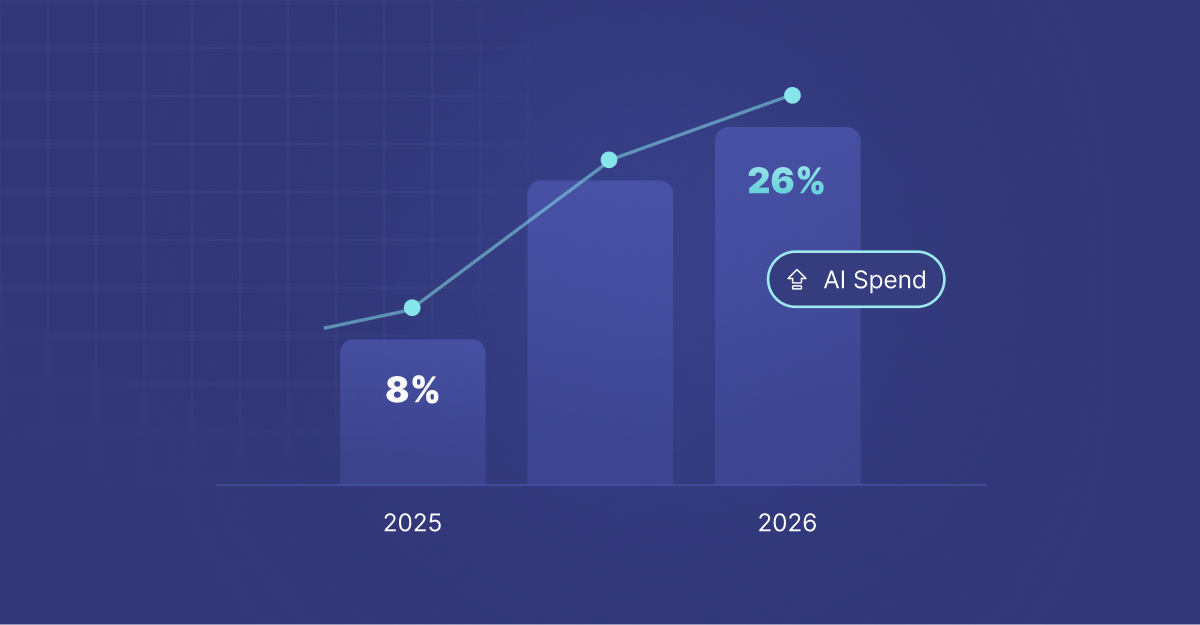
AI is Eating the SaaS Budget: How AI Tools Went from 8.8% to 26.4% of All Purchases

AI tools grew from 8.8% to 26.4% of all SaaS transactions in just 14 months. Here is what the spending data reveals about the AI takeover.
Read more

The Controller’s Guide to SaaS Expenses: Amortization, Accruals, and the End of the Spreadsheet

Struggling with SaaS accruals and prepaid amortization? This guide covers the accounting rules for software subscriptions (ASC 606/350-40), the risks of spreadsheet schedules, and how to automate your month-end close.
Read more