Practical insights for managing software and AI spend

Guides, spend benchmarks and side-by-side comparisons for finance teams who manage every software subscription. Get the best of it in your inbox.

Prefer LinkedIn? Follow the newsletter there.

Sign up

Featured articles

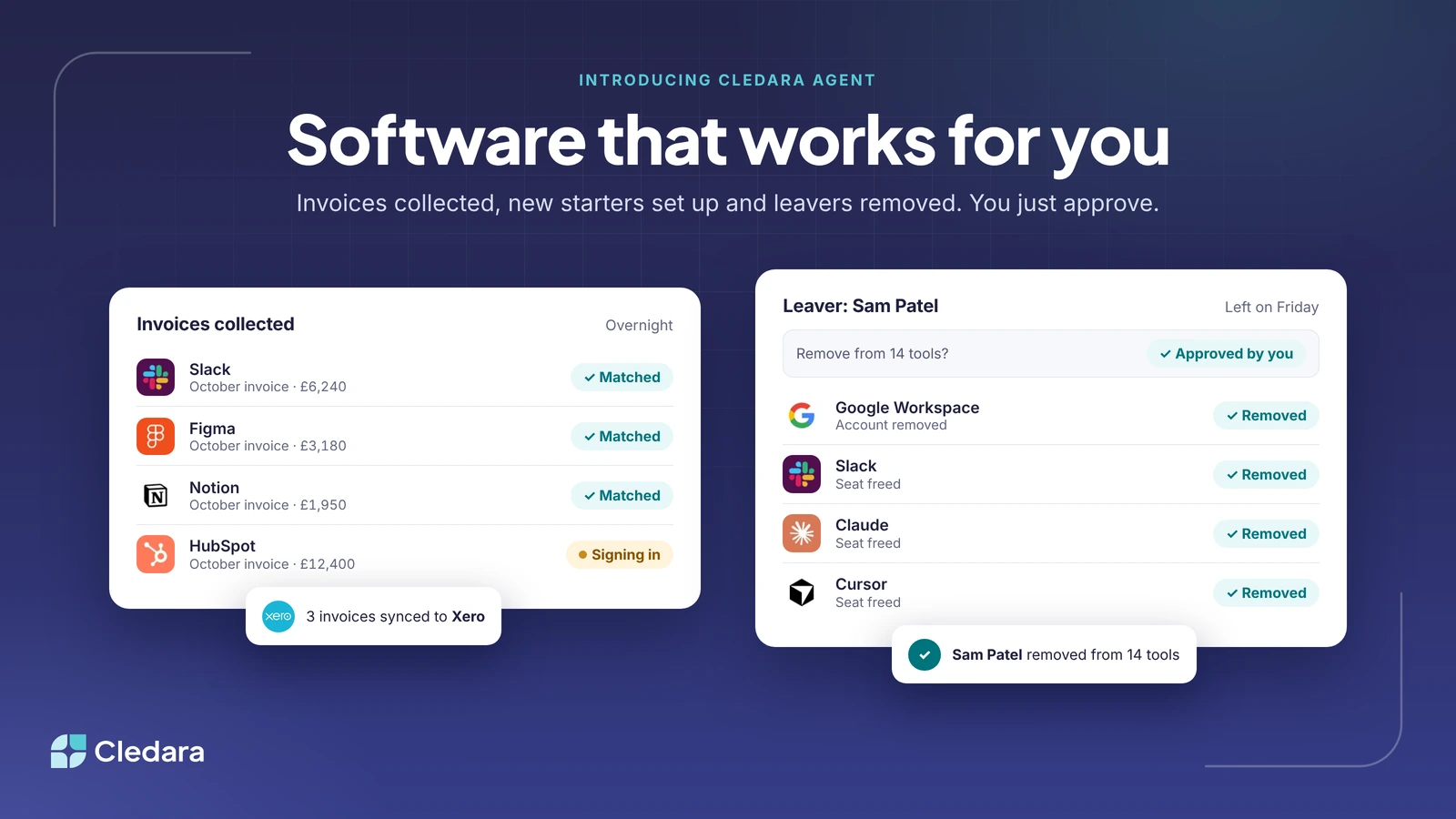
Introducing Cledara Agent: software should work for you, not the other way round

Cledara Agent is an AI agent that signs in to your SaaS and AI tools and does the admin behind them: it collects and matches invoices, sets up new joiners, reclaims unused seats and removes leavers, all with your approval. It works with more than 8,000 tools, is the only SaaS management agent verified by Cloudflare, and keeps passwords in a secure vault that AI never sees, so finance teams can spend their time on finance instead of chasing.

What Is SaaS Management? The Definitive Guide (2026)

SaaS management is the practice of tracking, buying, renewing and cancelling every software subscription your company pays for, so each tool has an owner, a known cost and a decision at renewal. It follows each tool through five stages (discover, buy, manage, renew and cancel) and covers the admin finance teams do every month: getting invoices, approving purchases, setting up new starters, removing leavers and taking back unused seats. It matters more now because the median company pays for 32 software tools, most billed monthly, and AI tools add bills that follow usage. Start early: past 10 to 15 subscriptions, spreadsheets stop keeping up.

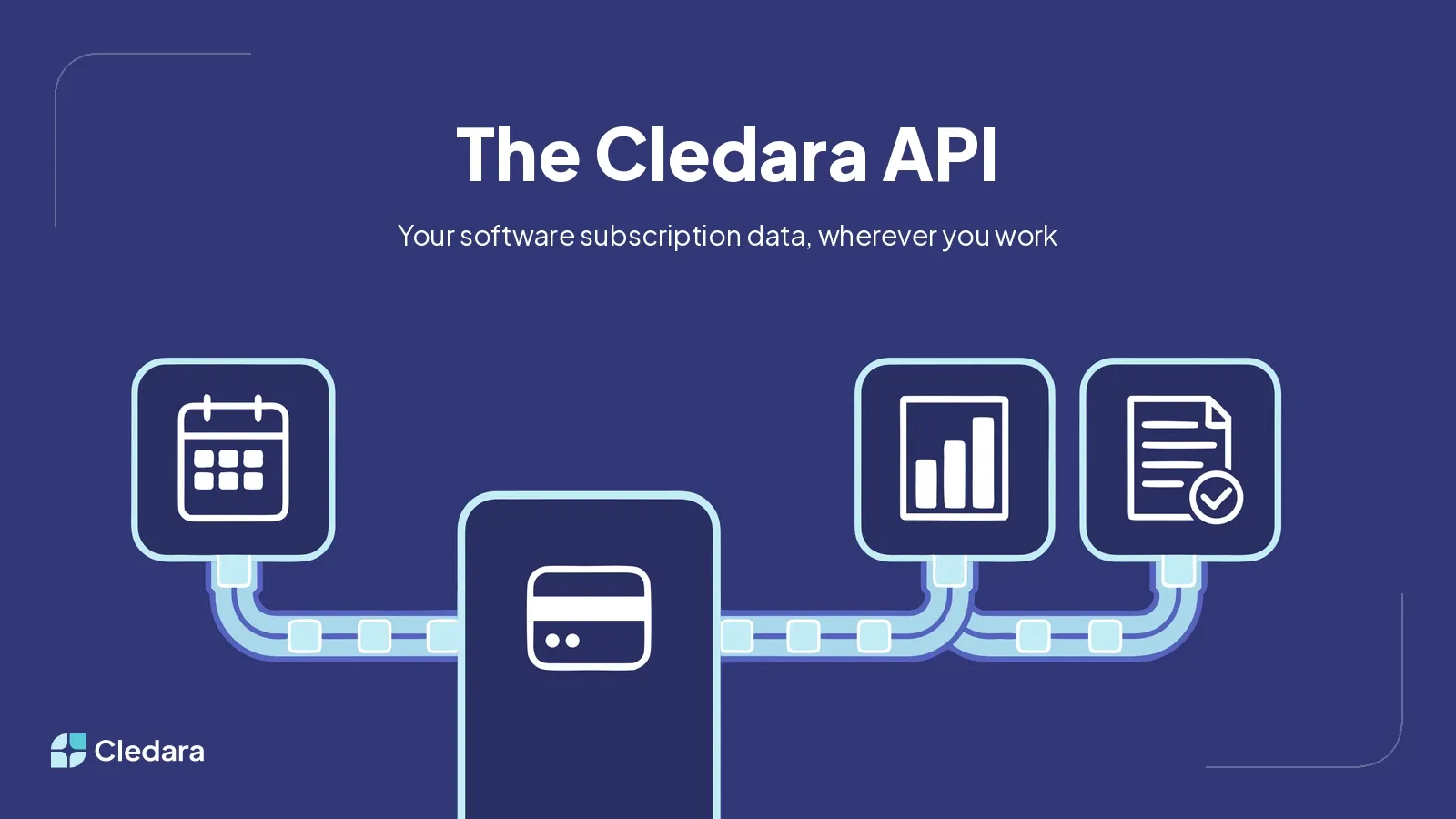
Introducing the Cledara API: Your Software Subscription Data, Wherever You Work

Your software subscription data, available programmatically. What the new Cledara API includes, why we built it, and what customers made in the first weeks.

Most read

Popular with finance teams

The guides and data readers come back to most.

What Is SaaS Management? The Definitive Guide (2026)

SaaS management is the practice of tracking, buying, renewing and cancelling every software subscription your company pays for, so each tool has an owner, a known cost and a decision at renewal. It follows each tool through five stages (discover, buy, manage, renew and cancel) and covers the admin finance teams do every month: getting invoices, approving purchases, setting up new starters, removing leavers and taking back unused seats. It matters more now because the median company pays for 32 software tools, most billed monthly, and AI tools add bills that follow usage. Start early: past 10 to 15 subscriptions, spreadsheets stop keeping up.

Software Tail Spend: Why It Matters and How to Manage It

Software tail spend is the long tail of small, low-cost subscriptions that people across a company buy on cards and expenses. Each tool is too small to need approval, but together they make up a real share of software spend and much of the admin: duplicates, renewals nobody owns, invoices behind vendor logins and access that outlives leavers. Across UK companies on Cledara, the 2,781 vendors outside the top 50 shared 34% of software spend between October 2025 and September 2026. To manage it, build one list of every subscription, give each an owner and its own card with a limit, set renewal alerts and automate invoice capture.

CFO Performance Metrics: 20 KPIs to Measure a Finance Leader

CFO performance metrics work on two levels. The first is the company KPIs a CFO owns: cash runway, operating cash flow, margins, growth, burn multiple, forecast accuracy and days to close. The second is the quality of their leadership: reporting, strategic input, team management and risk control. To measure CFO performance fairly, agree goals and baselines at the start of the year, score the numeric KPIs each quarter, and gather structured feedback from the CEO, board and finance team. Most CFOs should track 8 to 12 core KPIs in depth, drawn from six groups: liquidity, profitability, growth, efficiency, forecasting accuracy and finance operations.

How to Write a Software Business Case in 6 Steps (+ Template)

To write a software business case, follow six steps: define the problem in numbers, check what the company already pays for, compare at least two options plus doing nothing, build a three-year cost model, value the benefits and risks, then get sign-off with a named owner and review dates. A business case for SaaS should also cover seats, billing and notice periods, renewal price rises of 8 to 12% a year, security evidence and an exit plan. Cledara's Software Compliance module has templates for the business case, risk assessment, contract review and exit plan.

Budget Reporting: How to Build a Budget Report (Free Template)

A budget report compares what you planned to spend and earn with what actually happened in a period, usually a month or a quarter. For each line it shows the budget, the actual, the variance in money and as a percentage, a short commentary on the cause and the owner who will act. Good budget reports explain only the variances that pass a set threshold, separate timing from permanent changes and end with an updated forecast. Software subscriptions and AI tools deserve their own lines, because monthly billing, renewal price rises and fast-growing AI usage make them drift from budget faster than most costs.

The 13 Best FP&A Software Tools for 2026

The best FP&A software in 2026 depends on your size and how your team works. Enterprises planning across functions should shortlist Anaplan, Workday Adaptive Planning, Pigment or Jedox. Mid-market teams that want planning, close and reporting in one suite should look at Planful, Prophix One or, on NetSuite, NetSuite Planning and Budgeting. Excel-first teams suit Vena, Datarails or Cube, and scaling companies replacing spreadsheets should try Abacum, Aleph or Drivetrain. None of them showed list prices when we checked, so test each tool on your own numbers and make sure the data you feed it, including software subscriptions, is accurate.

Every article

Latest articles

Newest first, twelve at a time. Or see every article on one page.

All articles

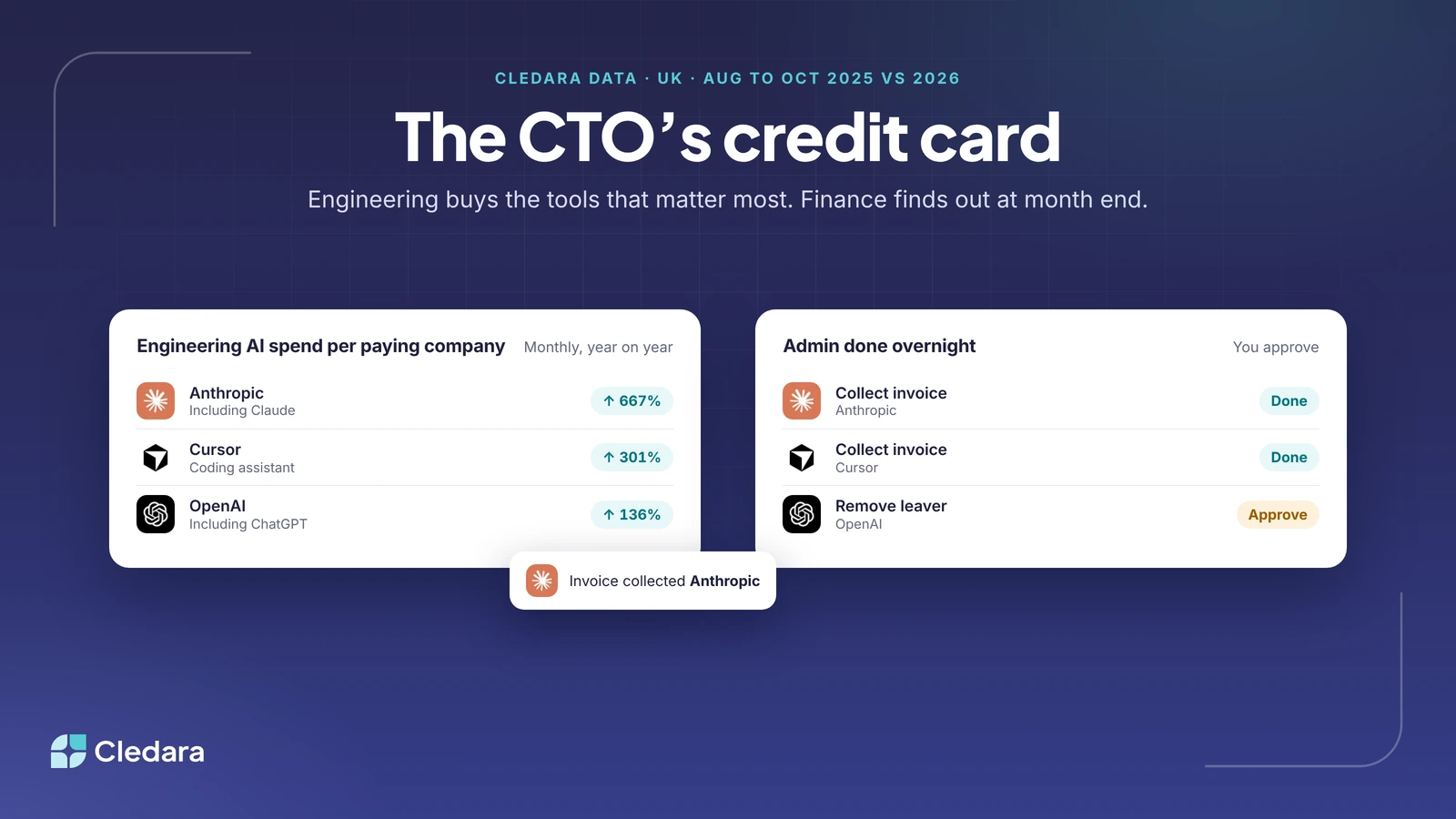
The CTO's Credit Card: Why Engineering Buys the Software That Matters Most, and Finance Finds Out at Month End

Engineering software spend is the biggest and least predictable line in most software budgets, and it usually starts life on the CTO's card rather than in finance's process. That made sense when developer tools were cheap to start, and it still does, but AI has changed the scale: Cledara data shows spend per paying UK company rose 667% on Anthropic, 301% on Cursor and 136% on OpenAI in a year, and engineering's share of software spend climbed from 15.5% to 17%. The cost is admin, not tool choice: CTOs downloading invoices, finance reconstructing budgets from statements. The fix is a card, an owner and a budget per tool, with an agent doing the chasing.

How to Forecast Software Spend When More of It Bills by Usage

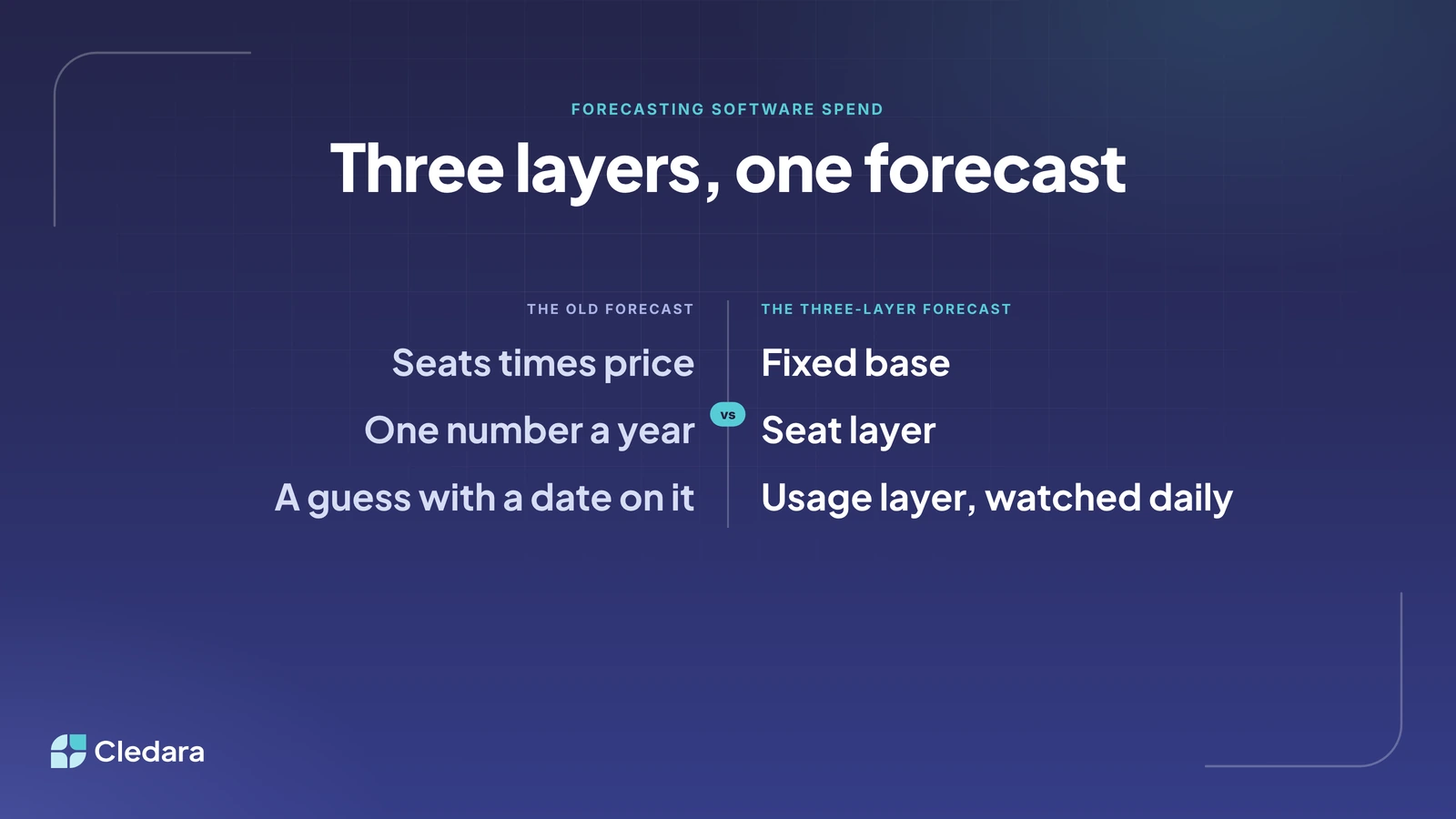
Seats times price no longer forecasts software spend, because AI, data and messaging tools charge for usage. Cledara data shows 83% of UK software subscription spend was billed monthly over the last year and that AI-native usage-style tools pay every 5.6 days on average. The fix is a three-layer software spend forecast: a fixed base of annual contracts forecast by renewal month, a seat layer driven by headcount, and a usage layer forecast as a trailing run rate with a ceiling per account, watched daily with alerts. Re-forecast monthly and log variance by layer, so the forecast tells you what to do rather than just that you are over.

Running ISO 27001 Vendor Management in Cledara

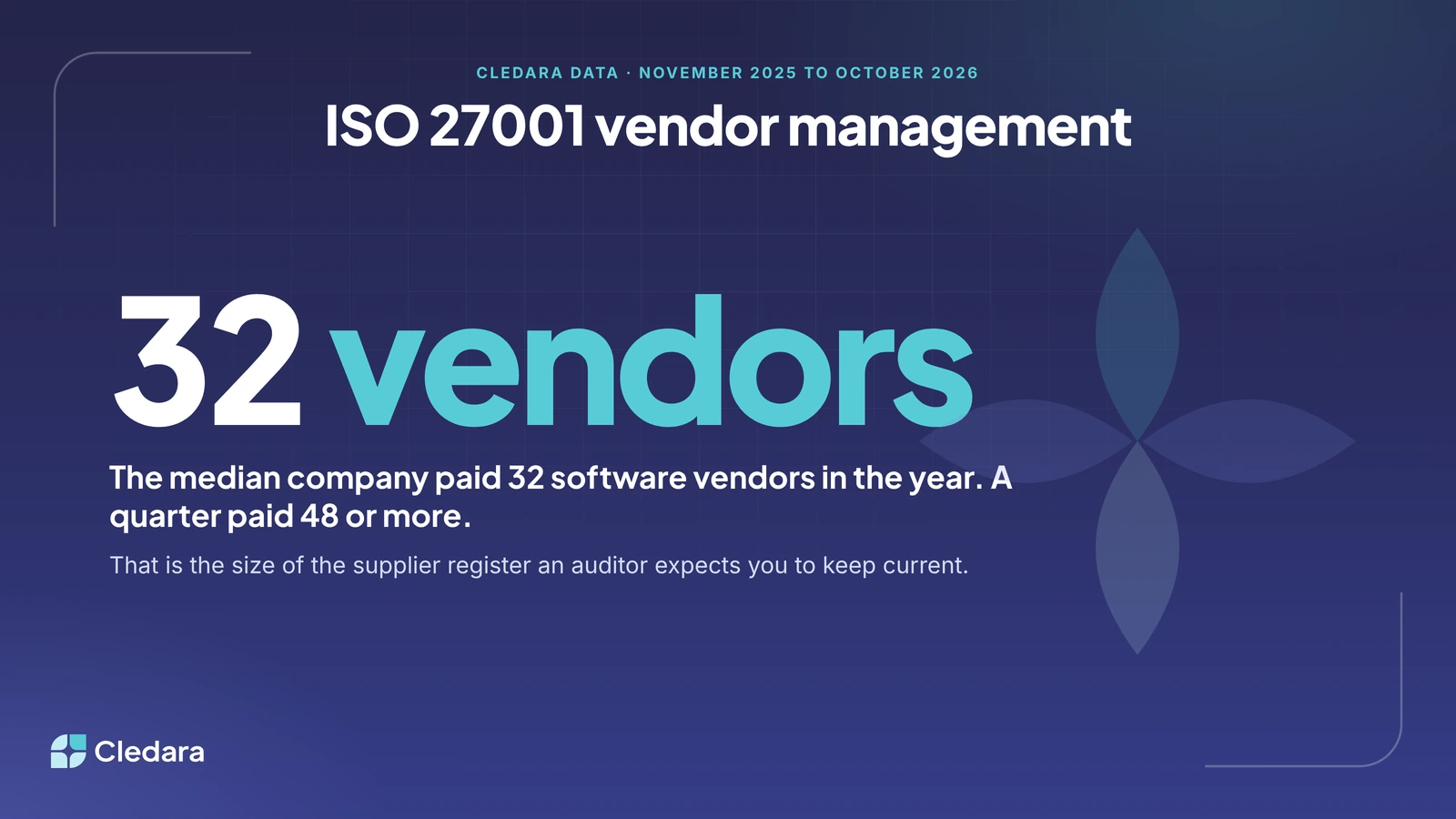
ISO 27001 asks you to know every software vendor that touches your data, assess the risk, cover security and exit in the contract, and review access. Cledara data shows the median company on the platform paid 32 software vendors in the year to October 2026, so the register has to update itself. In Cledara the subscription is the record: the Software Compliance module adds a questionnaire to each software request with templates for the business case, product details, risk assessment, contract review and exit plan, lets you delegate sections to colleagues and vendors, attaches evidence to the application, shows ISO 27001 and SOC 2 certification tags, and exports everything as a PDF or ZIP for the auditor.

Getting Software Spend Into the Ledger: Xero, QuickBooks, NetSuite, DATEV and Fortnox

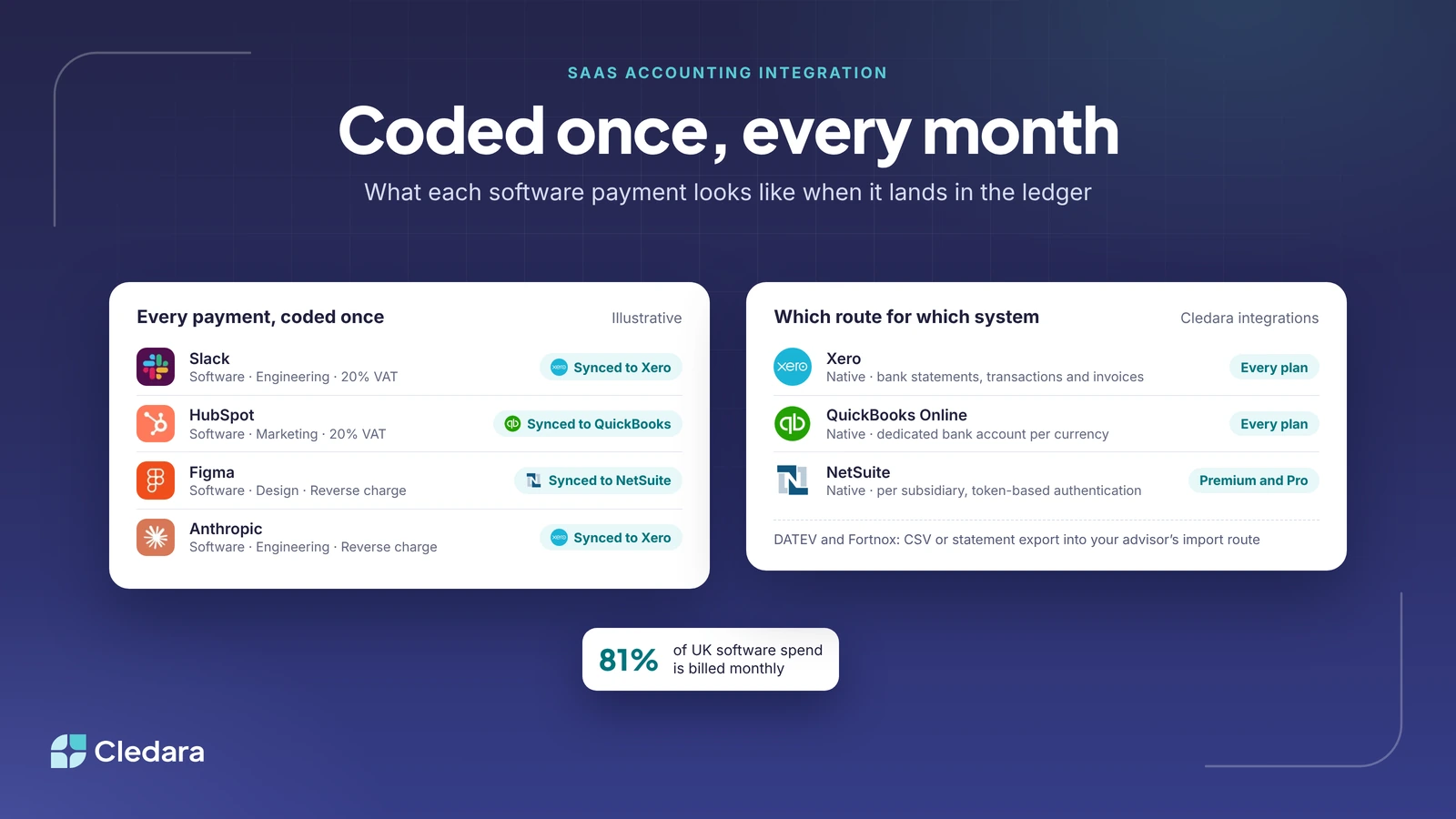
A SaaS accounting integration is judged by what lands in the ledger rather than by whether it connects. For every software payment you want the vendor, expense account, department or cost centre, tax treatment, period and invoice right, and Cledara data shows about 81% of UK software spend is billed monthly, so that coding repeats every month. Xero and QuickBooks Online connect natively on every Cledara plan and NetSuite from Premium, each with a one-time mapping per application. DATEV and Fortnox work through CSV or statement exports taken into your advisor's DATEV service or converted to SIE4. Invoices behind vendor logins remain the gap, which Cledara Agent closes by collecting them overnight.

How Cledara Pays for Itself: The Maths

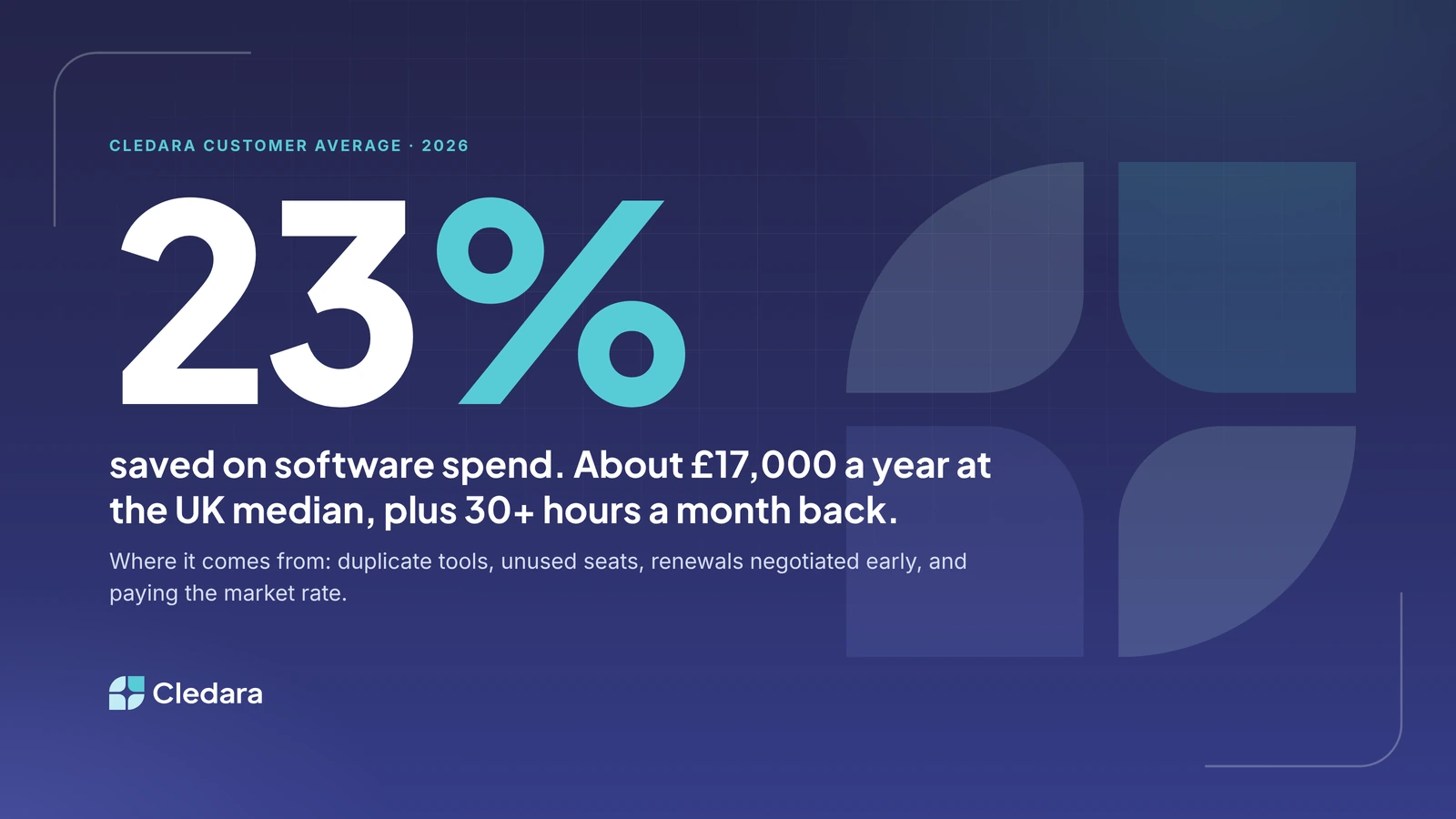
Cledara customers save 23% of their software spend on average and get 30+ hours a month back. On the median UK company's software bill (about £75,000 a year, from Cledara data for the year to October 2026) the saving alone is roughly £17,000, before the hours and before first-year cashback. This post shows where the 23% comes from (duplicate tools, unused seats, renewals handled 90 days early, and paying the market rate), works the maths at the UK, European and US medians, and gives a five-step method for estimating your own return. Prices live on the pricing page; the maths lives here.

Reclaimable VAT You're Leaving on the Table: The Missing Software Invoice Problem

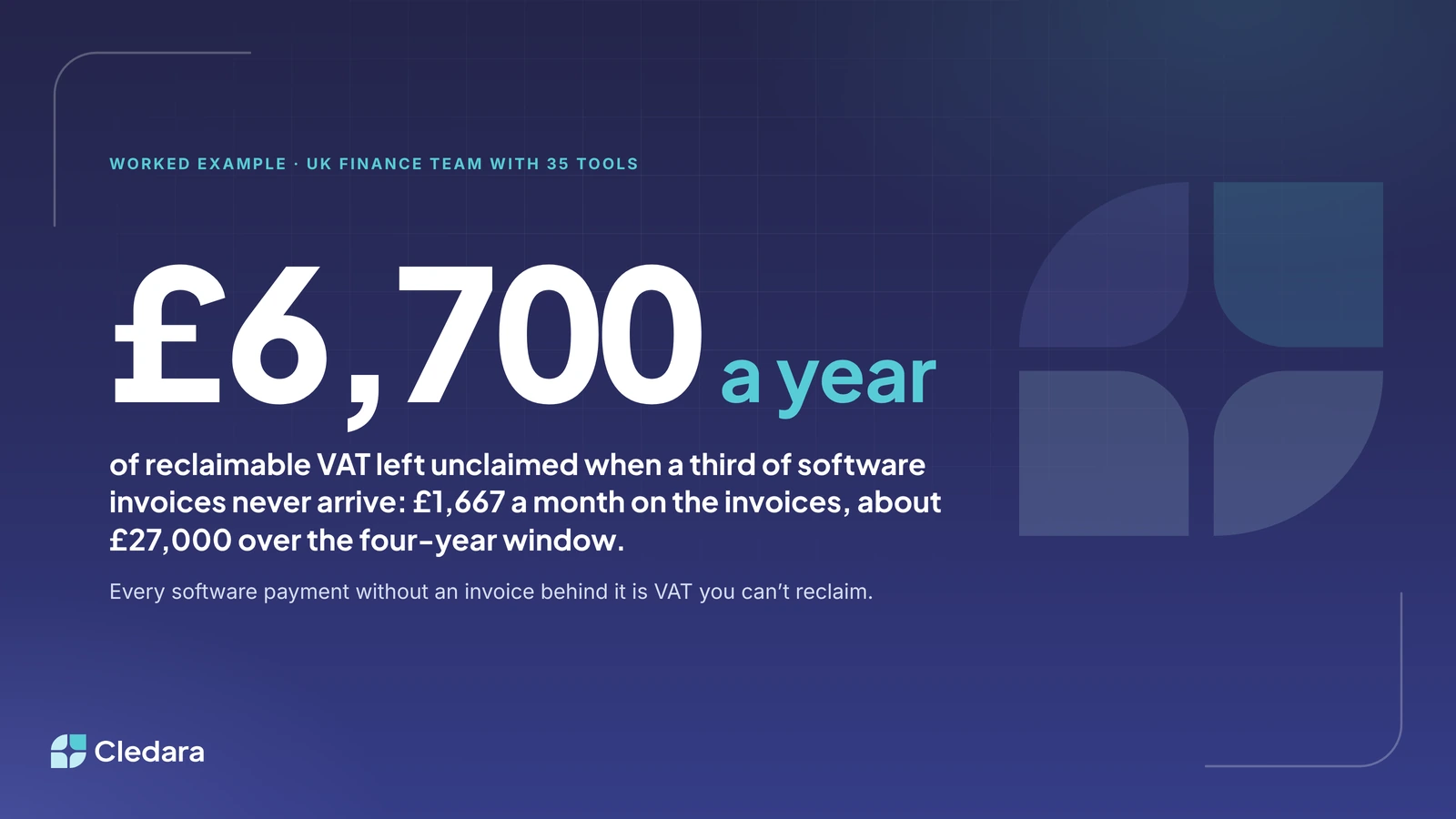
Every software payment without an invoice behind it is VAT you can't reclaim. HMRC expects a valid VAT invoice (or a simplified one at £250 or less including VAT) as evidence, and software is where invoices go missing most, because they sit behind logins owned by the people who bought the tools. Overseas vendors that aren't UK VAT registered fall under the reverse charge, but you still need the invoice. A worked example with 12 UK-VAT vendors and £10,000 a month of spend puts the unclaimed VAT at about £6,700 a year if a third of invoices are never collected, and late claims can go back four years. The fix is collecting every invoice automatically, including from vendor billing pages.

SaaS Price Increases 2026: What the Data Shows, and Where the Rises Actually Landed

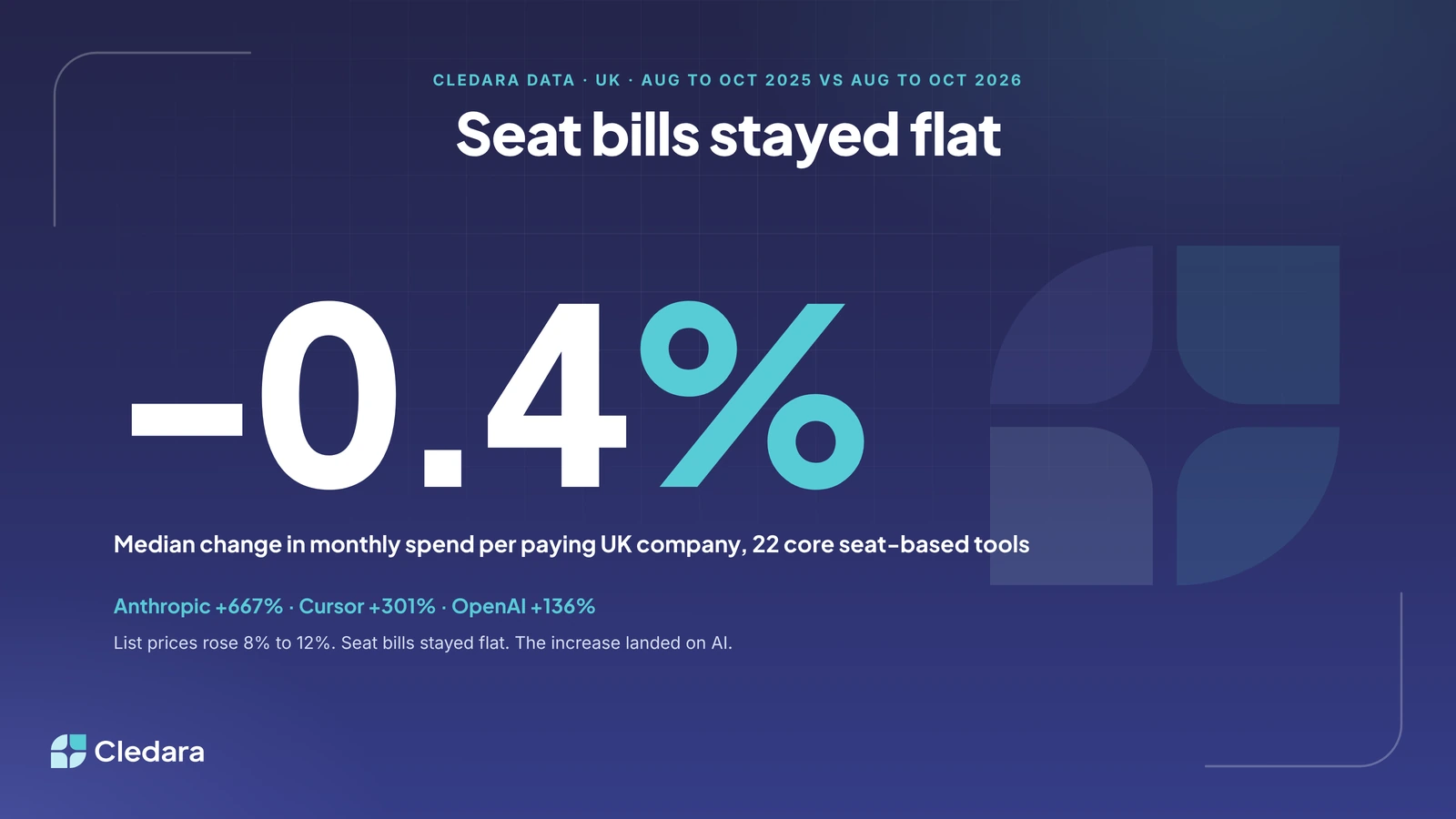
SaaS price increases were everywhere in 2026, with 79% of IT leaders meeting a rise at renewal and typical uplifts of 8% to 12%. Yet Cledara data shows the median change in monthly spend per paying UK company across 22 core seat-based tools was minus 0.4% between autumn 2025 and autumn 2026, because companies trimmed seats and tiers to offset the rises. The increase landed on AI instead: spend per paying company rose about 7.7 times on Anthropic, 4 times on Cursor and 2.4 times on OpenAI, and AI-native tools took 18% of all platform spend in October 2026, up from 6% a year earlier. The 2027 risk is usage-based AI pricing, so budgets and alerts on AI keys matter most.

12 Demo Questions Finance Teams Should Ask Before Buying a Software Spend Tool

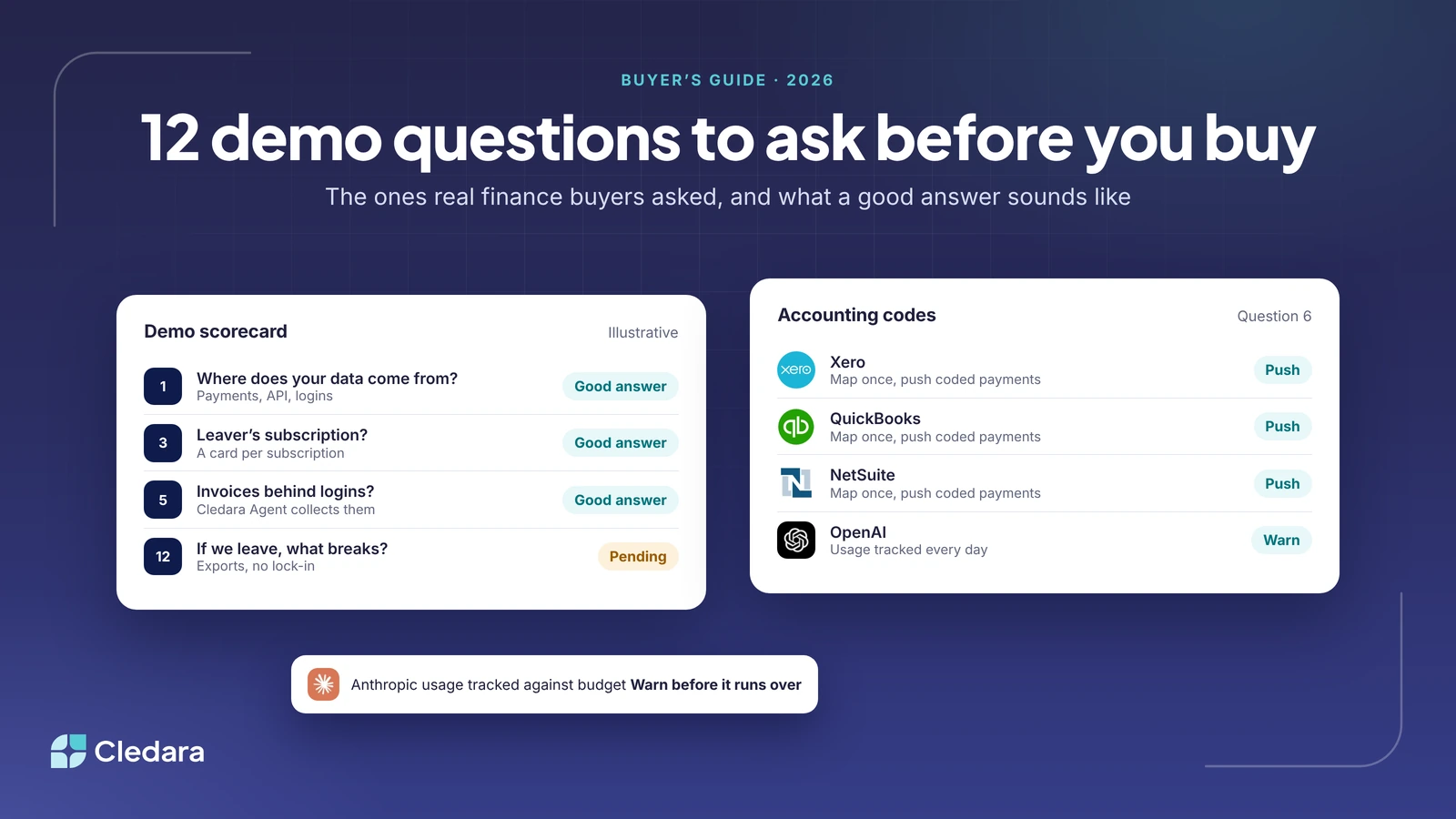
The best demo questions expose design decisions you'll live with for years. Ask where the data comes from (payments, API, logins or a browser extension), what the extension collects, and what happens to a subscription when the person who set it up leaves. Then cover usage-based overspend, invoices that live behind vendor logins, how accounting codes reach each payment, approval routing, renewals, HR-driven joiners and leavers, the pricing model, setup time and what you get back if you leave. The table in the post gives a good answer and a red flag for each of the twelve.

Moss, Vertice and an Email Chain: Running Software Payments, Contracts and Approvals in One Place

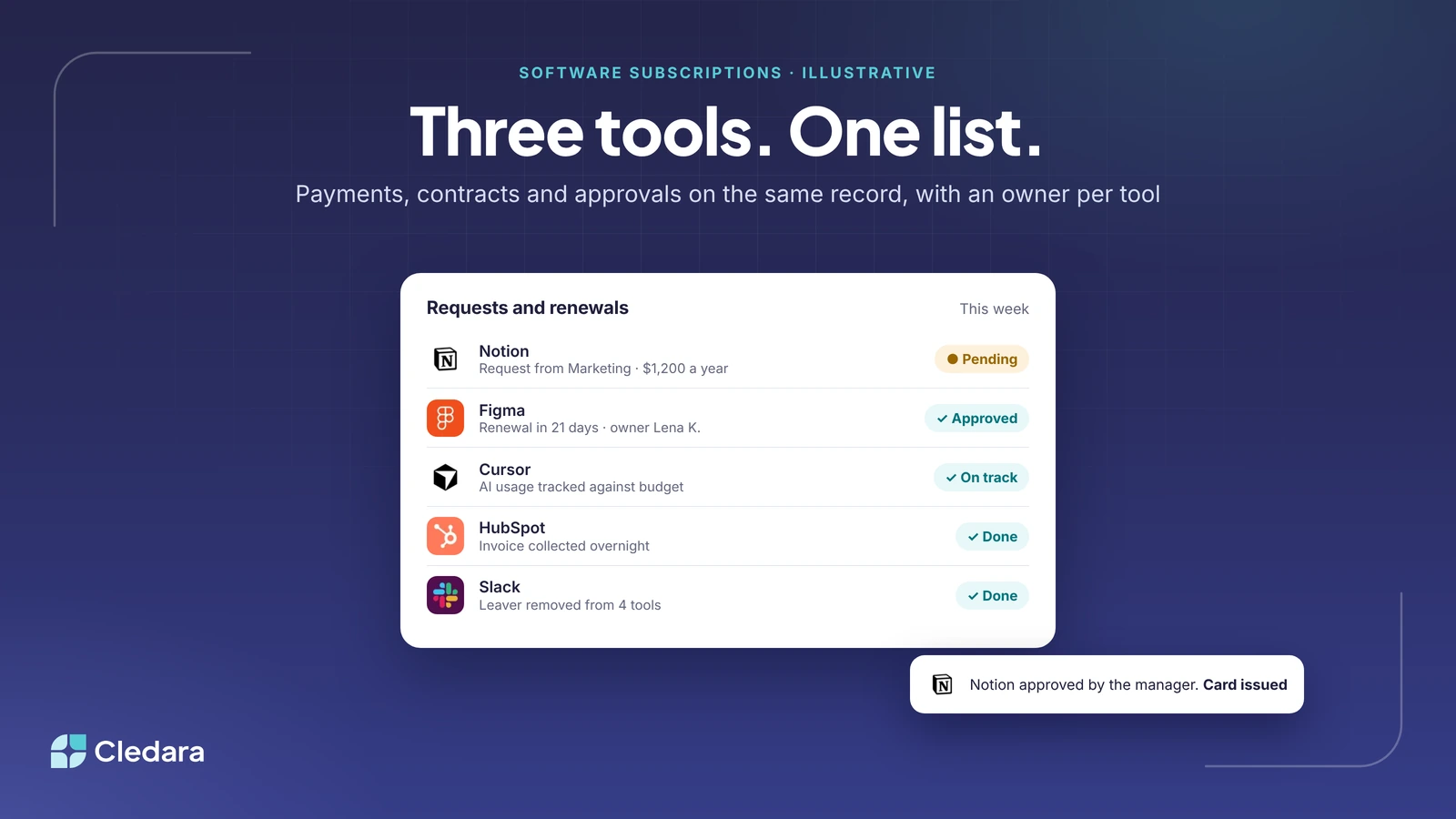
Many finance teams run three systems for one software subscription: Moss pays it, Vertice holds the contract and an email chain approves it. Each tool is good at its slice; the problems live in the seams between them, such as duplicate tools, AI bills that hit a card limit and renewals that pass without a decision. This guide shows what it looks like to run software payments, contracts and approvals in one place, how the bookkeeping reaches DATEV, when to keep Moss and Vertice alongside, and a 30-day plan for making the move.

Introducing Cledara Agent: software should work for you, not the other way round

Cledara Agent is an AI agent that signs in to your SaaS and AI tools and does the admin behind them: it collects and matches invoices, sets up new joiners, reclaims unused seats and removes leavers, all with your approval. It works with more than 8,000 tools, is the only SaaS management agent verified by Cloudflare, and keeps passwords in a secure vault that AI never sees, so finance teams can spend their time on finance instead of chasing.

Granola vs Wispr Flow: A Third of Companies Pay for Both

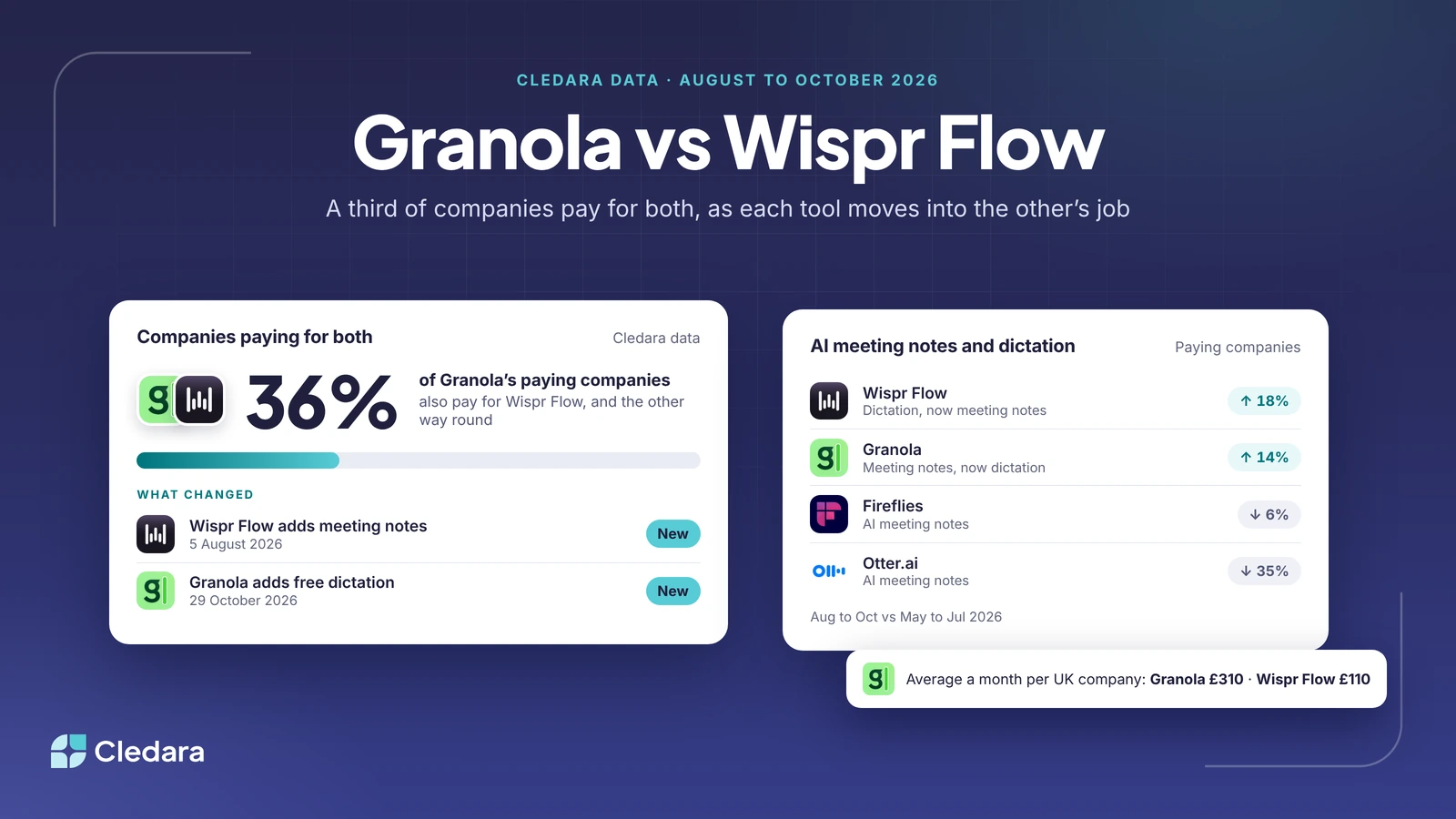
Granola and Wispr Flow are now direct competitors. Wispr Flow added meeting notes in August 2026, and Granola added free dictation on 29 October. Cledara data shows the overlap was already large: 36% of companies paying for Granola also pay for Wispr Flow, and the same share of Wispr Flow's paying companies pay for Granola. Both tools kept growing after Wispr Flow's launch, with 14% and 18% more paying companies from August to October. For finance teams the lesson goes beyond these two tools: AI products are moving into each other's jobs, and companies end up paying twice unless someone checks.

How to Find the AI Tools Already Inside Your SaaS Stack

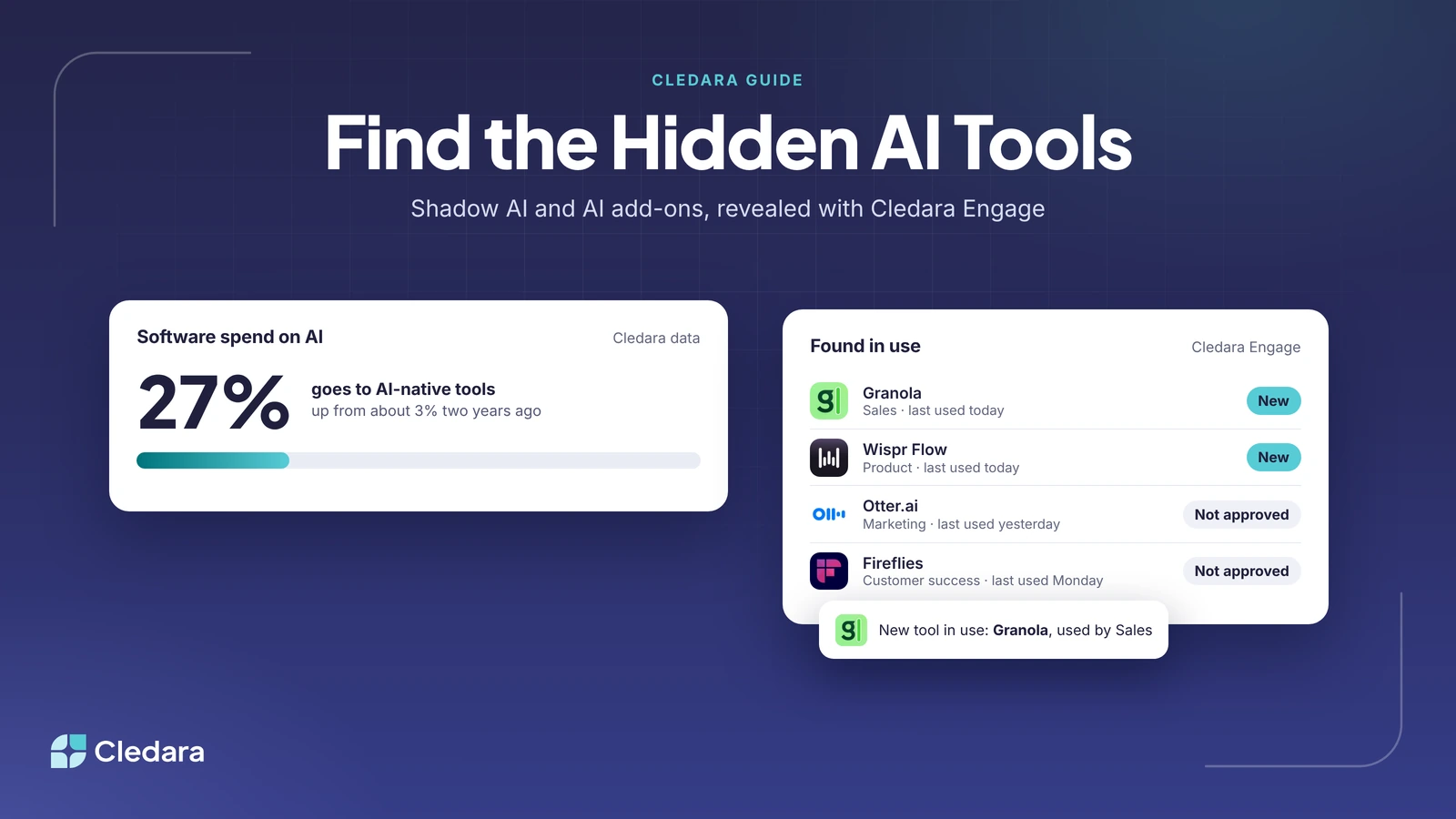
To reveal the AI tools already inside your SaaS stack, use Cledara Engage: the browser extension shows which of 8,000+ software tools your team actually uses, including AI tools nobody approved, and collects only a username and a timestamp. Then use Cledara's list of every payment to find AI subscriptions bought on cards and expenses, and check the tools you already pay for for AI add-ons and AI-driven price rises. Give every AI tool an owner and a decision (keep, consolidate or cancel), and repeat the check every month.

Newsletter

Software spend insights for finance teams

The best new guides, spend data and practical ideas from the Cledara blog, straight to your inbox.

  • Guides on managing software subscriptions and renewals
  • Data on what companies spend on software and AI
  • Comparisons of the tools finance teams use

Prefer LinkedIn? Follow the newsletter there.

Software and AI management for finance teams

Software that runs itself.

Cledara manages every software subscription and does the admin for you, from invoices and renewals to new starters and leavers. You approve, Cledara does the rest.

4.6 on G21,000+ customersSOC 2 Type II