Practical insights for managing software and AI spend

Guides, spend benchmarks and side-by-side comparisons for finance teams who manage every software subscription. Get the best of it in your inbox.

Prefer LinkedIn? Follow the newsletter there.

Sign up

Featured articles

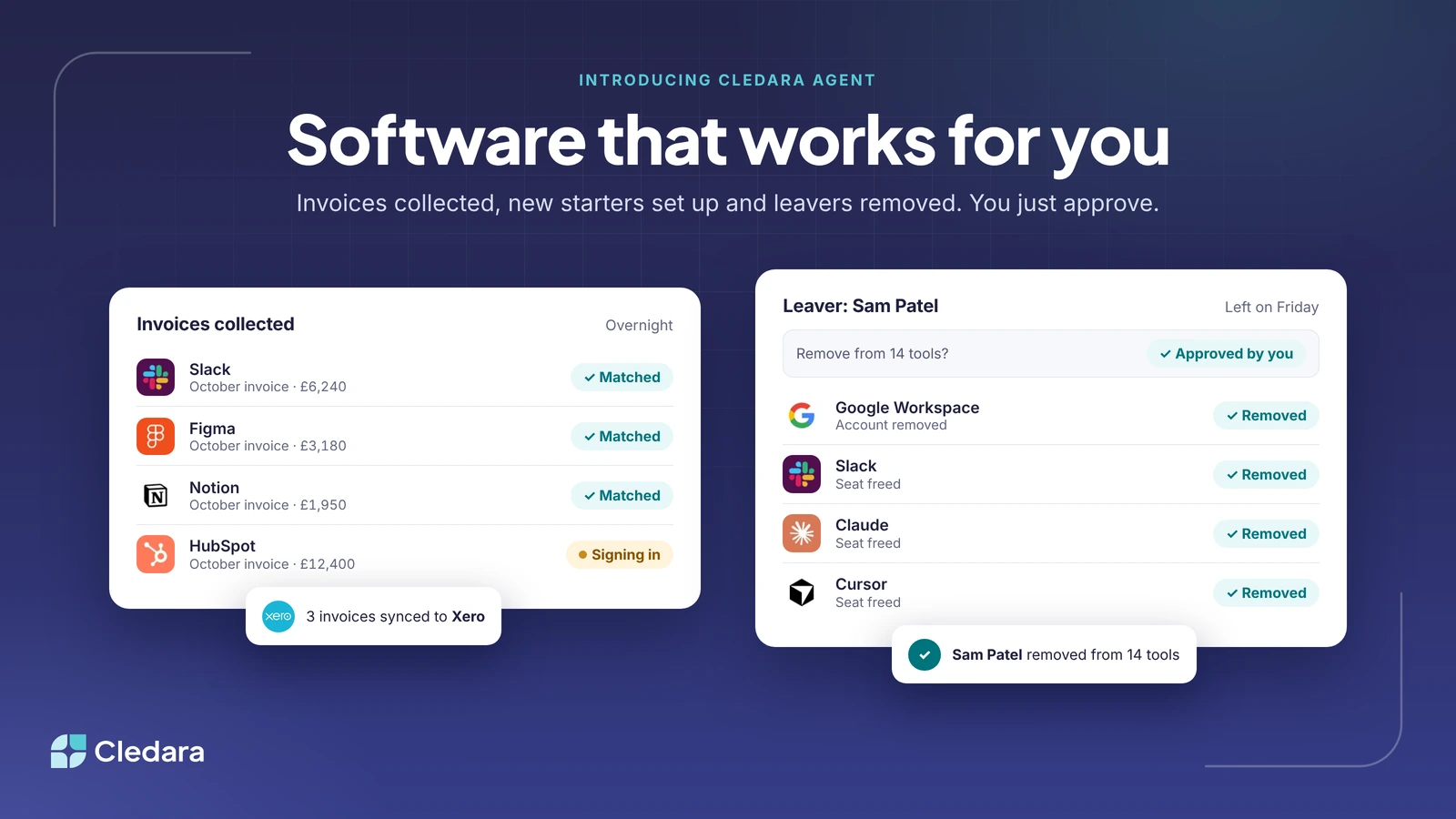
Introducing Cledara Agent: software should work for you, not the other way round

Cledara Agent is an AI agent that signs in to your SaaS and AI tools and does the admin behind them: it collects and matches invoices, sets up new joiners, reclaims unused seats and removes leavers, all with your approval. It works with more than 8,000 tools, is the only SaaS management agent verified by Cloudflare, and keeps passwords in a secure vault that AI never sees, so finance teams can spend their time on finance instead of chasing.

What Is SaaS Management? The Definitive Guide (2026)

SaaS management is the practice of tracking, buying, renewing and cancelling every software subscription your company pays for, so each tool has an owner, a known cost and a decision at renewal. It follows each tool through five stages (discover, buy, manage, renew and cancel) and covers the admin finance teams do every month: getting invoices, approving purchases, setting up new starters, removing leavers and taking back unused seats. It matters more now because the median company pays for 32 software tools, most billed monthly, and AI tools add bills that follow usage. Start early: past 10 to 15 subscriptions, spreadsheets stop keeping up.

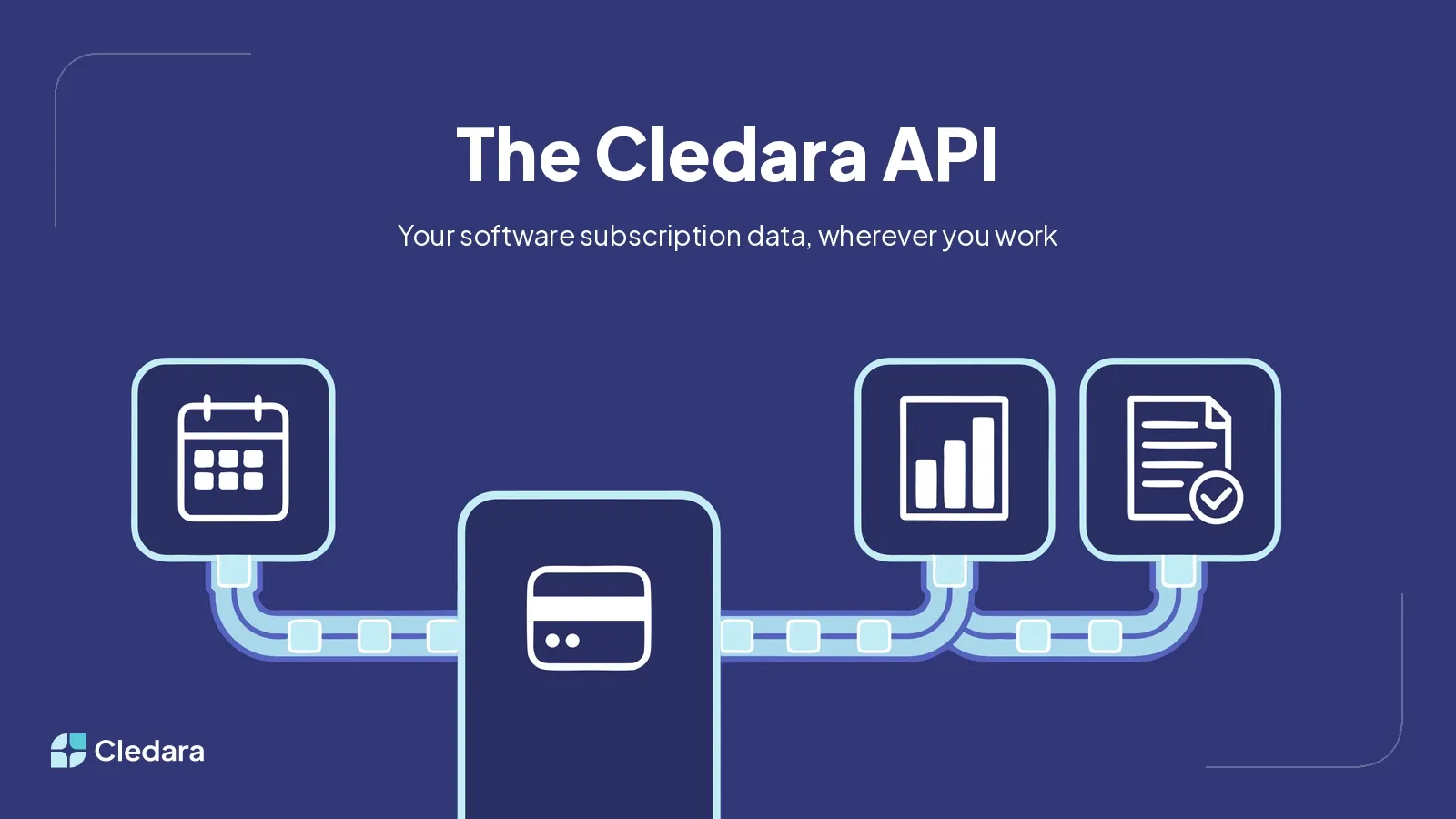
Introducing the Cledara API: Your Software Subscription Data, Wherever You Work

Your software subscription data, available programmatically. What the new Cledara API includes, why we built it, and what customers made in the first weeks.

Most read

Popular with finance teams

The guides and data readers come back to most.

How to Write a Software Business Case in 6 Steps (+ Template)

To write a software business case, follow six steps: define the problem in numbers, check what the company already pays for, compare at least two options plus doing nothing, build a three-year cost model, value the benefits and risks, then get sign-off with a named owner and review dates. The same pattern works for any category of software, and a one-page version fits in a seven-line table. A business case for SaaS should cover seats, billing and notice periods, renewal price rises of 8 to 12% a year, security evidence and an exit plan, and a renewal case should start 90 days out. Cledara's Software Compliance module has templates for the business case, risk assessment, contract review and exit plan.

Introducing Cledara Agent: software should work for you, not the other way round

Cledara Agent is an AI agent that signs in to your SaaS and AI tools and does the admin behind them: it collects and matches invoices, sets up new joiners, reclaims unused seats and removes leavers, all with your approval. It works with more than 8,000 tools, is the only SaaS management agent verified by Cloudflare, and keeps passwords in a secure vault that AI never sees, so finance teams can spend their time on finance instead of chasing.

What Is SaaS Management? The Definitive Guide (2026)

SaaS management is the practice of tracking, buying, renewing and cancelling every software subscription your company pays for, so each tool has an owner, a known cost and a decision at renewal. It follows each tool through five stages (discover, buy, manage, renew and cancel) and covers the admin finance teams do every month: getting invoices, approving purchases, setting up new starters, removing leavers and taking back unused seats. It matters more now because the median company pays for 32 software tools, most billed monthly, and AI tools add bills that follow usage. Start early: past 10 to 15 subscriptions, spreadsheets stop keeping up.

Software Tail Spend: Why It Matters and How to Manage It

Software tail spend is the long tail of small, low-cost subscriptions that people across a company buy on cards and expenses. Each tool is too small to need approval, but together they make up a real share of software spend and much of the admin: duplicates, renewals nobody owns, invoices behind vendor logins and access that outlives leavers. Across UK companies on Cledara, the 2,781 vendors outside the top 50 shared 34% of software spend between October 2025 and September 2026. To manage it, build one list of every subscription, give each an owner and its own card with a limit, set renewal alerts and automate invoice capture.

CFO Performance Metrics: 20 KPIs to Measure a Finance Leader

CFO performance metrics work on two levels. The first is the company KPIs a CFO owns: cash runway, operating cash flow, margins, growth, burn multiple, forecast accuracy and days to close. The second is the quality of their leadership: reporting, strategic input, team management and risk control. To measure CFO performance fairly, agree goals and baselines at the start of the year, score the numeric KPIs each quarter, and gather structured feedback from the CEO, board and finance team. Most CFOs should track 8 to 12 core KPIs in depth, drawn from six groups: liquidity, profitability, growth, efficiency, forecasting accuracy and finance operations.

Budget Reporting: How to Build a Budget Report (Free Template)

A budget report compares what you planned to spend and earn with what actually happened in a period, usually a month or a quarter. For each line it shows the budget, the actual, the variance in money and as a percentage, a short commentary on the cause and the owner who will act. Good budget reports explain only the variances that pass a set threshold, separate timing from permanent changes and end with an updated forecast. Software subscriptions and AI tools deserve their own lines, because monthly billing, renewal price rises and fast-growing AI usage make them drift from budget faster than most costs.

Every article

Latest articles

Newest first, twelve at a time. Or see every article on one page.

All articles

What Customer Success Teams Actually Spend on SaaS

Customer Success is the second-largest SaaS spend category after Engineering. We analyzed spending patterns to show what CS teams are actually buying.

Cursor vs GitHub Copilot: Which AI Coding Tool Is Winning?

Cursor's 30.5% adoption rivals Copilot's 56.5% lead. Our data reveals why teams choose both.

The Best SaaS Tools for Startups in 2026: What Fast-Growing Companies Actually Buy

Based on analysis of 1.7 million real SaaS purchases, discover what fast-growing startups actually use. From AI-native coding tools growing 1000%+ to the lean, focused stacks replacing bloated enterprise software, this post reveals the modern startup toolkit.

The AI SaaS Stack: Every AI Tool Companies Are Actually Buying in 2026

AI tools now represent 26.4% of all SaaS purchases, up from 5.8% in January 2024. Based on real transaction data from 1.8M purchases, we reveal the exact AI tools companies are buying, how much they're spending, and what a functional AI stack looks like in 2026.

What Marketing Teams Actually Spend on SaaS: The Data Behind Every Tool

Analysis of 1,402 marketing tools and real spending data reveals what marketing teams actually spend on SaaS, why marketing tech budgets keep growing, and how to optimize your martech stack.

What IT and Security Teams Actually Spend on SaaS: From Password Managers to Zero Trust

IT and Operations teams are the second-biggest spenders in SaaS, controlling 20.6% of enterprise spending. We analyzed real transaction data to reveal exactly what IT budgets actually fund: identity and access management, network security, compliance tools, and incident response platforms.

SaaS Pricing Trends in 2026: What's Getting Cheaper and What's Getting More Expensive

SaaS pricing is up 8.7% on average in 2026, but varies widely. Enterprise tools up 14%+, while commoditized tools stay flat. Learn pricing trends and negotiation strategies.

Notion vs Confluence: The Knowledge Management Showdown (2026 Data)

Confluence and Notion both dominate knowledge management but for different reasons. Confluence leads in adoption (49% vs 34.7%) but Notion is growing faster. Analysis of real spending data shows they're not really competing.

The Most Expensive SaaS Tools in 2026: Real Spending Data

See real spending data from 5000+ organizations showing which SaaS tools cost the most. Salesforce leads at $240K+, but the full cost of ownership is often much higher.

What Finance Teams Actually Spend on SaaS: Accounting, Payments, and Beyond

Finance teams control SaaS decisions but spend only 3.4% of budgets on their own tools. See where finance actually allocates SaaS spending and why accounting software, contract management, and spend analytics matter.

Figma vs Adobe: The Real Cost of Design Tools in 2026

Figma dominates adoption at 59%, but Adobe Creative Cloud costs 41% more per user. The real question isn't which tool to choose. It's how to build your design stack.

What Design Teams Actually Spend on SaaS: From Figma to Canva to Framer

Explore real data on design SaaS spending. Figma dominates at 59% adoption with $5,344/year average spend, Adobe Creative Cloud commands $7,558/year, while Canva democratizes design at $523/year. Learn how to build a cost-effective design stack.

Newsletter

Software spend insights for finance teams

The best new guides, spend data and practical ideas from the Cledara blog, straight to your inbox.

  • Guides on managing software subscriptions and renewals
  • Data on what companies spend on software and AI
  • Comparisons of the tools finance teams use

Prefer LinkedIn? Follow the newsletter there.

Software and AI management for finance teams

Software that runs itself.

Cledara manages every software subscription and does the admin for you, from invoices and renewals to new starters and leavers. You approve, Cledara does the rest.

4.6 on G21,000+ customersSOC 2 Type II