If you're evaluating expense management solutions for your tech company, you've likely come across both Moss and Cledara. On the surface, they might seem like competing solutions in the same category. But they're actually solving different problems.
Moss is a generalist corporate card and expense management platform with roots in Europe. It handles employee reimbursements, invoice management, and physical and virtual cards for traditional companies reasonably well. It's solid if you need basic expense tracking and T&E management.
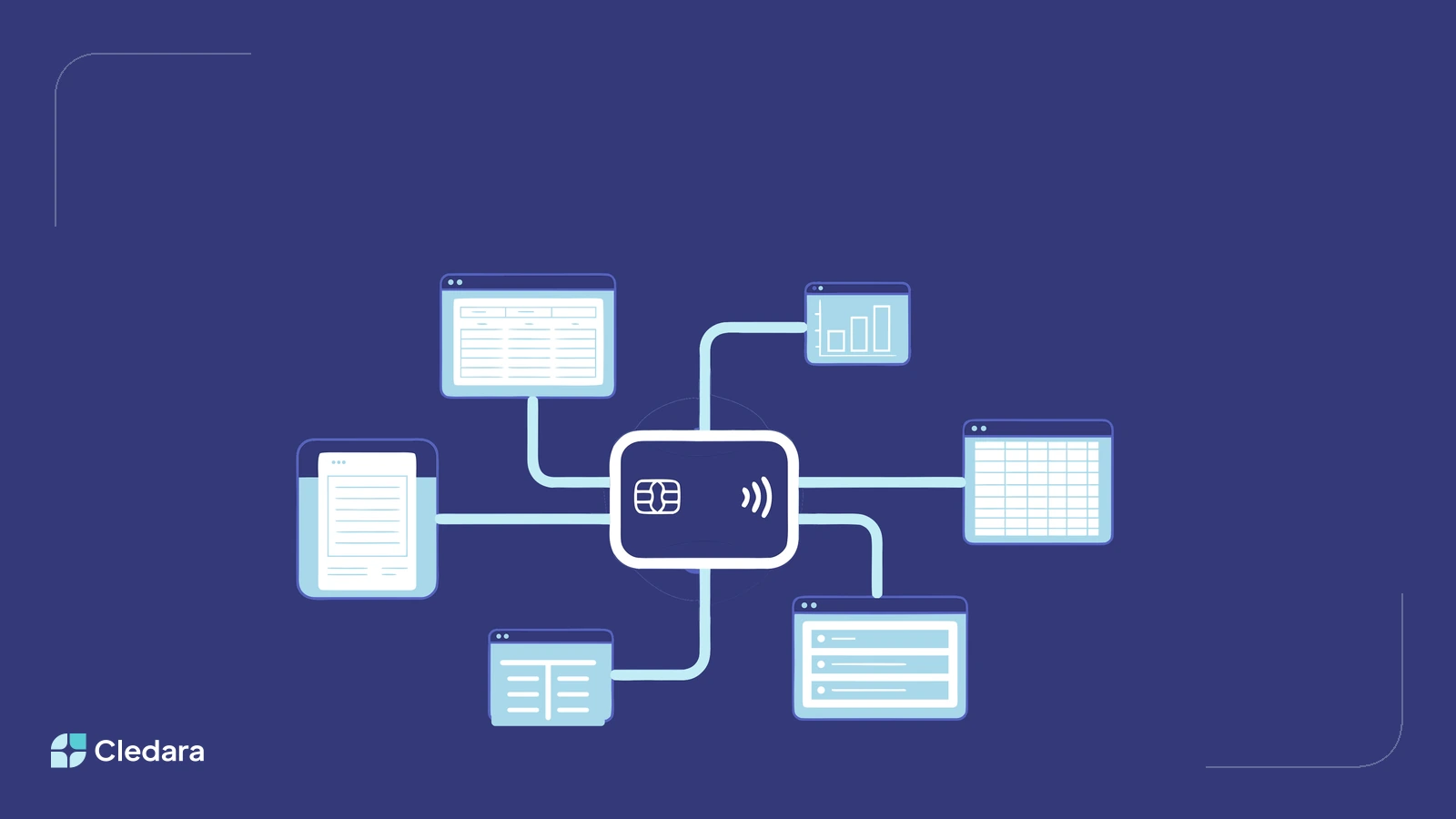
Cledara, by contrast, is purpose-built for modernSaaS and tech-heavy companies where the biggest spend category isn't meals and travel, but software subscriptions and cloud services. Cledara's entire platform is designed around managing that reality: virtual cards for every SaaS subscription, renewal tracking, duplicate detection, and spend visibility built in from day one.
Let's dig into the specifics so you can make an informed decision.
Quick Comparison: Moss vs. Cledara
Payment Control and Spend Visibility
Both platforms offer corporate cards, but the level of control differs significantly. Moss provides standard card controls: you can issue physical and virtual cards, set spending limits, and freeze cards as needed. For basic T&E and operational expenses, this is perfectly adequate.
Cledara's approach to payment control is built specifically for SaaS-heavy environments. Instead of generic cards, you get virtual card numbers assigned to individual subscriptions. This means you can see exactly which card is tied to which tool, track subscription payments in real-time, and immediately spot unauthorized charges or duplicate payments. When you have 50 or 100 active SaaS subscriptions, this level of granularity makes a profound difference in visibility.
Real feedback from tech companies evaluating both platforms highlights this gap. One prospect noted they preferred Cledara's interface and found it easier to consolidate their software management into one platform. Another common finding: Moss's reporting is often described as inadequate. Users report that the reporting lacks the ability to split software tools by department, a critical feature for larger organizations trying to understand which teams are driving SaaS spend.
For any company with 20+ SaaS subscriptions, Cledara's approach to spend visibility is fundamentally superior because it's designed for that reality from the ground up.
Pricing: Consumption vs. Subscription
The pricing structures of these two platforms reveal their different philosophies and can have a significant impact on your bottom line.
Moss operates on a consumption-based model with no subscription fee. Instead, you pay per transaction, typically around 50 pence per transaction in the UK market. At first glance, this sounds attractive. But for tech companies processing hundreds of SaaS transactions monthly, plus team expenses and operational purchases, these transaction fees accumulate quickly. A company making 500 transactions per month is spending around 250 GBP in fees alone.
Cledara uses a transparent, published subscription model. You pay a fixed monthly fee, and in return, you get dedicated SaaS management features plus cashback on software spend. Because Cledara helps you find and eliminate duplicate subscriptions and rogue software spend, the platform often pays for itself through the savings it helps you achieve. Many customers report ROI within weeks by recovering forgotten subscriptions and consolidating redundant tools.
For modern tech companies that consume a lot of software or AI, Moss's per-transaction model can become surprisingly expensive and difficult to forecast. For SaaS-focused companies, Cledara's subscription model with built-in savings mechanisms typically results in lower total cost of ownership.
SaaS Subscription Management: The Critical Differentiator
This is where the two platforms diverge most dramatically. Moss does not have SaaS subscription management as a core feature. While Moss has added some basic SaaS visibility in recent years, it remains a secondary feature bolted onto a platform designed for general expense tracking.
Cledara, by contrast, is engineered from the ground up for SaaS management. Key capabilities include:
- Virtual cards per subscription: Every SaaS tool gets its own card number, so you know exactly which tool is being charged
- Automatic renewal tracking: Never be surprised by unexpected annual renewals again
- Duplicate detection: Cledara identifies when multiple teams have purchased similar tools and alerts you
- Spend benchmarking: Compare your SaaS spend against industry peers to identify outliers
- Departmental allocation: Track which teams are driving which costs, with full breakdowns by software category
For tech companies, this isn't a nice-to-have; it's fundamental. The average SaaS-heavy organization has 20-40% of its software spend on duplicate or forgotten subscriptions. Cledara's purpose-built SaaS management tools help you recover that spend immediately.
Integration and Accounting Software Compatibility
Both platforms integrate with accounting software, but the depth and reliability of integration matters significantly. Cledara's integration with Xero, the most popular accounting platform among tech companies, is notably superior.
Real-world feedback shows that Cledara integrates better with Xero compared to Moss. Moss users in the US particularly struggle because Moss does not integrate with Xero in the US market, requiring manual reconciliation steps and workarounds. This creates unnecessary friction, especially when your accounting software should be a source of truth for spend data.
Cledara's integration with Xero is automatic and bidirectional. Transactions sync seamlessly, receipt data is captured and attached, and your accounting records stay in sync without manual intervention. For companies using Xero as their financial backbone, this is a material advantage that saves time every month.
Additionally, Moss users have reported bugs with bank reconciliation and API data integration, which compounds the integration challenges. Cledara's integration approach is more stable and requires less manual maintenance.
Support, Reliability, and Customer Experience
When issues arise, responsive support matters. Tech teams evaluating both platforms have consistently rated Cledara as offering better customer experience and responsiveness compared to Moss. This isn't just about speed; it's about depth of expertise. Cledara's team understands SaaS spend management because that's the core product. Support interactions tend to be more productive and solutions-oriented.
On the technical reliability front, Cledara's system is built specifically to handle the unique challenges of SaaS payment tracking: recurring subscriptions, annual renewals, currency fluctuations, and reconciliation edge cases. Moss's architecture is more generic, which can lead to friction points when you're trying to apply it to a SaaS-focused workflow.
Receipt Capture: A Real-World Problem
One concrete metric shows a stark difference: receipt capture success rates. Moss's receipt capture functionality works only about 20% of the time according to user reports. This might seem like a technical detail, but it has real operational impact.
When receipt capture fails, your team manually uploads receipts, your accounting reconciliation becomes fragmented, and audit trails break down. A 20% success rate on receipt capture means you're manually handling four out of every five receipts, which defeats the purpose of automation.
Cledara's superior receipt capture success rate means your accounting data stays clean, your team spends less time on manual data entry, and your financial records are more reliable.
Choose Moss If...
- Your primary spend category is traditional T&E (meals, flights, hotels) rather than SaaS subscriptions
- You don't use AI in your business and don't need to worry about daily AI usage charges
- You have very low transaction volumes and prefer consumption-based pricing
- You need basic corporate cards without specialized spend management features
Choose Cledara If...
- Your company's biggest spend category is SaaS subscriptions and software tools
- You need reliable receipt capture and automated accounting integration
- You want to eliminate duplicate and forgotten subscriptions
- You operate internationally and need multi-currency support (USD, GBP, EUR)
- You use Xero and want seamless, automatic accounting synchronization
- You need departmental reporting to understand which teams are driving SaaS spend
- You want responsive, specialized support from a team that understands SaaS finance
- You prefer transparent, subscription-based pricing with built-in ROI through spend recovery
The Bottom Line
Moss and Cledara are not substitutes for each other; they're solutions to different problems. Moss is a generalist expense management platform that handles traditional corporate cards and T&E adequately. Cledara is purpose-built for SaaS-heavy tech companies managing subscription spend at scale.
If you're a tech company evaluating these options, the data is clear: the majority of prospects choose Cledara for the combination of better visibility, superior controls, specialized SaaS features, and more reliable integrations with accounting software. Real-world experience shows that Cledara delivers better outcomes for companies whose biggest financial challenge is managing SaaS spend sprawl.
Moss remains a viable option if your company's needs are primarily traditional expense tracking and you're willing to accept the limitations around SaaS management and receipt capture reliability. But if you're looking for a platform that understands and solves the financial operations challenges unique to software companies, Cledara is the specialist built for that job.