
The engineering budget in 2026 looks fundamentally different than it did just 14 months ago. Not because engineering teams have changed. Not because the work has changed. But because the tools have.
AI coding tools didn't just enter the market. They came in and started eating the productivity budget from day one. And the pace of adoption tells a story about the future of software development that most organizations aren't ready for.
The Three-X Growth in Coding Tool Spend
Monthly spending on coding tools grew from roughly $217,000 in January 2025 to $670,000 in March 2026. That's an increase of more than 200%. In 14 months. For a single category.
Let's be clear about what that means. It's not that companies eliminated other tools to make room for coding tools. They added them on top of existing budgets. An engineering organization that was spending $50,000 a year on coding infrastructure in early 2025 is probably spending $150,000 or more today. And the budget line didn't shrink elsewhere to absorb that.
The impact on engineering budgets is real. For a company with 50 engineers, adding one AI coding assistant per person at an average of $10 to $20 per month is $6,000 to $12,000 per year. That's not trivial. That's a new headcount equivalent.
But here's the paradox. That money is being spent because it's generating value. Engineers aren't signing up for Cursor and Copilot out of curiosity. They're signing up because those tools are faster than writing code by hand.
GitHub Copilot: The Baseline
GitHub Copilot owns the space it created. It appears in 56.5% of buyer accounts, with an average spend of $7,934 per buyer. That's not marginal adoption. That's mainstream infrastructure.
What's remarkable is that Copilot hasn't consolidated the market around itself. Despite massive adoption and being integrated directly into GitHub, it hasn't prevented competition.
Instead, it's enabled it. By proving that AI code completion was viable, Copilot created a market. Now that market is fragmenting among multiple players.
The New Wave: Cursor and Windsurf
Cursor, a full AI-first code editor, has reached 30.5% adoption in less than three years. That's not a niche tool. That's a mainstream developer platform.
Cursor's strategy is elegantly simple. It takes the IDE model (which engineers already understand) and builds AI into every action. Autocomplete, refactoring, debugging, test generation. Each one uses AI. Each one is faster than doing it by hand.
The average spend per buyer on Cursor is $5,857, which is lower than Copilot's $7,934. That's likely because Cursor captures different use cases and team sizes. But the adoption curve matters more than the per-user spend. Cursor is growing faster than Copilot ever did.
Windsurf, an even newer entrant, is at 4.1% adoption but accelerating rapidly. Its value proposition is similar to Cursor, but with a different UX and different team. The market is clearly large enough to support multiple winners.
The Specialized Layer: JetBrains, Replit, Lovable
JetBrains, the dominant IDE vendor for professional developers, sits at 33.3% adoption with an average spend of $6,160 per buyer. JetBrains isn't an AI tool. It's a platform that's integrating AI features into an already dominant product.
That's a different strategy than Cursor or Copilot. Instead of "start with AI, add an IDE," JetBrains is "start with an IDE, add AI." Both approaches work. Both are winning.
Replit, which specializes in collaborative cloud-based development, is at 5.4% adoption with an average spend of $880. That's lower spend per buyer, but Replit's target is different. It's not enterprise developers. It's students, hobbyists, and small teams that need to spin up projects instantly.
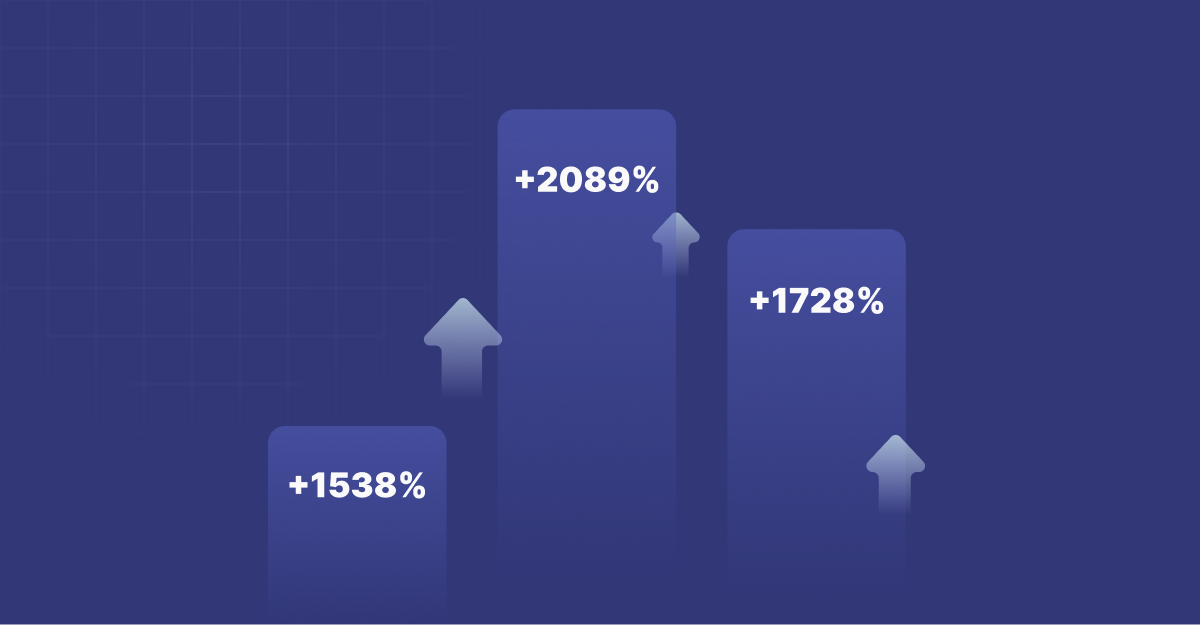
Lovable, a tool for building entire apps with AI, is at 12.2% adoption but growing 2,089% year-over-year. Lovable isn't for professional developers writing complex systems. It's for teams that want to go from idea to app in hours instead of days. It's selling speed. And teams are buying it.
The Infrastructure Layer: Vercel, CircleCI, and the DevOps Stack
You can't talk about engineering spend without talking about deployment and infrastructure. Vercel, the Next.js deployment platform, is at 17.3% adoption with $3,853 average spend. CircleCI, for continuous integration, is at 7.6% adoption with $5,390 spend.
These tools aren't directly "AI tools," but they're part of the engineering stack. And they're seeing momentum because of AI.
When developers can write code 50% faster with AI, they need deployment infrastructure that matches that velocity. Traditional CI/CD that takes 20 minutes to get code live feels slow. You want infrastructure that gets code live in under a minute.
The correlation is strong: teams using AI coding tools are also adopting modern deployment platforms at higher rates than teams using traditional tools. The productivity gains from AI coding only matter if you can ship fast.
What's Happening to the Old Tools?
Traditional developer tools aren't collapsing. They're being supplemented.
GitHub is at 56.5% adoption. It didn't go down because AI tools exist. It stayed high because GitHub integrated Copilot directly into its platform.
Atlassian's developer toolchain (Jira, Bitbucket, etc.) is at 49% adoption overall. Not seeing massive pressure from AI.
What's actually happening is more nuanced. Tools that were solving "how do I organize this," "how do I deploy this," or "how do I manage this" are still needed. But tools that were solving "how do I write boilerplate" or "how do I do this common pattern" are getting pressure from AI.
The vendors that are winning are those adding AI capabilities to existing platforms. JetBrains. GitHub. Atlassian. The vendors that are losing are those sitting still and hoping customers don't notice there's something faster.
The Talent Equation: Coding Tools as Hiring Leverage
Here's where the engineering budget becomes a strategic question, not just a cost line item.
A senior developer with AI coding tools is vastly more productive than the same developer without them. That's not opinion. That's measured in every study and proven in every company that's deployed these tools at scale.
So the talent strategy shifts. Instead of hiring more junior developers to scale output, you hire fewer senior developers and equip them with AI tools.
The math is compelling. A senior developer costs $150,000 to $250,000 per year. An AI coding tool costs $5,000 to $15,000 per developer per year. If an AI tool makes a senior developer 40% more productive, that's the equivalent of hiring a new person at one-tenth the cost.
That's not profit. That's just... how work works now. The companies that accept this first are getting ahead. The companies that treat it as an optional nice-to-have are falling behind.
The Consolidation Question
Will the AI coding tool market consolidate around one winner, like GitHub did in version control? Almost certainly not.
The reason is that coding is diverse. Some teams need to integrate deeply with their IDE. Others need cloud-based collaboration. Others need just-in-time learning alongside coding. Some teams are using multiple tools in the same project.
The winners will be tools that own a specific use case completely. Cursor for "full IDE replacement." Copilot for "integrated into GitHub." Vercel for "deployment pipeline." Each one solves a problem. Each one has staying power.
The long-term engineering budget won't be dominated by one tool. It will be dominated by a combination of tools, each chosen for a specific reason, tightly integrated with each other.
What This Means for Engineering Leaders
If you're an engineering leader in 2026, the question isn't whether to adopt AI coding tools. That's been decided. The question is which ones, how to measure their impact, and how to evolve your hiring and productivity models around them.
You need to know: Which tools are your engineers actually using, or want to use? What's the budget impact of deploying them at scale? What training and onboarding is required? How does this change your hiring strategy?
The teams that answer these questions and execute on them will move faster. The teams that ignore the shift will find their best engineers leaving to join companies that are equipped for 2026 development, not 2024 development.
The future of engineering spend isn't about replacing expensive tools with cheaper ones. It's about equipping talented people with tools that make them unstoppable. That costs money. But it generates value that pays for itself many times over.
This analysis is based on anonymized, aggregated transaction data from Cledara's platform. All figures represent averages, percentages, and ratios. No individual company data is disclosed. For detailed market analysis, visit data.cledara.com.