
AI software spend is the fastest-moving line in the 2026 software budget, and it is nowhere near settled. On the Cledara platform, AI platforms grew from 3% of software spend to 10% in twelve months, and AI tools now account for roughly 17% of all software subscriptions, up from under 8% a year ago.
Beneath that headline sits a market where individual vendors rise and fall faster than anything we have tracked in traditional SaaS. Some AI tools are compounding; others peaked, plateaued, and lost nearly half their customer base while the category around them tripled.
This post uses payment-level data from thousands of software vendors tracked across Cledara's customers to show who is winning AI budgets, who is losing them, and what the speed of that rotation means for how finance teams should buy AI.
Key Takeaways
- AI platforms grew from 3% to 10% of software spend on the Cledara platform in the twelve months to July 2026, and AI tools now represent about 17% of software subscriptions.
- Anthropic topped the new-subscription leaderboard in May and June 2026 and has the fastest-growing active customer base of any major vendor on the platform, up 6.7% in the last 90 days.
- Not every AI vendor wins: Jasper has declined for roughly three years and Midjourney has lost 46% of its adoption share since its late-2024 peak, even as AI budgets tripled around them.
- Perplexity shows a pattern only payment data catches: spend share up 241% year over year while its active paying customer base fell 31% in 90 days.
- Churned customers from OpenAI, Perplexity, and Grammarly name Claude as their most common replacement, a sign the AI category is consolidating around a small number of platforms.
- Third-party research points the same direction: consumer AI apps see annual subscriptions cancelled about 30% faster than non-AI apps, and AI-native startups average far lower gross revenue retention than established B2B SaaS.
- The practical response for finance teams is monthly billing on unproven AI tools, renewal alerts on every AI contract, and a quarterly review of usage against spend.
How Much Software Spend Goes to AI in 2026?
AI platforms and model providers took roughly 10% of software spend on the Cledara platform in July 2026, up from about 3% in July 2025. Measured by subscription count rather than spend, AI tools reached about 17% of software subscriptions, more than doubling in a year. Roughly a third of all new software tools first appearing on the platform in a typical month are AI products.
That reallocation has a source. Marketing and growth tools fell from 19% to 16% of software spend over the same twelve months, customer support tools have dropped to less than half their 2022 share, and finance and accounting software has roughly halved as a share of budgets since 2022.
The engineering category moved the other way, rising from 11.3% to 13.7% of spend, lifted by AI coding tools like Cursor. AI software spend is growing by taking share from almost everything else, a shift we covered from the buyer's side in our guide to managing unsanctioned AI spend.
The Winners in AI Software Spend
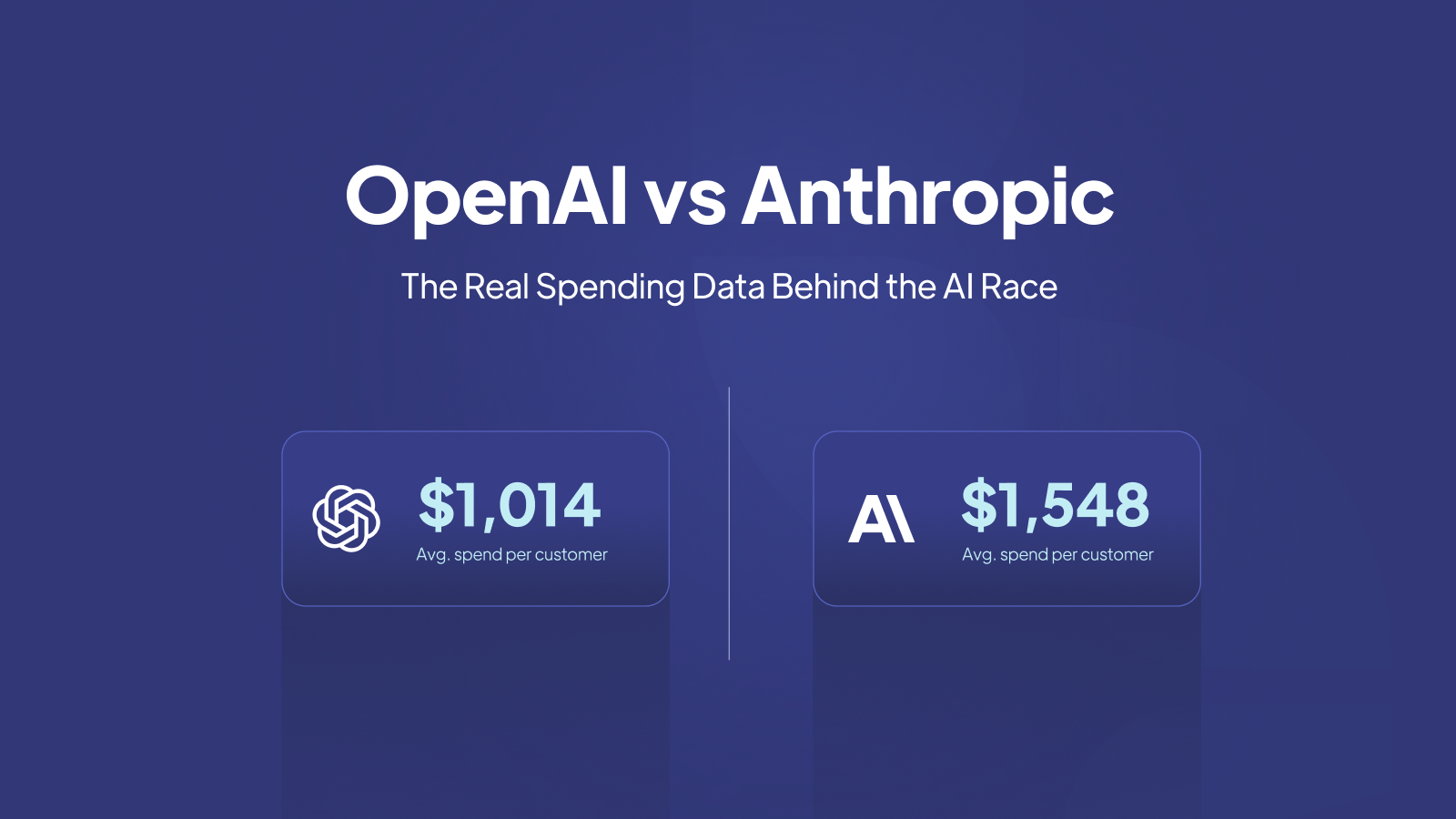
The clearest winner in AI software spend right now is Anthropic. It topped the platform's new-subscription leaderboard in both May and June 2026, ahead of Google's Gemini and OpenAI, and it holds about 6.9% of all software spend on the platform against OpenAI's 4.5%. Its active customer count also grew faster over the last 90 days than any other major vendor in our data, up 6.7% in a period when most large vendors were flat or contracting.
The second winner is the AI coding category. Cursor sits among the top new-subscription earners month after month, and the engineering and DevOps category is the only traditional software category gaining budget share. Model routers like OpenRouter, which let engineering teams switch between providers, now appear alongside the giants in the top five for new subscriptions in a typical month.
Winning, in this market, has a specific shape. The vendors gaining budget are platforms that absorb more use cases over time, or tools wired directly into daily engineering work. The vendors losing budget tend to do one job that a platform now does adequately for free.
The Losers: Three Ways AI Tools Lose the Budget
AI's share of software spend grew every single month in our data, yet several of the best-known AI brands shrank while it happened. Three distinct failure patterns show up in the payment data.
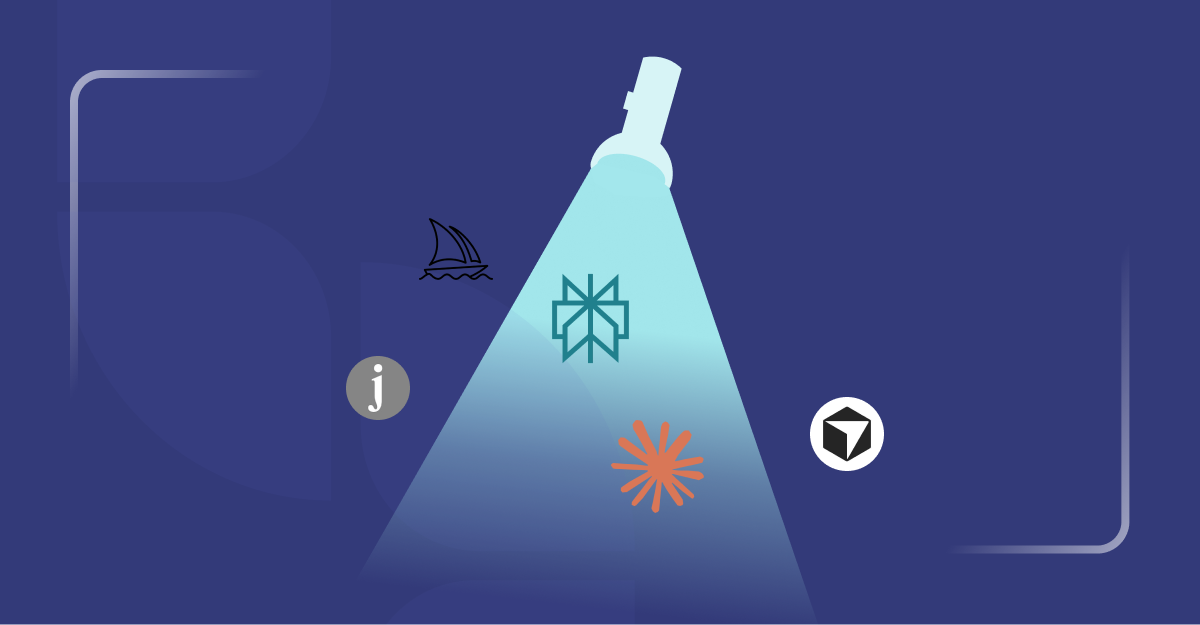
Jasper is the cleanest arc in the dataset. It reached its peak in mid-2023, almost exactly when GPT-4-class models made AI copywriting a free capability inside general assistants, and it has declined nearly every month since. Its spend rank on the platform fell from 325 to 1,168 in three years.
Midjourney tells a different story: being first is worth less than being embedded. It grew explosively through 2023, plateaued through 2024, and has since given back almost half its adoption share. The pattern repeats with Windsurf and Grammarly: when a vendor's future becomes uncertain, or a platform ships the same capability, buyers move within a quarter rather than waiting for renewal season.
Perplexity Shows How AI Spend Can Grow and Churn at Once
Perplexity is the most interesting vendor in this dataset because its two headline metrics point in opposite directions. Its spend share grew 241% year over year and its spend rank climbed from 520 to 188. At the same time, its active paying customer base contracted 31% over the last 90 days, and the customers who left most often named Claude as their replacement.
Revenue expansion from remaining accounts is covering for accelerating logo churn. Usage dashboards and revenue charts look healthy in that situation; the customer list does not. This is the pattern that tends to appear a few quarters before a visible decline, and it is only observable in payment-level data, where you can see companies stop paying long before a vendor's growth story changes.
Why AI Budgets Rotate Faster Than SaaS Ever Did
Leadership in AI categories is changing hands in months, and the tenure of a losing position is short. Jasper went from category leader to also-ran in about 18 months. Midjourney went from peak to nearly half its adoption share in about 21. Windsurf went from launch to peak to steep decline inside two years. In traditional SaaS, comparable declines took the better part of a decade.
Third-party data supports the same conclusion from different angles. RevenueCat's 2026 subscription benchmark found consumer AI apps see annual subscriptions cancelled about 30% faster than non-AI apps, and Growth Unhinged's analysis of the AI churn wave puts gross revenue retention at AI-native startups far below the roughly 82% typical of established B2B SaaS.
The reason is structural. AI capabilities are converging: when models improve, the improvement arrives simultaneously inside every product built on them, which erodes the moat of any single-purpose tool. Buyers have learned this. On the Cledara platform, the replacement flows from churned AI tools concentrate on a small set of platforms, with Claude the most common destination for former OpenAI, Perplexity, and Grammarly customers. Companies are consolidating AI spend the way they once consolidated point SaaS tools into suites, compressed from years into quarters.
How Finance Teams Should Manage AI Software Spend
Fast rotation should change how you buy AI, without slowing how fast you adopt it. The productivity gains are real and the companies buying these tools are getting value. The change is in contract structure. The vendor you pick this quarter has a meaningful chance of being the wrong one within a year, and that is fine if your contracts assume it.
- Default to monthly billing on unproven AI tools. An annual contract on a category leader made sense in SaaS. In AI, the discount rarely compensates for the odds the category flips before renewal.
- Put renewal alerts on every AI contract. A tool your team stopped using in March should not auto-renew in September. Rotation only saves money if the old subscription actually gets cancelled.
- Review usage against spend quarterly. The Perplexity pattern cuts both ways: your own stack can contain tools where spend keeps growing after usage has moved elsewhere.
- Watch the replacement flows before committing. Where churned customers of a tool actually go is a better leading indicator than any vendor roadmap.
This is the buying behavior Cledara was built for: every software subscription visible in one place, renewal dates flagged before they hit, and usage data next to the spend so the rotation decision is made by you rather than by an auto-renewal. Benchmarks help here too; our data on average SaaS spend per employee and the most expensive tools of 2026 show what typical AI budgets look like at each company size.
The AI budget is the most contested line in software spending, and the next twelve months will decide which vendors keep it. Expect the winners' list to look different again by mid-2027. The companies that come out ahead will treat that as a feature of the market and keep their switching costs low.