
What Is Shadow AI? (And How Is It Different from Shadow IT?)
Your team is almost certainly spending thousands of dollars per month on AI tools you cannot see in your general ledger. Not because anyone is being malicious, but because signing up for ChatGPT, Claude, or Cursor takes less than two minutes and a personal credit card. By the time finance finds out, the tool has been in daily use for months.
Shadow AI refers to artificial intelligence tools and services that employees use for work without explicit approval from finance or IT. Think ChatGPT subscriptions paid for on personal credit cards, Cursor accounts that engineering managers set up with their corporate cards, or Anthropic API keys that developers provision directly without a purchase order in sight.
If that sounds like shadow IT, you are right: shadow AI is a subset of shadow IT. But there are critical differences that make it a far more complex problem for finance teams. Traditional shadow IT (an unapproved Trello board, a rogue Dropbox account) is predictable. It has fixed per-seat pricing, shows up on credit card statements with a recognisable vendor name, and tends to stabilise in cost over time. Shadow AI breaks all three of those assumptions.
The Three Types of Shadow AI Spend
Shadow AI spending falls into three distinct categories, each with different visibility and control challenges.
Individual subscriptions are the most common. An employee signs up for ChatGPT Plus at $20 per month, a designer starts using Midjourney at $30 per month, or a marketer subscribes to Jasper. The charges hit personal credit cards or get expensed without a clear software category. Multiply this by 50 or 100 employees and you have thousands of dollars in monthly AI spend that never appears in your software budget.
Team accounts are slightly more visible. A team lead provisions an account for their department: engineering gets a Cursor Business subscription, the data team sets up an Anthropic workspace, the content team shares a Claude Pro account. These might show up on a corporate card, but they rarely go through formal procurement or get mapped to the correct GL code.
Usage-based API access is where things get genuinely unpredictable. A developer adds an OpenAI API key to a prototype. Usage scales. The monthly bill goes from $5 to $500 without anyone in finance knowing it exists. Based on Cledara platform data, individual company payments for the same AI vendor can range from under $11 to over $2,300 in a single month, depending entirely on consumption patterns.
Why AI Tools Are Harder to Track Than Traditional SaaS
Traditional SaaS is relatively predictable. You buy 50 seats of Slack at $12.50 per user per month, and the bill is $625. Every month. AI tools break this model in three ways.
First, usage-based pricing means costs fluctuate wildly. The same tool can cost a team $40 one month and $600 the next, depending on how many tokens, queries, or API calls they consume. There is no "per seat" anchor to forecast against.
Second, AI tools have near-zero onboarding friction. There is no IT ticket, no procurement review, no contract negotiation. An employee can sign up for ChatGPT, Claude, or Midjourney in under two minutes and start using it immediately. By the time finance hears about it, the tool has been in use for months.
Third, many AI tools operate through browser interfaces that leave no footprint in your existing software inventory systems. Unless you are actively monitoring browser-level activity, these tools are completely invisible to your tech stack audits.
The Scale of the Problem: Shadow AI in Numbers
The data on shadow AI adoption is striking, and it is accelerating faster than most finance teams realise.
61% of Enterprise Apps Run Outside IT Oversight
The Torii 2026 SaaS Benchmark Report found that the average organisation now runs more than 830 applications, with 61% operating outside formal IT oversight. Only 15.5% of applications are formally sanctioned. That means for every tool your finance team knows about, there are roughly four it does not.
Over Half of Newly Adopted Shadow Apps Are AI-First Tools
The same Torii report reveals that more than half of the most widely adopted shadow applications discovered in enterprise environments are AI-first tools. These are not niche products. They include ChatGPT, Claude, Midjourney, GitHub Copilot, Cursor, and dozens of vertical AI tools that employees adopt at a pace finance and IT simply cannot match using traditional procurement processes.
What makes this particularly challenging is that many of these AI tools use OAuth-based permissions and instant integrations that connect directly to corporate data. An employee does not just sign up for a tool; they grant it access to company email, documents, or code repositories during the onboarding flow, often without realising the security and data governance implications of that single click.
AI Spend Growing 100%+ YoY at Most Companies
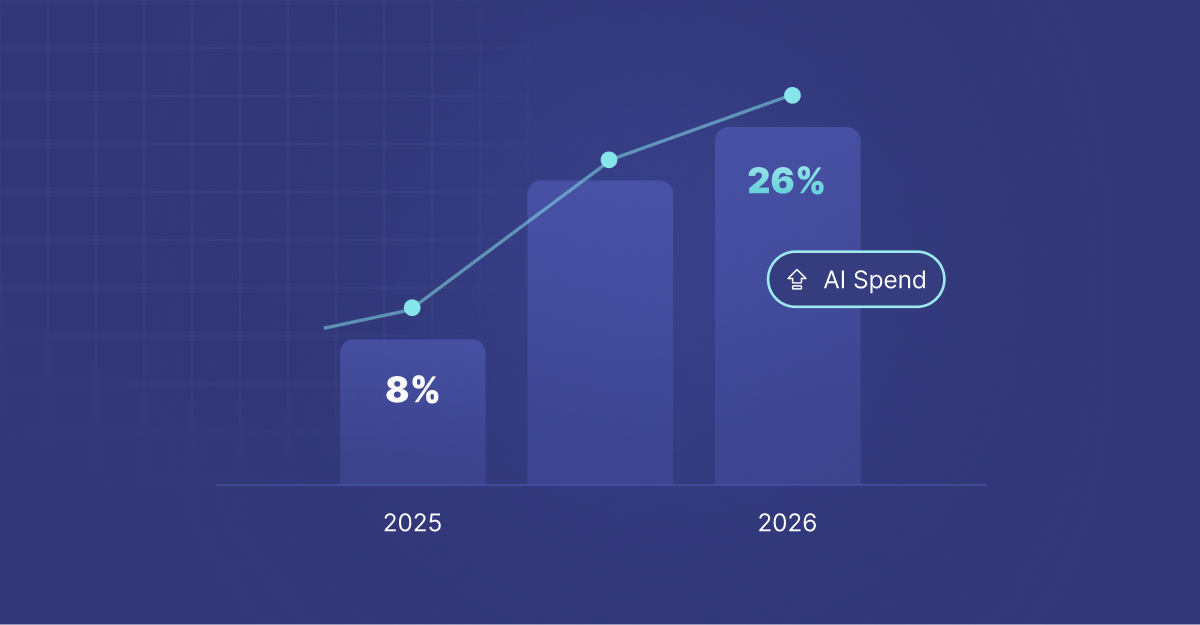
Spending on AI-native applications rose 108% in 2025, averaging $1.2 million in spend per organisation. At the same time, Gartner projects that worldwide AI spending will reach $2.5 trillion in 2026. AI governance spending alone is expected to hit $492 million this year and surpass $1 billion by 2030. These are not incremental changes. This is a fundamental shift in how companies spend on software, and most finance teams are flying blind.
Why This Is a Finance Problem, Not Just an IT Problem
Most shadow AI content frames this as a security and compliance issue: data leakage, prompt injection, regulatory risk. Those concerns are real, but they are not the whole story. Shadow AI is also, and perhaps primarily, a finance problem. Here is why.
Usage-Based Pricing Creates Unpredictable Costs
Traditional SaaS subscriptions are fixed. You know what you are paying next month because it is the same as this month. AI tools operate on a fundamentally different pricing model.
A single developer using Cursor might spend $20 one month and $200 the next, depending on how much AI-assisted coding they do. An API-connected workflow using Anthropic's Claude could cost $10 during testing and $2,000 once it starts processing production data. These are not hypothetical ranges: Cledara platform data shows exactly this kind of variance across companies paying for the same AI vendors.
The numbers confirm the challenge. 78% of IT leaders reported unexpected SaaS charges due to consumption-based or AI pricing models in 2025, up from 65% the year before. And 85% of enterprises miss their AI infrastructure forecasts by more than 10%. For finance teams accustomed to predictable, seat-based software costs, this introduces a category of spend that resists traditional budgeting and forecasting methods.
AI Tools on Personal Cards Are Invisible to the GL
When employees pay for AI tools with personal credit cards and expense them (or simply absorb the cost themselves), that spend is invisible to your general ledger. It does not appear in your software spend reports. It does not get allocated to a department. It does not get mapped to an expense code. It does not exist in your SaaS governance framework.
This creates a blind spot that compounds over time. Research shows that 34% of shadow AI spending duplicates tools the organisation already pays for. That is money being spent twice on the same capability, with nobody in finance aware of either transaction. At scale, this invisible duplication can represent tens of thousands of dollars per year in wasted spend.
Cost Allocation: Who Owns the ChatGPT Bill?
Even when AI spend is visible, allocating it correctly is a headache. If the marketing team uses ChatGPT for content drafts, the engineering team uses it for code review, and the customer success team uses it for email responses, which cost centre does that subscription belong to?
With traditional SaaS, the answer is usually clear: Salesforce goes to Sales, Figma goes to Design. AI tools cut across departments by nature. A single ChatGPT Team subscription might serve five different cost centres. And if it is a usage-based API account, the consumption might split 60/20/20 across teams with no built-in mechanism to track or allocate costs accordingly. This AI cost allocation challenge only grows as adoption increases.
The 4-Step Shadow AI Management Framework
Here is a practical framework you can use to get shadow AI under control. It is designed to be actionable enough to present to your leadership team next week.
Step 1: Discover Every AI Tool in Use
You cannot manage what you cannot see. Start with a comprehensive discovery exercise that combines two data sources.
Analyse payment data. Review corporate card statements, expense reports, and accounts payable for any payments to known AI vendors: OpenAI, Anthropic, Midjourney, Stability AI, Cursor, Jasper, Copy.ai, Perplexity, and others. Look for charges that might be miscategorised as general "software" or "subscriptions" in your expense reports.
Deploy browser-level detection. Payment data only catches tools that have been purchased. Browser-level monitoring catches tools that employees are using on free tiers or personal accounts. Cledara's Engage browser extension, for example, identifies AI applications employees are actively using across Chrome, Safari, and Firefox, including ChatGPT, Claude, Midjourney, Gemini, and Cursor, even when the subscription was not purchased through official channels.
The goal of this step is a complete inventory: every AI tool, who is using it, how it was purchased, and what it costs.
Step 2: Quantify and Consolidate AI Spend into One View
Once you know what AI tools are in use, consolidate that information into a single view. For each tool, document the monthly cost (or estimated monthly cost for usage-based tools), the number of users, the purchasing method (corporate card, personal card, expense claim, or direct invoice), and the department or team using it.
This step often reveals surprises. Companies regularly discover they are paying for three different AI writing tools across departments, or that API spend on a tool they thought cost $50 per month is actually ten times that amount.
For usage-based AI tools specifically, monthly invoices are not enough. You need daily or weekly spend monitoring to catch cost spikes before they become budget-breaking surprises. This is where connecting directly to AI provider APIs matters: tracking AI spend at the transaction level rather than waiting for a monthly invoice gives finance teams the real-time visibility they need.
Step 3: Govern with AI-Specific Procurement Policies
Generic software procurement policies were not designed for AI tools. You need policies that account for the unique characteristics of AI spending: variable costs, rapid adoption cycles, and cross-departmental usage.
Set clear rules for who can purchase AI tools and at what thresholds. Require approval for any new AI tool subscription, but make the process fast enough that employees do not route around it. A good benchmark: low-cost AI tools (under $50 per month) should be approved within 24 hours, while subscriptions above that threshold get routed to finance for review.
Most importantly, route all AI tool payments through channels you control. Virtual cards with per-subscription spend limits make AI spend visible and controllable at the payment layer, regardless of which team initiated the purchase. If a developer's Cursor usage spikes from $20 to $200 in a week, the spend limit on that card catches it before it becomes a $2,000 surprise on your next statement. For a detailed template, see our guide to building an AI procurement policy.
Step 4: Optimise by Consolidating Redundant Tools and Negotiating Enterprise Deals
With full visibility and governance in place, you can start optimising. The most common wins include:
- Consolidating duplicate AI tools. Do you really need ChatGPT, Claude, and Gemini subscriptions spread across different teams? Standardising on one or two approved AI assistants can cut costs significantly while simplifying governance.
- Negotiating enterprise agreements. Enterprise plans for AI tools often cost 30-50% less per user than multiple individual subscriptions. Once you know your total headcount using a tool, you have leverage to negotiate.
- Setting and enforcing budgets for usage-based tools. Daily spend caps on API accounts prevent runaway costs. Budget alerts at 50%, 75%, and 90% thresholds give teams time to adjust before hitting limits.
- Reclaiming unused AI licences. Not every employee who signed up for an AI tool six months ago is still using it. Regular utilisation reviews recover wasted spend.
Remember: 34% of shadow AI spending duplicates existing approved tools. Consolidation alone can produce meaningful savings before you even begin negotiating with vendors.
Building an AI-Specific Governance Policy
What to Include
An effective AI governance policy for finance teams should cover five areas.
Data handling requirements. Which AI tools are approved for use with company data? What data classification levels are acceptable for each tool? This is the one area where finance and IT/security must collaborate closely. Not every AI tool handles data the same way, and your policy should reflect the differences between tools that store prompts and those that do not.
Approved vendor list. Maintain a curated list of AI tools that meet your security, privacy, and budget requirements. Update it quarterly, because the AI tool landscape evolves faster than any other software category. New tools launch weekly, pricing models change, and existing vendors add (or remove) enterprise features.
Spend limits and budgets. Set per-tool and per-department AI budgets. For usage-based tools, set daily and monthly spending caps with automated alerts when thresholds are approached. This is not about restricting AI use; it is about ensuring spend stays within planned parameters.
Procurement process. Define how employees request new AI tools, who approves them, and how quickly approvals happen. Include escalation paths for different spend levels. A $20 per month individual subscription should not require the same approval process as a $5,000 per month team API account.
Review cadence. AI tools and their costs change rapidly. Schedule quarterly reviews of your AI tool inventory, spend, utilisation, and policy compliance. What was the right tool at the right price three months ago may not be today.
Balancing Control with Productivity
Here is the tension every finance leader must navigate: employees are adopting AI tools because they genuinely improve productivity. A developer using Cursor writes code faster. A marketer using ChatGPT produces first drafts in minutes instead of hours. An analyst using Claude processes complex data sets more efficiently.
If your governance policy is too restrictive, employees will find workarounds. They will use personal accounts, pay with personal cards, and you will be back to square one with even less visibility than before.
The goal is not to block AI adoption. It is to channel it through systems that give finance visibility and control. Make it easier to use approved AI tools through official channels than to sign up independently. Fast approval workflows, pre-provisioned accounts for popular tools, and self-service access requests all reduce the incentive to go rogue. When requesting a new AI tool takes five minutes through your internal process, nobody bothers signing up with a personal credit card.
How Cledara Manages Shadow AI
Cledara addresses shadow AI at every stage of the management framework outlined above.
For discovery, the Engage browser extension identifies AI tools employees are actively using across Chrome, Safari, and Firefox. It detects ChatGPT, Claude, Midjourney, Gemini, Cursor, and hundreds of other AI applications, even when they were not purchased through official channels. Because it tracks actual usage rather than just payments, it catches tools that would otherwise remain completely invisible to finance.
For quantification, the AI Dashboard connects directly to OpenAI, Anthropic, and Cursor APIs to track usage-based spend with daily visualisation and budget alerts. This solves the core finance challenge of AI spend: unpredictable, consumption-based costs that traditional accounting systems cannot track in real time. You see exactly how much each team is consuming, every day, not just when the monthly invoice arrives.
For governance, approval flows require sign-off before new AI tools are purchased. Spend thresholds are configurable: a $20 per month individual subscription can be auto-approved while a $500 per month team account gets routed to finance for review. Virtual cards issued per subscription enforce spend limits at the payment layer. If a usage-based AI tool starts exceeding its budget, the card limit stops the overspend before it hits your books.
For optimisation, all AI spend is automatically mapped to the correct GL code and synced to Xero, QuickBooks, or NetSuite through Cledara's accounting integrations. Every AI subscription and API charge is allocated to the right department, coded to the right expense category, and reconciled automatically. No more manual categorisation. No more wondering which cost centre owns the ChatGPT bill.
The result is a complete view of AI spend across your organisation, with the controls to manage it proactively rather than discovering budget overruns after the quarter closes.
Shadow AI Is Not Going Away. Your Visibility Needs to Catch Up.
Shadow AI is not a temporary trend. It is the new default. Employees have discovered that AI tools make them faster, sharper, and more productive, and they are not going to stop using them because finance does not have a line item in the budget. The question is not whether your company will spend on AI tools. It is whether finance will have visibility into that spend or discover it three months later during a reconciliation exercise.
The 4-step framework outlined in this guide (discover, quantify, govern, optimise) gives you a practical path forward. Start with discovery this week: pull your corporate card statements, search for AI vendor names, and deploy browser-level monitoring. You will almost certainly find more AI tools in use than you expected. That is not a failure; it is the starting point for building a sustainable AI spend management practice.
The companies that get this right will not just control costs. They will be the ones that scale AI adoption confidently, knowing exactly what they are spending, where the value is coming from, and where they can optimise. The companies that ignore it will keep finding surprises in their expense reports, quarter after quarter, as AI adoption accelerates around them.
Ready to see every AI tool your company is paying for? Book a Cledara demo and get full visibility into your shadow AI spend in minutes, not months.