Practical insights for managing software and AI spend

Guides, spend benchmarks and side-by-side comparisons for finance teams who manage every software subscription. Get the best of it in your inbox.

Prefer LinkedIn? Follow the newsletter there.

Sign up

Featured articles

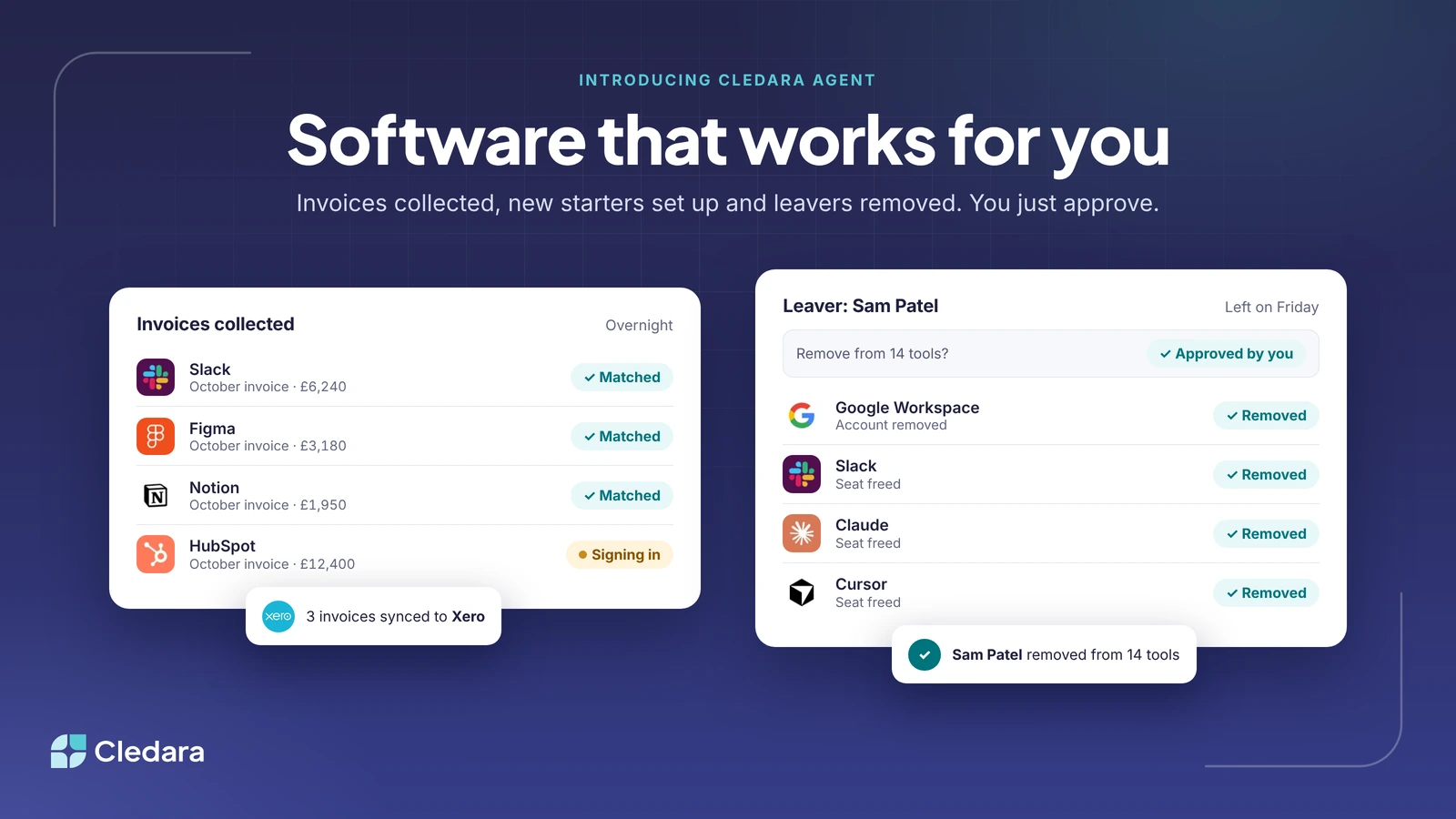
Introducing Cledara Agent: software should work for you, not the other way round

Cledara Agent is an AI agent that signs in to your SaaS and AI tools and does the admin behind them: it collects and matches invoices, sets up new joiners, reclaims unused seats and removes leavers, all with your approval. It works with more than 8,000 tools, is the only SaaS management agent verified by Cloudflare, and keeps passwords in a secure vault that AI never sees, so finance teams can spend their time on finance instead of chasing.

What Is SaaS Management? The Definitive Guide (2026)

SaaS management is the practice of tracking, buying, renewing and cancelling every software subscription your company pays for, so each tool has an owner, a known cost and a decision at renewal. It follows each tool through five stages (discover, buy, manage, renew and cancel) and covers the admin finance teams do every month: getting invoices, approving purchases, setting up new starters, removing leavers and taking back unused seats. It matters more now because the median company pays for 32 software tools, most billed monthly, and AI tools add bills that follow usage. Start early: past 10 to 15 subscriptions, spreadsheets stop keeping up.

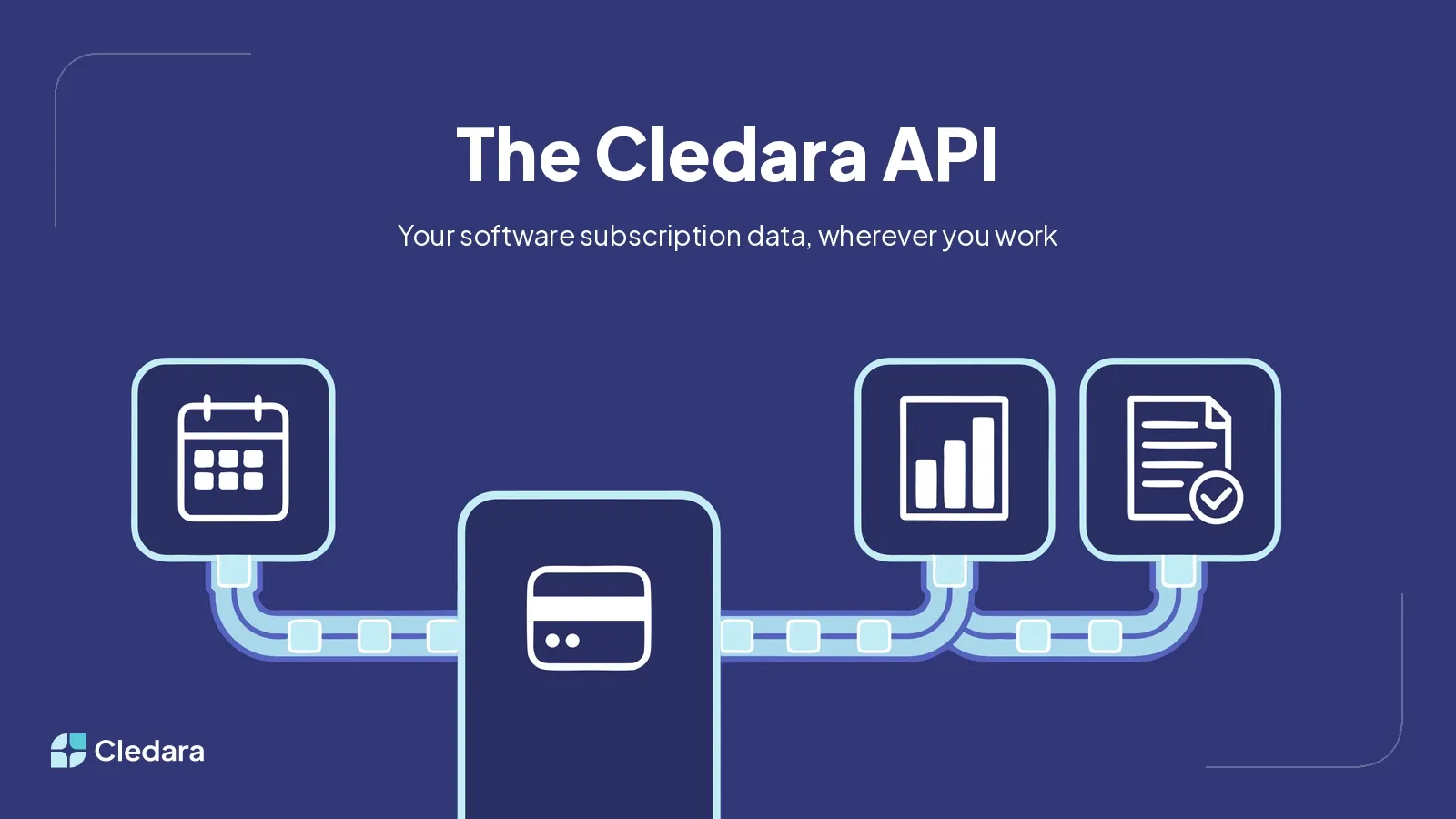
Introducing the Cledara API: Your Software Subscription Data, Wherever You Work

Your software subscription data, available programmatically. What the new Cledara API includes, why we built it, and what customers made in the first weeks.

Most read

Popular with finance teams

The guides and data readers come back to most.

How to Write a Software Business Case in 6 Steps (+ Template)

To write a software business case, follow six steps: define the problem in numbers, check what the company already pays for, compare at least two options plus doing nothing, build a three-year cost model, value the benefits and risks, then get sign-off with a named owner and review dates. The same pattern works for any category of software, and a one-page version fits in a seven-line table. A business case for SaaS should cover seats, billing and notice periods, renewal price rises of 8 to 12% a year, security evidence and an exit plan, and a renewal case should start 90 days out. Cledara's Software Compliance module has templates for the business case, risk assessment, contract review and exit plan.

Introducing Cledara Agent: software should work for you, not the other way round

Cledara Agent is an AI agent that signs in to your SaaS and AI tools and does the admin behind them: it collects and matches invoices, sets up new joiners, reclaims unused seats and removes leavers, all with your approval. It works with more than 8,000 tools, is the only SaaS management agent verified by Cloudflare, and keeps passwords in a secure vault that AI never sees, so finance teams can spend their time on finance instead of chasing.

What Is SaaS Management? The Definitive Guide (2026)

SaaS management is the practice of tracking, buying, renewing and cancelling every software subscription your company pays for, so each tool has an owner, a known cost and a decision at renewal. It follows each tool through five stages (discover, buy, manage, renew and cancel) and covers the admin finance teams do every month: getting invoices, approving purchases, setting up new starters, removing leavers and taking back unused seats. It matters more now because the median company pays for 32 software tools, most billed monthly, and AI tools add bills that follow usage. Start early: past 10 to 15 subscriptions, spreadsheets stop keeping up.

Software Tail Spend: Why It Matters and How to Manage It

Software tail spend is the long tail of small, low-cost subscriptions that people across a company buy on cards and expenses. Each tool is too small to need approval, but together they make up a real share of software spend and much of the admin: duplicates, renewals nobody owns, invoices behind vendor logins and access that outlives leavers. Across UK companies on Cledara, the 2,781 vendors outside the top 50 shared 34% of software spend between October 2025 and September 2026. To manage it, build one list of every subscription, give each an owner and its own card with a limit, set renewal alerts and automate invoice capture.

CFO Performance Metrics: 20 KPIs to Measure a Finance Leader

CFO performance metrics work on two levels. The first is the company KPIs a CFO owns: cash runway, operating cash flow, margins, growth, burn multiple, forecast accuracy and days to close. The second is the quality of their leadership: reporting, strategic input, team management and risk control. To measure CFO performance fairly, agree goals and baselines at the start of the year, score the numeric KPIs each quarter, and gather structured feedback from the CEO, board and finance team. Most CFOs should track 8 to 12 core KPIs in depth, drawn from six groups: liquidity, profitability, growth, efficiency, forecasting accuracy and finance operations.

Budget Reporting: How to Build a Budget Report (Free Template)

A budget report compares what you planned to spend and earn with what actually happened in a period, usually a month or a quarter. For each line it shows the budget, the actual, the variance in money and as a percentage, a short commentary on the cause and the owner who will act. Good budget reports explain only the variances that pass a set threshold, separate timing from permanent changes and end with an updated forecast. Software subscriptions and AI tools deserve their own lines, because monthly billing, renewal price rises and fast-growing AI usage make them drift from budget faster than most costs.

Every article

Latest articles

Newest first, twelve at a time. Or see every article on one page.

All articles

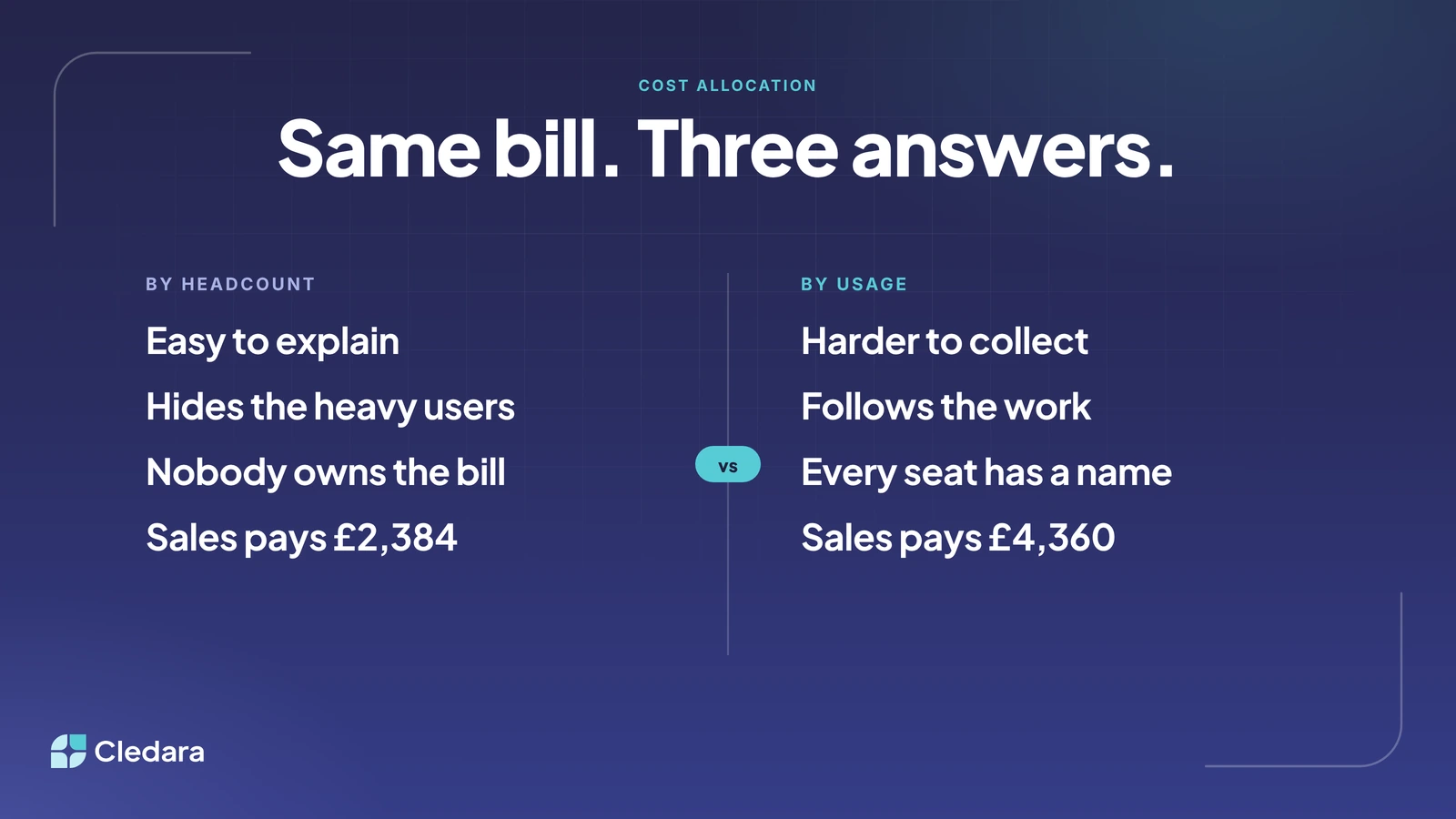
How to allocate shared software spend between departments: three chargeback models with a worked example

To allocate shared expenses between departments, pick one of three methods for each shared cost: by headcount (fair for platform costs nobody controls), by usage or seats (fair for costs teams can reduce), or by direct attribution with a card or cost centre per subscription (fair for costs a team chose to buy). Write the rule next to each tool, give every tool an owner, and run the same routine monthly. In a worked example for a 150-person company, the same £11,920 of Google Workspace, AI usage and travel bills gives Sales £2,384 under headcount and £4,360 under usage. Allocation arguments are ownership arguments, and a card and owner per subscription settles most of them at the moment of purchase.

The software subscription register: owners, renewal dates and costs in one list (template)

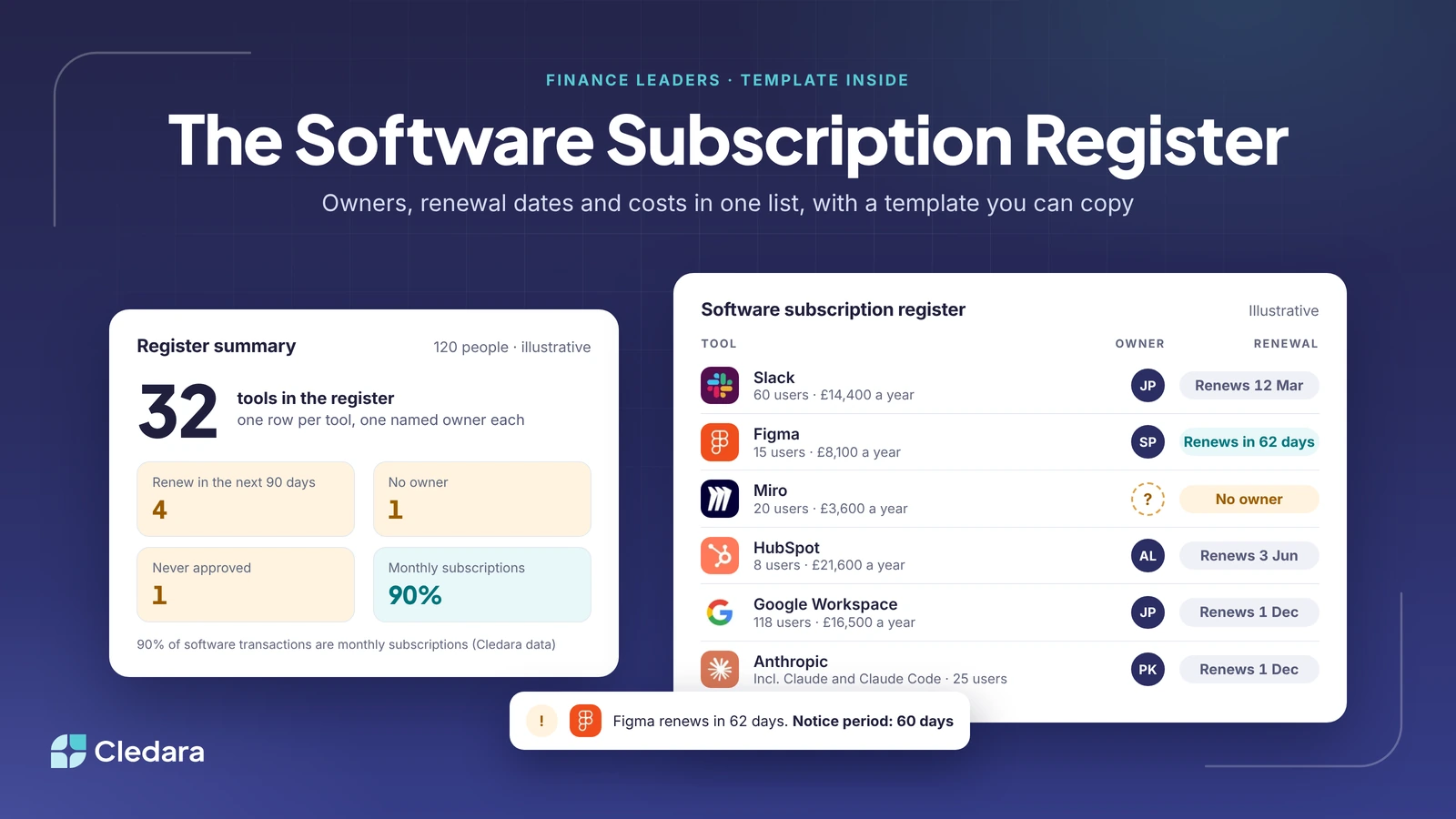
A software subscription register is one list of every software and AI tool a company pays for, with the owner, users, cost, billing cycle, renewal date, notice period and contract term next to each one. Build it from 12 months of payments rather than memory, keep one row per tool, sort it by renewal date and update it on the same day each month. The median company on Cledara pays for 32 tools and 90% of software transactions are monthly, so most renewals happen every 30 days whether you track them or not. This post gives you the 12 fields that matter, a copyable template and the point where a platform should take over.

How to Build a Business Case for SaaS Management Software Ahead of a Renewal (Template)

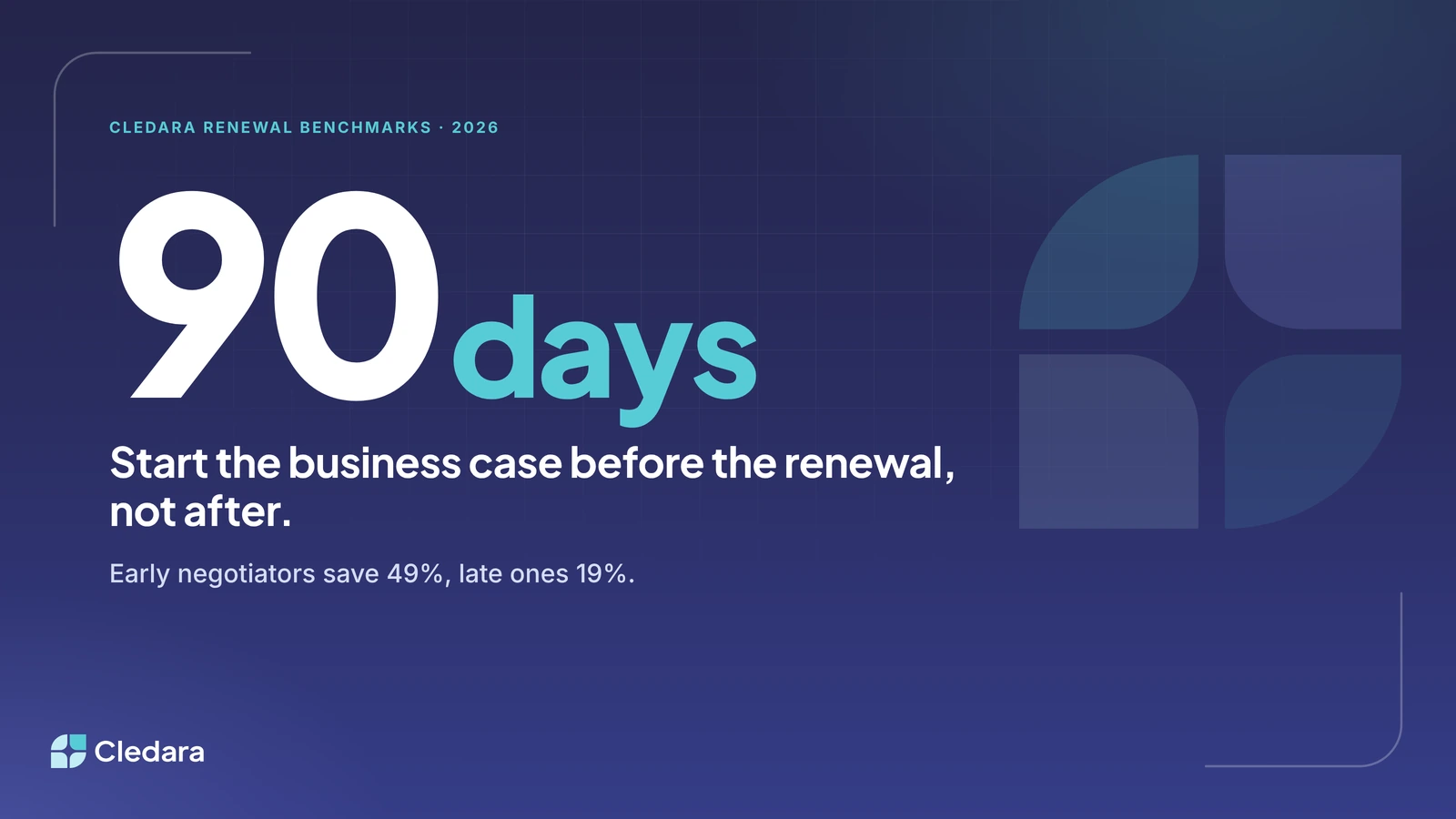
The easiest business case for SaaS management software is the one tied to a specific renewal, because the saving becomes a line on an invoice rather than a forecast. Start 90 days before the renewal: companies that negotiate that early average 49% savings against 19% for those that start later. Use a one-page table with nine rows (problem, cost of doing nothing, options, recommended option, benefits, costs, risks, timeline and the ask), fill it in with your own card statements and the free benchmarks at data.cledara.com, and let the renewal prove the case at the 90-day review.

AI tool approval checklist for security, compliance and finance teams

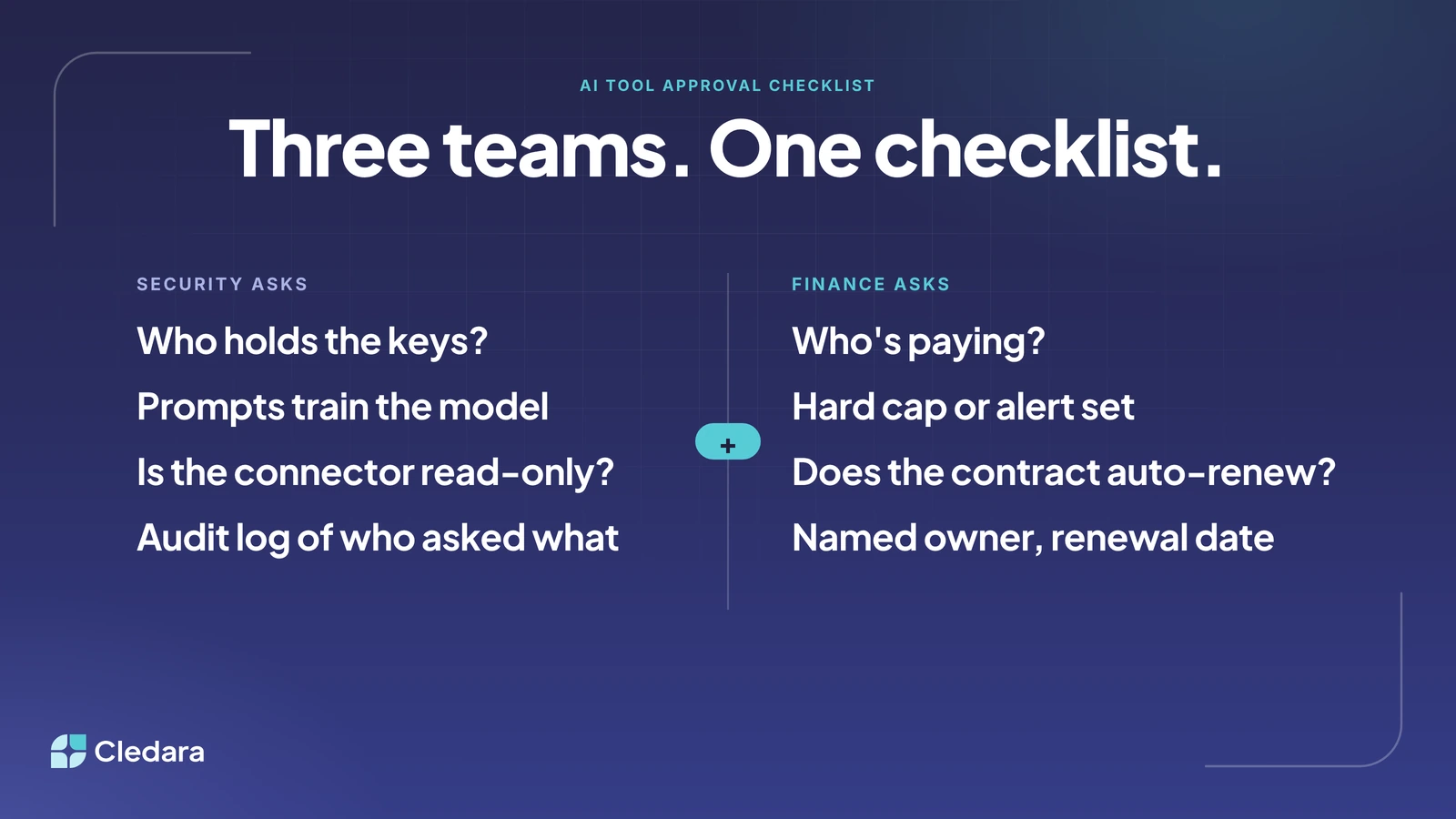
An AI tool approval checklist is one list of the ten things to check before a company approves a new AI tool: data handling and residency, whether prompts train the model, access and role controls, SSO, retention and deletion, certifications (SOC 2, ISO 27001, a GDPR DPA), sub-processors, cost caps and usage billing, exit terms and data export, and a named owner with a renewal date. Security, compliance and finance each review their own rows at the same time instead of in sequence, which is what turns a six-week approval into a few days. This post includes the table of who checks what and a one-page template you can copy.

Introducing Cledara Agent: software should work for you, not the other way round

Cledara Agent is an AI agent that signs in to your SaaS and AI tools and does the admin behind them: it collects and matches invoices, sets up new joiners, reclaims unused seats and removes leavers, all with your approval. It works with more than 8,000 tools, is the only SaaS management agent verified by Cloudflare, and keeps passwords in a secure vault that AI never sees, so finance teams can spend their time on finance instead of chasing.

Startup CFO vs Corporate CFO: What's Actually Different, and When to Hire One

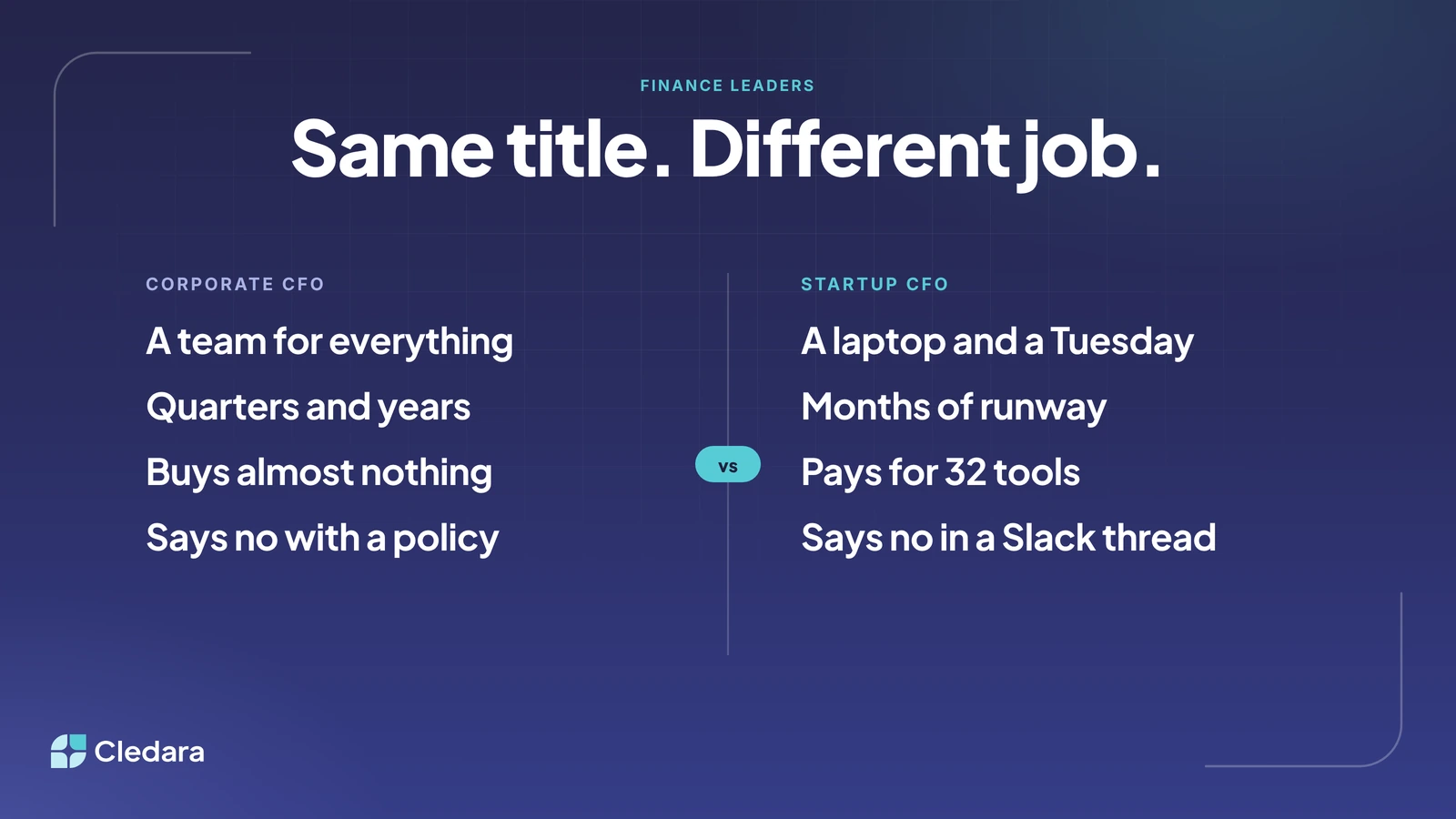
A startup CFO is an operator who happens to be good with numbers: they own cash and runway, the model, the board pack and the fundraise, plus the admin a corporate CFO has a team for, from contracts to the software bill. A corporate CFO is a steward of reporting, governance and capital allocation. Most startups need an experienced finance leader around $3 to 5 million ARR, fractional earlier if fundraising demands it, and a full-time CFO by Series C. Cledara, software subscription management for finance teams, takes the software admin off the startup CFO's desk: invoices, renewals, approvals, new starters and leavers.

The CTO's Credit Card: Why Engineering Buys the Software That Matters Most, and Finance Finds Out at Month End

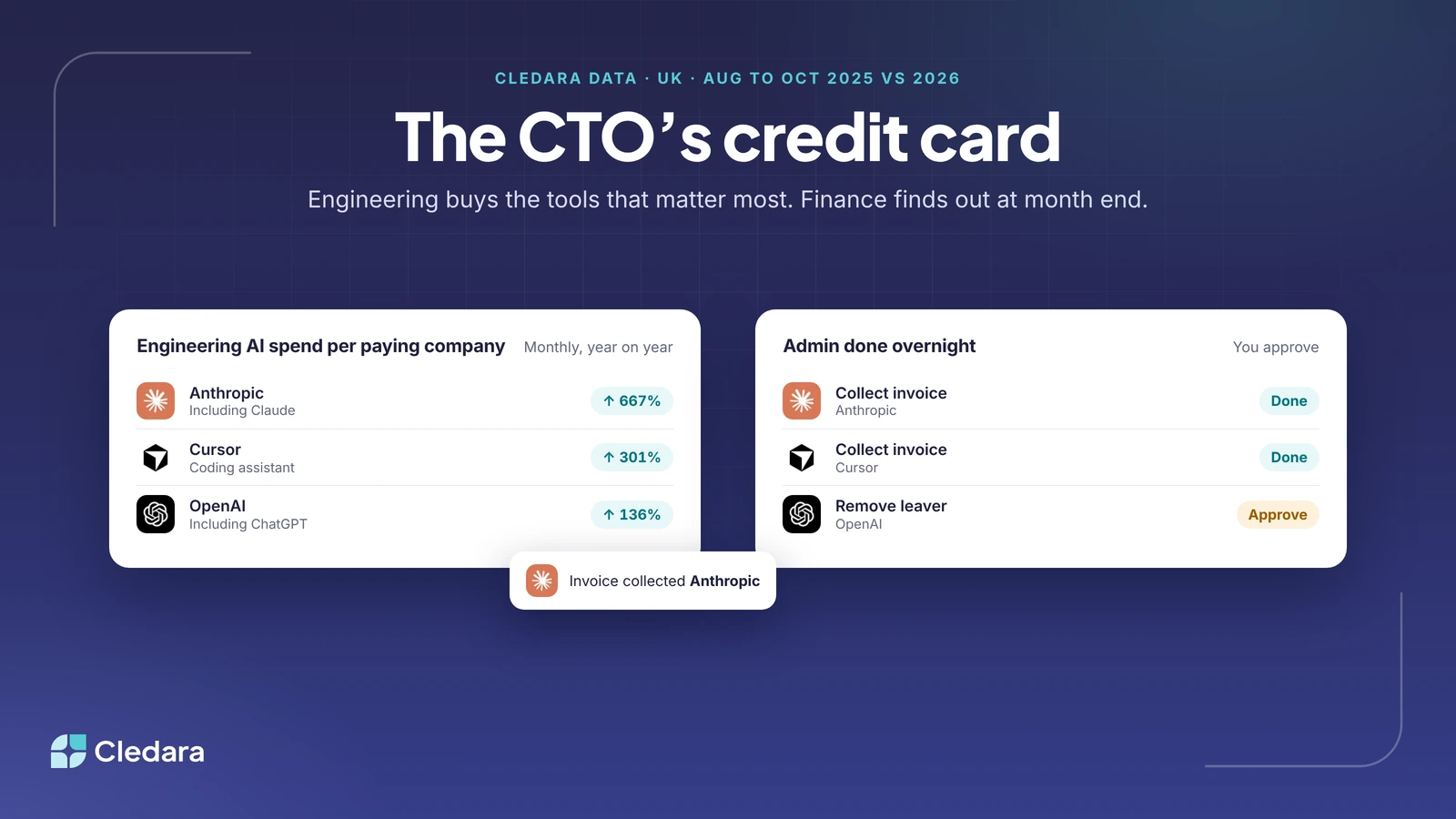
Engineering software spend is the biggest and least predictable line in most software budgets, and it usually starts life on the CTO's card rather than in finance's process. That made sense when developer tools were cheap to start, and it still does, but AI has changed the scale: Cledara data shows spend per paying UK company rose 667% on Anthropic, 301% on Cursor and 136% on OpenAI in a year, and engineering's share of software spend climbed from 15.5% to 17%. The cost is admin, not tool choice: CTOs downloading invoices, finance reconstructing budgets from statements. The fix is a card, an owner and a budget per tool, with an agent doing the chasing.

How to Forecast Software Spend When More of It Bills by Usage

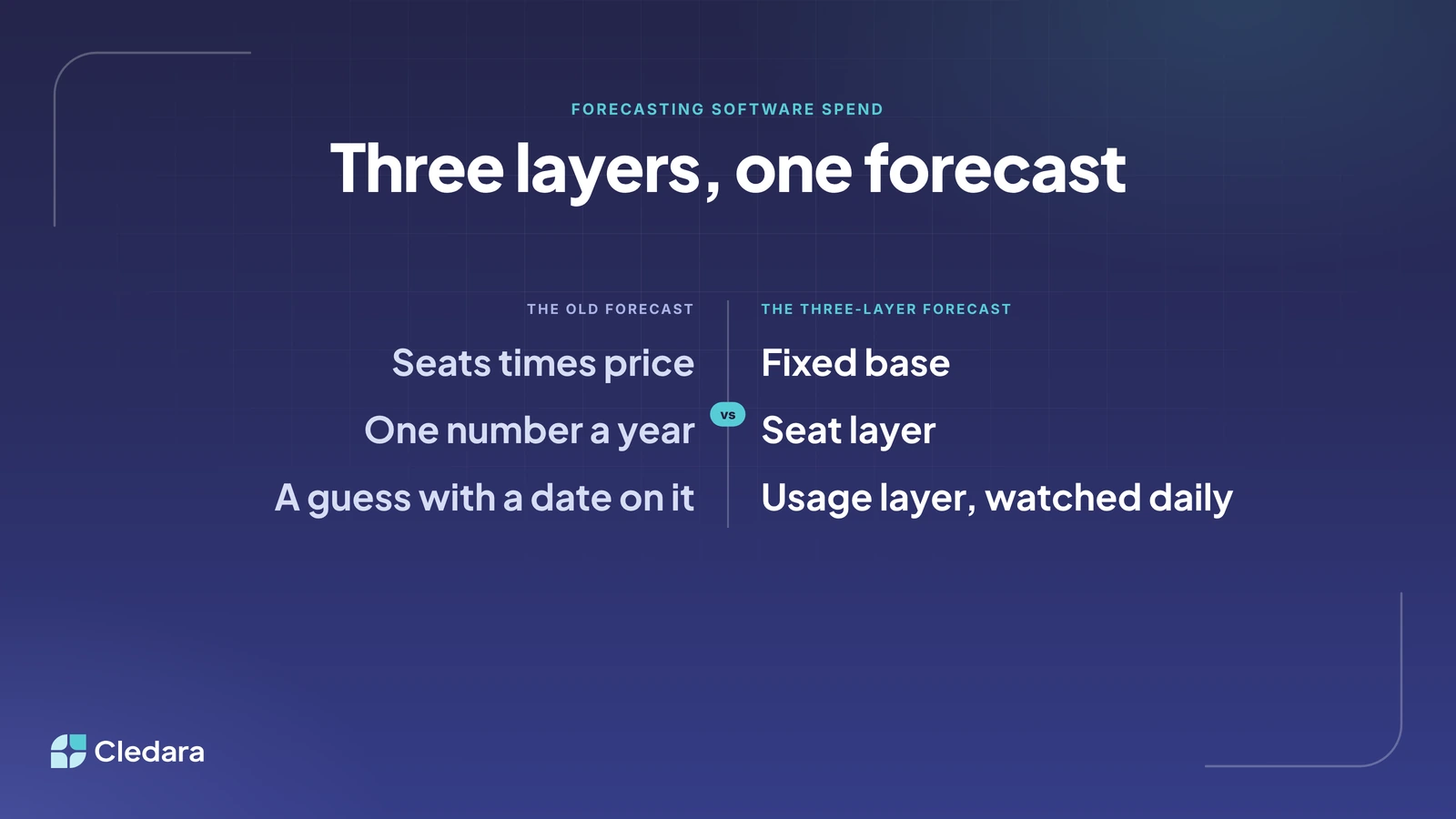
Seats times price no longer forecasts software spend, because AI, data and messaging tools charge for usage. Cledara data shows 83% of UK software subscription spend was billed monthly over the last year and that AI-native usage-style tools pay every 5.6 days on average. The fix is a three-layer software spend forecast: a fixed base of annual contracts forecast by renewal month, a seat layer driven by headcount, and a usage layer forecast as a trailing run rate with a ceiling per account, watched daily with alerts. Re-forecast monthly and log variance by layer, so the forecast tells you what to do rather than just that you are over.

Running ISO 27001 Vendor Management in Cledara

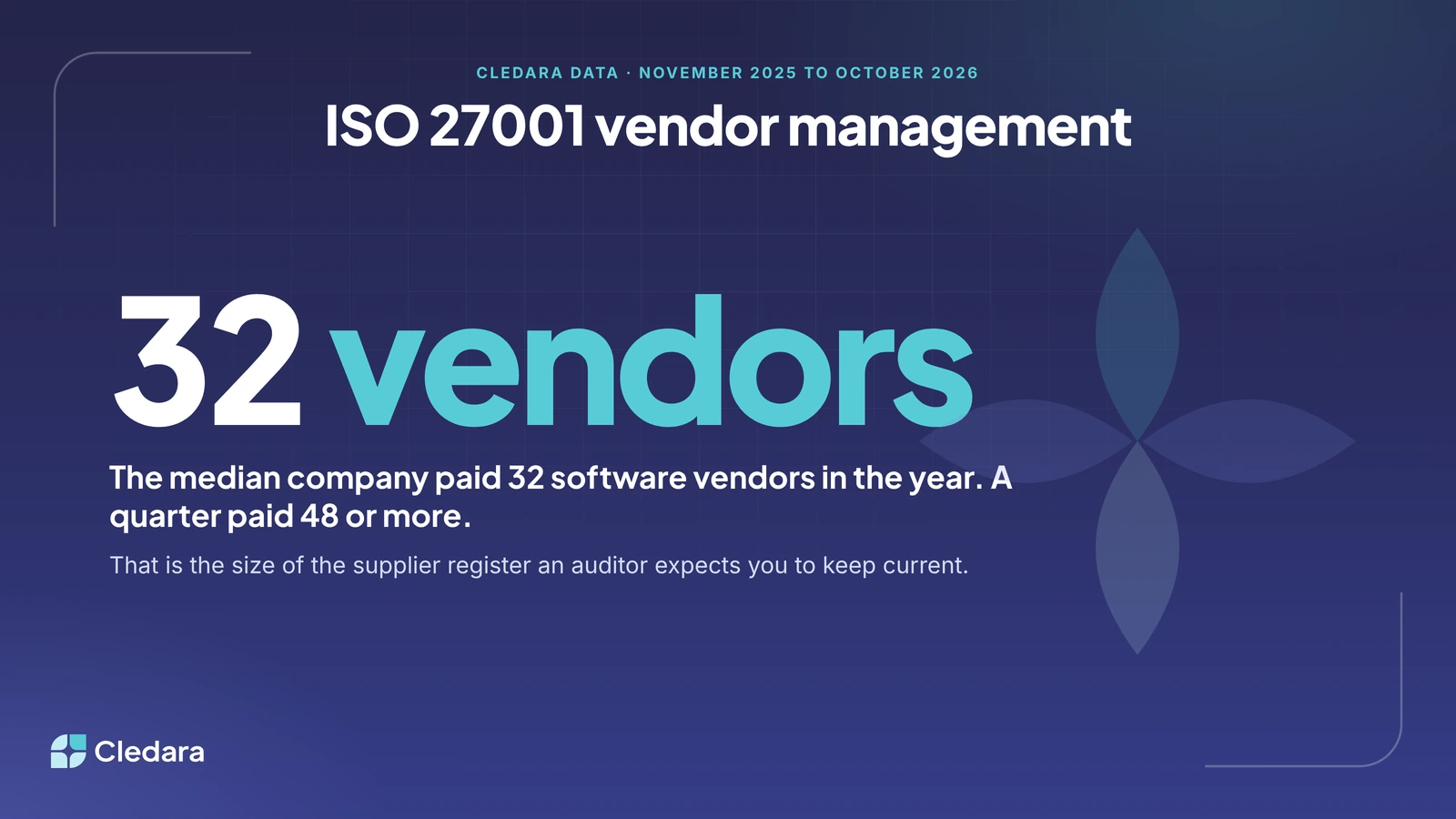
ISO 27001 asks you to know every software vendor that touches your data, assess the risk, cover security and exit in the contract, and review access. Cledara data shows the median company on the platform paid 32 software vendors in the year to October 2026, so the register has to update itself. In Cledara the subscription is the record: the Software Compliance module adds a questionnaire to each software request with templates for the business case, product details, risk assessment, contract review and exit plan, lets you delegate sections to colleagues and vendors, attaches evidence to the application, shows ISO 27001 and SOC 2 certification tags, and exports everything as a PDF or ZIP for the auditor.

Getting Software Spend Into the Ledger: Xero, QuickBooks, NetSuite, DATEV and Fortnox

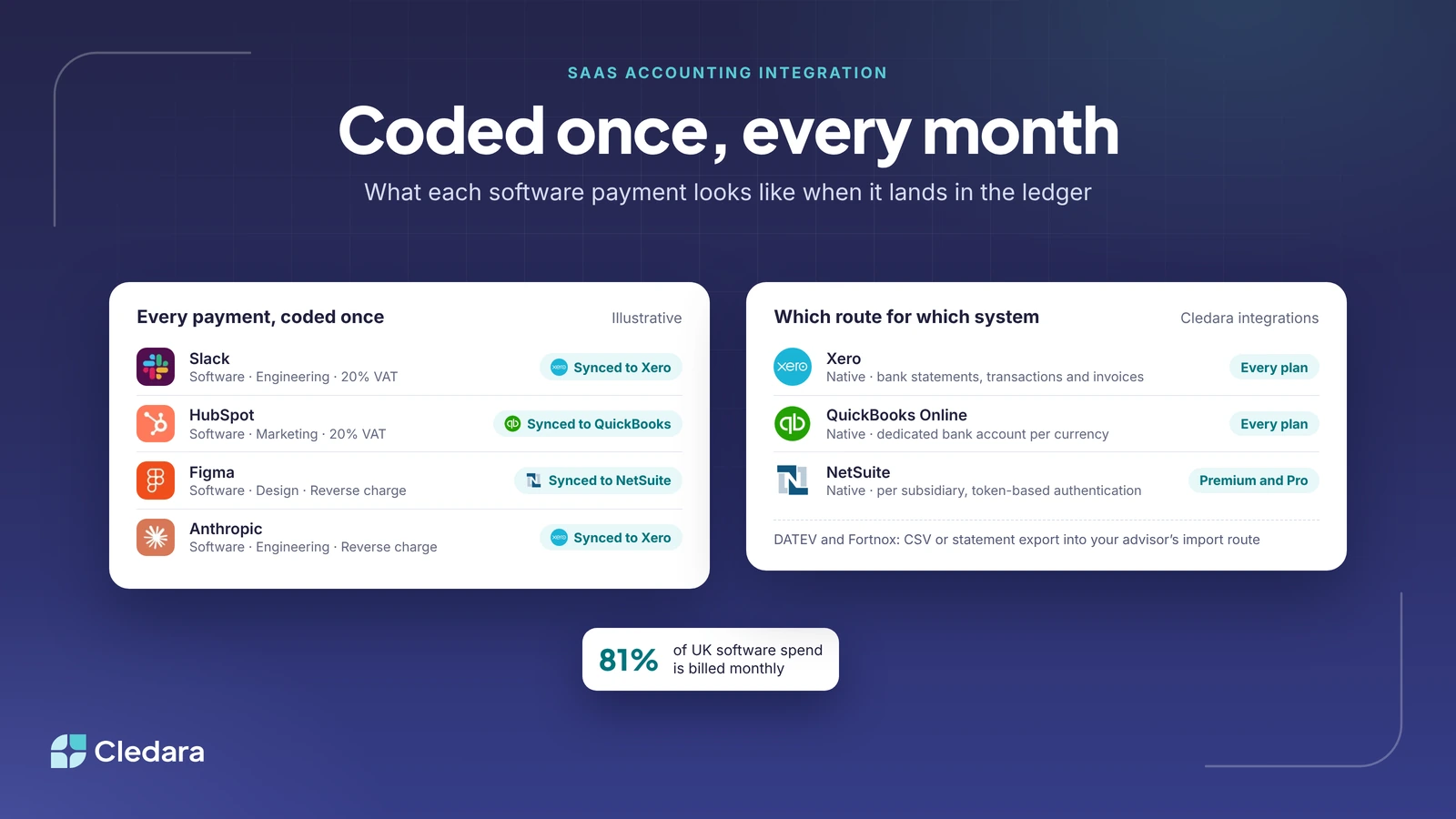
A SaaS accounting integration is judged by what lands in the ledger rather than by whether it connects. For every software payment you want the vendor, expense account, department or cost centre, tax treatment, period and invoice right, and Cledara data shows about 81% of UK software spend is billed monthly, so that coding repeats every month. Xero and QuickBooks Online connect natively on every Cledara plan and NetSuite from Premium, each with a one-time mapping per application. DATEV and Fortnox work through CSV or statement exports taken into your advisor's DATEV service or converted to SIE4. Invoices behind vendor logins remain the gap, which Cledara Agent closes by collecting them overnight.

How Cledara Pays for Itself: The Maths

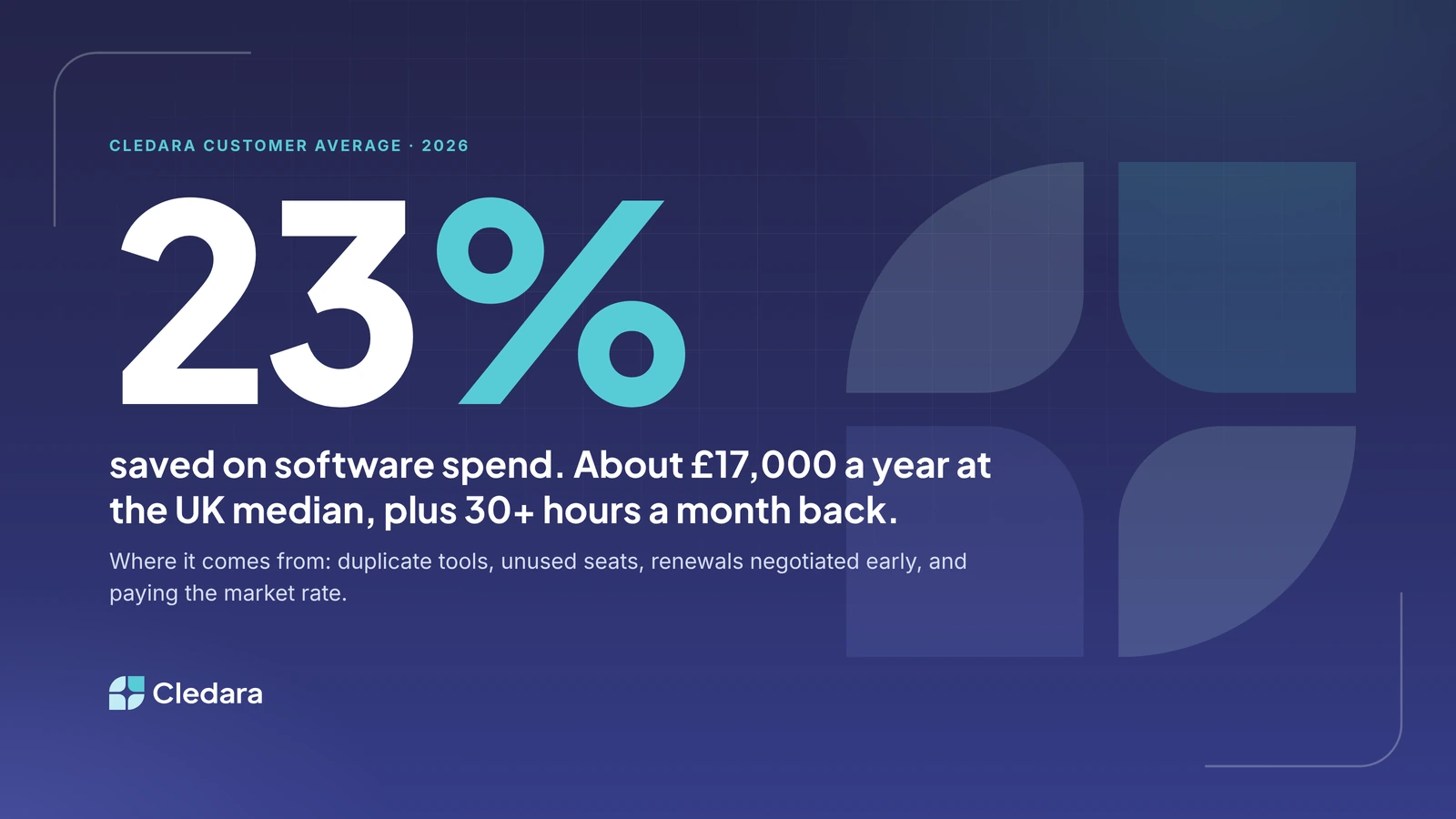
Cledara customers save 23% of their software spend on average and get 30+ hours a month back. On the median UK company's software bill (about £75,000 a year, from Cledara data for the year to October 2026) the saving alone is roughly £17,000, before the hours and before first-year cashback. This post shows where the 23% comes from (duplicate tools, unused seats, renewals handled 90 days early, and paying the market rate), works the maths at the UK, European and US medians, and gives a five-step method for estimating your own return. Prices live on the pricing page; the maths lives here.

Reclaimable VAT You're Leaving on the Table: The Missing Software Invoice Problem

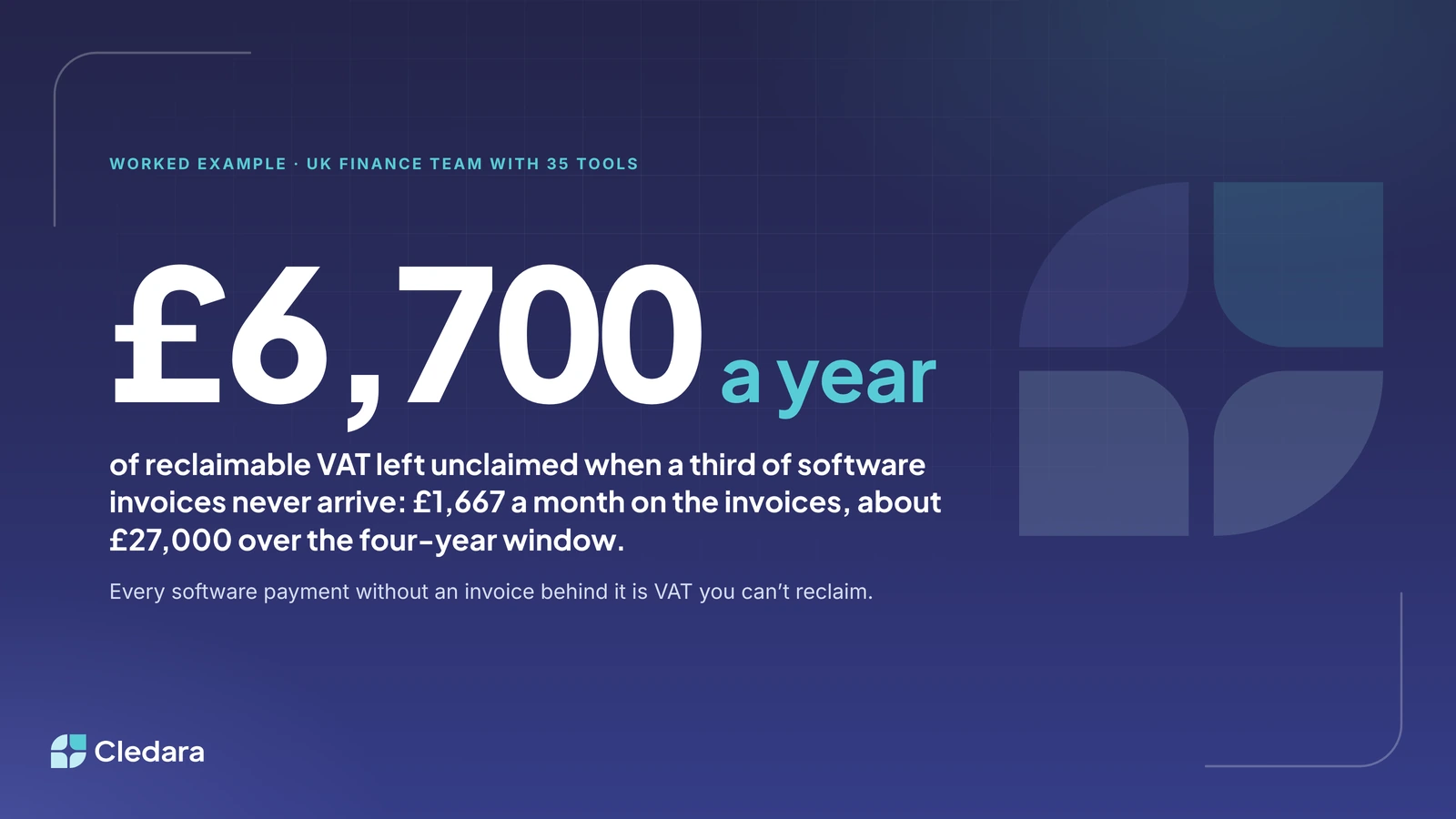
Every software payment without an invoice behind it is VAT you can't reclaim. HMRC expects a valid VAT invoice (or a simplified one at £250 or less including VAT) as evidence, and software is where invoices go missing most, because they sit behind logins owned by the people who bought the tools. Overseas vendors that aren't UK VAT registered fall under the reverse charge, but you still need the invoice. A worked example with 12 UK-VAT vendors and £10,000 a month of spend puts the unclaimed VAT at about £6,700 a year if a third of invoices are never collected, and late claims can go back four years. The fix is collecting every invoice automatically, including from vendor billing pages.

Newsletter

Software spend insights for finance teams

The best new guides, spend data and practical ideas from the Cledara blog, straight to your inbox.

  • Guides on managing software subscriptions and renewals
  • Data on what companies spend on software and AI
  • Comparisons of the tools finance teams use

Prefer LinkedIn? Follow the newsletter there.

Software and AI management for finance teams

Software that runs itself.

Cledara manages every software subscription and does the admin for you, from invoices and renewals to new starters and leavers. You approve, Cledara does the rest.

4.6 on G21,000+ customersSOC 2 Type II