Practical insights for managing software and AI spend

Guides, spend benchmarks and side-by-side comparisons for finance teams who manage every software subscription. Get the best of it in your inbox.

Prefer LinkedIn? Follow the newsletter there.

Sign up

Featured articles

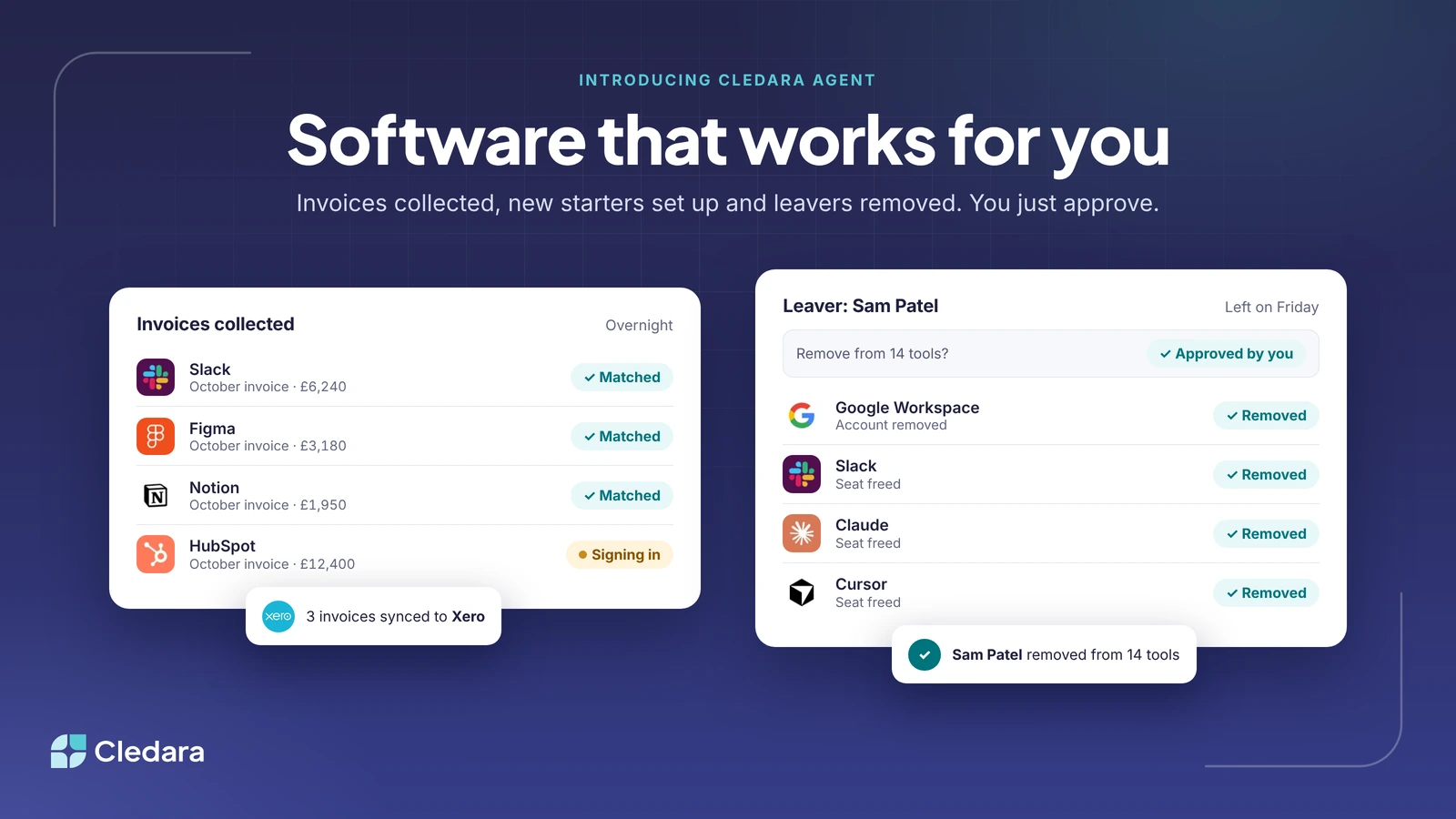
Introducing Cledara Agent: software should work for you, not the other way round

Cledara Agent is an AI agent that signs in to your SaaS and AI tools and does the admin behind them: it collects and matches invoices, sets up new joiners, reclaims unused seats and removes leavers, all with your approval. It works with more than 8,000 tools, is the only SaaS management agent verified by Cloudflare, and keeps passwords in a secure vault that AI never sees, so finance teams can spend their time on finance instead of chasing.

What Is SaaS Management? The Definitive Guide (2026)

SaaS management is the practice of tracking, buying, renewing and cancelling every software subscription your company pays for, so each tool has an owner, a known cost and a decision at renewal. It follows each tool through five stages (discover, buy, manage, renew and cancel) and covers the admin finance teams do every month: getting invoices, approving purchases, setting up new starters, removing leavers and taking back unused seats. It matters more now because the median company pays for 32 software tools, most billed monthly, and AI tools add bills that follow usage. Start early: past 10 to 15 subscriptions, spreadsheets stop keeping up.

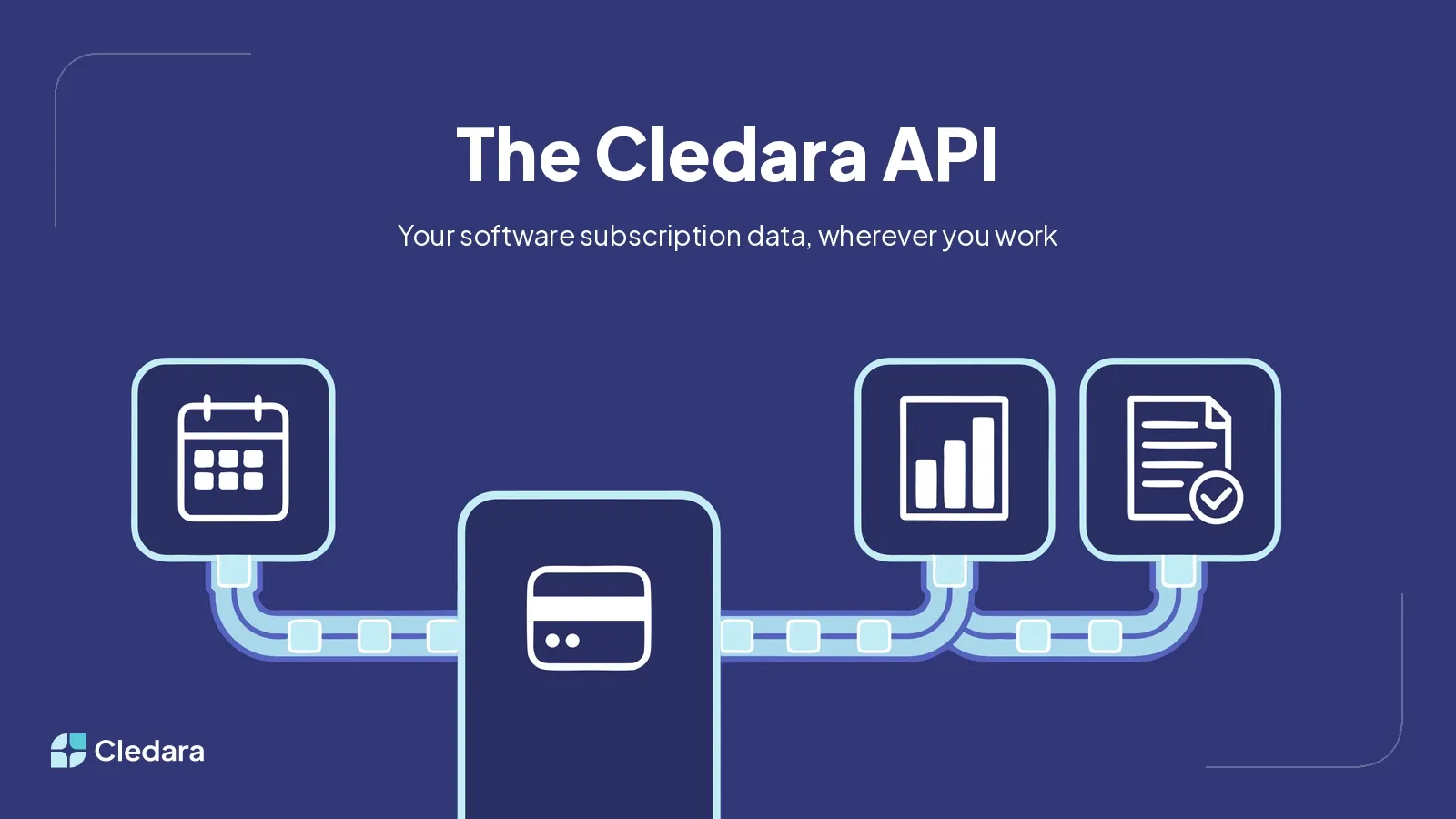
Introducing the Cledara API: Your Software Subscription Data, Wherever You Work

Your software subscription data, available programmatically. What the new Cledara API includes, why we built it, and what customers made in the first weeks.

Most read

Popular with finance teams

The guides and data readers come back to most.

How to Write a Software Business Case in 6 Steps (+ Template)

To write a software business case, follow six steps: define the problem in numbers, check what the company already pays for, compare at least two options plus doing nothing, build a three-year cost model, value the benefits and risks, then get sign-off with a named owner and review dates. The same pattern works for any category of software, and a one-page version fits in a seven-line table. A business case for SaaS should cover seats, billing and notice periods, renewal price rises of 8 to 12% a year, security evidence and an exit plan, and a renewal case should start 90 days out. Cledara's Software Compliance module has templates for the business case, risk assessment, contract review and exit plan.

Introducing Cledara Agent: software should work for you, not the other way round

Cledara Agent is an AI agent that signs in to your SaaS and AI tools and does the admin behind them: it collects and matches invoices, sets up new joiners, reclaims unused seats and removes leavers, all with your approval. It works with more than 8,000 tools, is the only SaaS management agent verified by Cloudflare, and keeps passwords in a secure vault that AI never sees, so finance teams can spend their time on finance instead of chasing.

What Is SaaS Management? The Definitive Guide (2026)

SaaS management is the practice of tracking, buying, renewing and cancelling every software subscription your company pays for, so each tool has an owner, a known cost and a decision at renewal. It follows each tool through five stages (discover, buy, manage, renew and cancel) and covers the admin finance teams do every month: getting invoices, approving purchases, setting up new starters, removing leavers and taking back unused seats. It matters more now because the median company pays for 32 software tools, most billed monthly, and AI tools add bills that follow usage. Start early: past 10 to 15 subscriptions, spreadsheets stop keeping up.

Software Tail Spend: Why It Matters and How to Manage It

Software tail spend is the long tail of small, low-cost subscriptions that people across a company buy on cards and expenses. Each tool is too small to need approval, but together they make up a real share of software spend and much of the admin: duplicates, renewals nobody owns, invoices behind vendor logins and access that outlives leavers. Across UK companies on Cledara, the 2,781 vendors outside the top 50 shared 34% of software spend between October 2025 and September 2026. To manage it, build one list of every subscription, give each an owner and its own card with a limit, set renewal alerts and automate invoice capture.

CFO Performance Metrics: 20 KPIs to Measure a Finance Leader

CFO performance metrics work on two levels. The first is the company KPIs a CFO owns: cash runway, operating cash flow, margins, growth, burn multiple, forecast accuracy and days to close. The second is the quality of their leadership: reporting, strategic input, team management and risk control. To measure CFO performance fairly, agree goals and baselines at the start of the year, score the numeric KPIs each quarter, and gather structured feedback from the CEO, board and finance team. Most CFOs should track 8 to 12 core KPIs in depth, drawn from six groups: liquidity, profitability, growth, efficiency, forecasting accuracy and finance operations.

Budget Reporting: How to Build a Budget Report (Free Template)

A budget report compares what you planned to spend and earn with what actually happened in a period, usually a month or a quarter. For each line it shows the budget, the actual, the variance in money and as a percentage, a short commentary on the cause and the owner who will act. Good budget reports explain only the variances that pass a set threshold, separate timing from permanent changes and end with an updated forecast. Software subscriptions and AI tools deserve their own lines, because monthly billing, renewal price rises and fast-growing AI usage make them drift from budget faster than most costs.

Every article

Latest articles

Newest first, twelve at a time. Or see every article on one page.

All articles

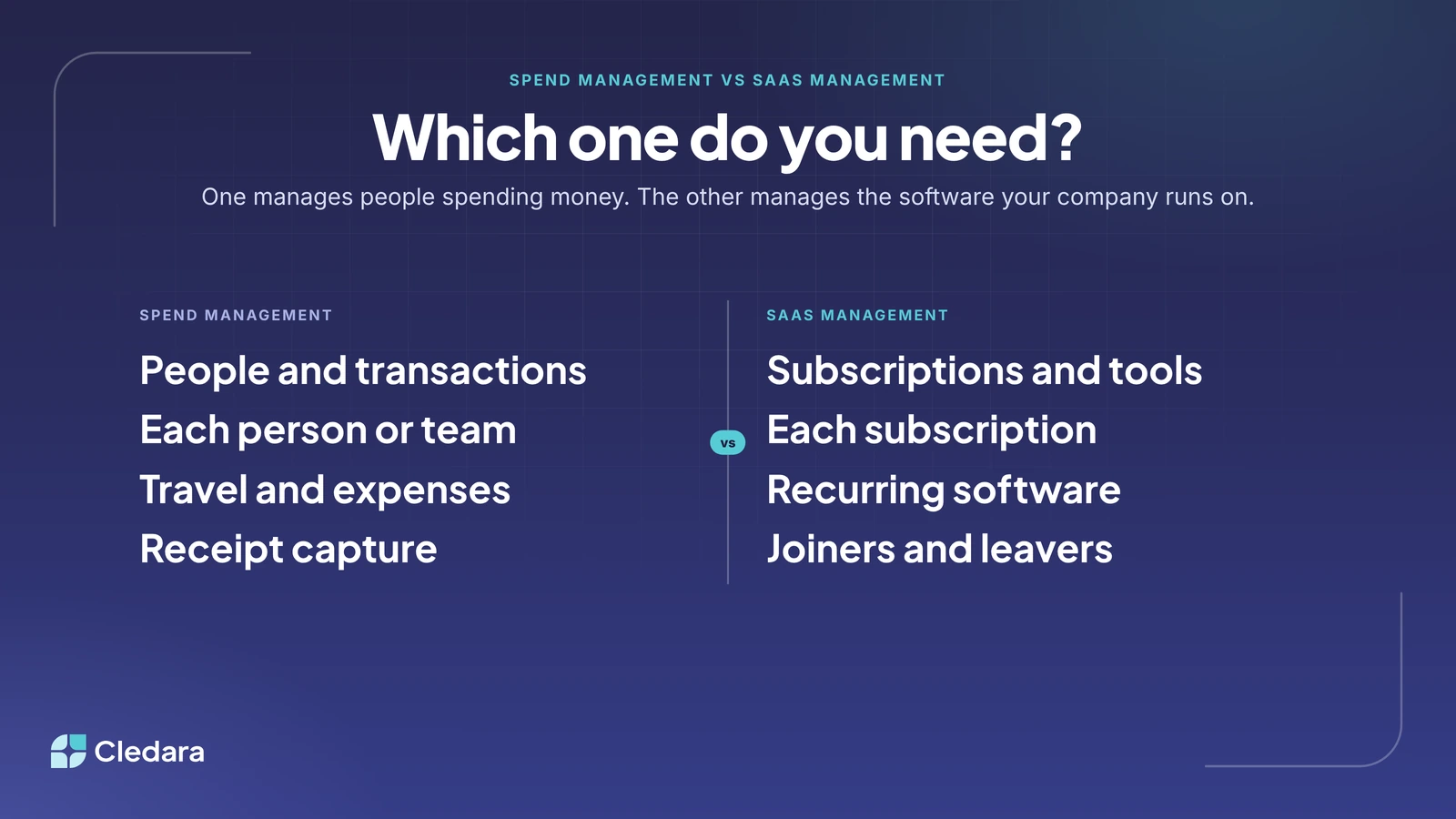
Spend Management vs SaaS Management: Which One Do You Actually Need?

Spend management manages people spending money: cards per person, receipts, policy checks, travel and expenses. SaaS management manages the software your company runs on: one list of every subscription with its owner, users, renewal date and invoices, plus the admin inside each tool. The unit of analysis is the difference. A spend tool sees a transaction; a SaaS tool sees a subscription with a renewal and an owner. If most of your spend is T&E, buy spend management. If you pay for 20 or more software tools (the median on Cledara is 33), you need SaaS management too. Many companies run both.

Why Your AI Bill Is a Black Box (and the Five Numbers That Open It)

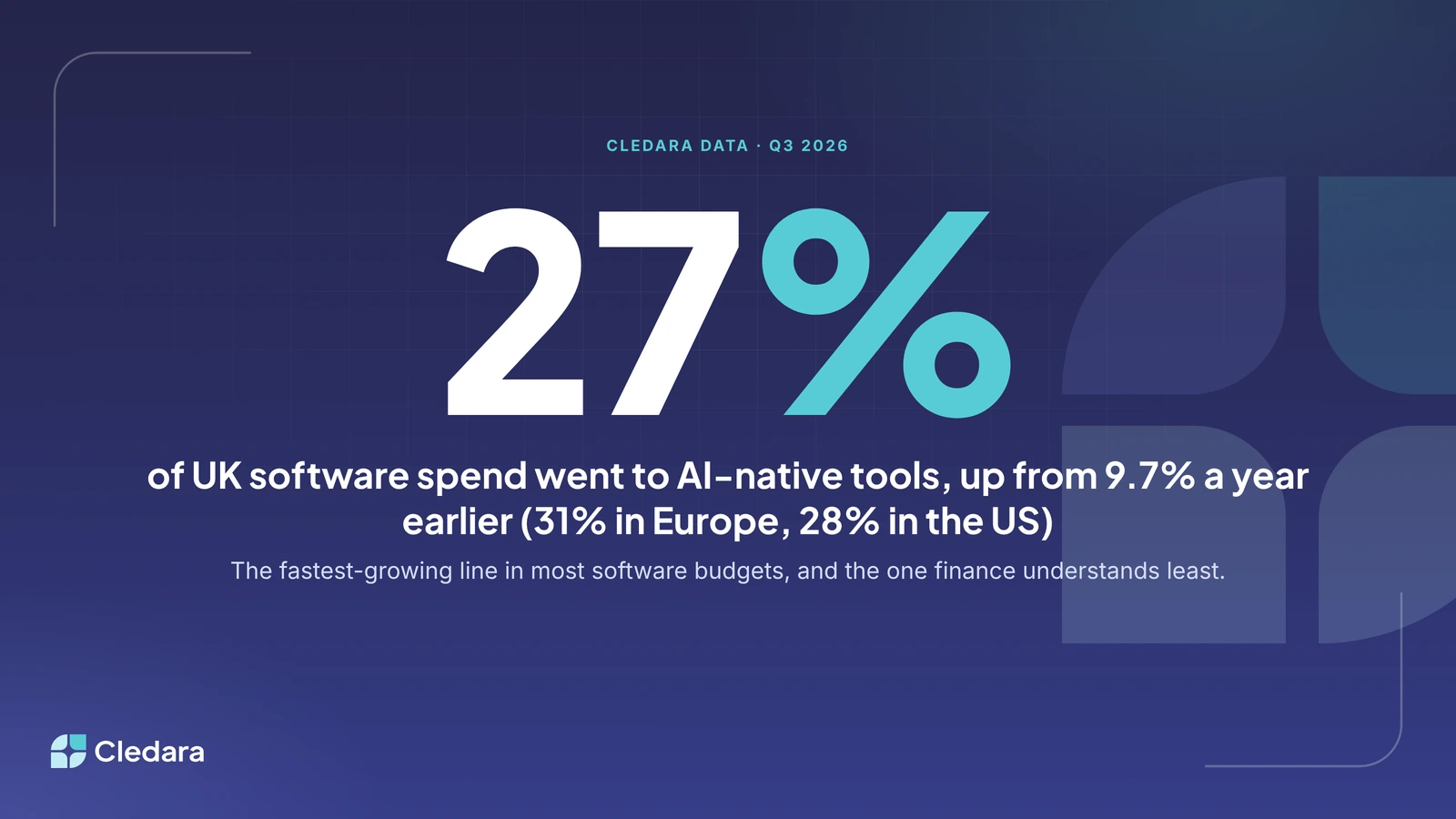
AI spend is a black box because it is metered rather than seat-based, bought by engineers on API keys, and reported monthly by dashboards built for developers. Cledara data shows AI-native tools took 27% of UK software spend in Q3 2026, up from 9.7% a year earlier, and that they pay every 5.6 days on average. Five numbers make it readable: spend by model, by project or key, by person, by day, and against budget. Start with one API key per project, an owner and a budget for each, and a daily view that warns before the money runs out.

How to Make the Business Case for Cledara to Your CEO (Email Template Included)

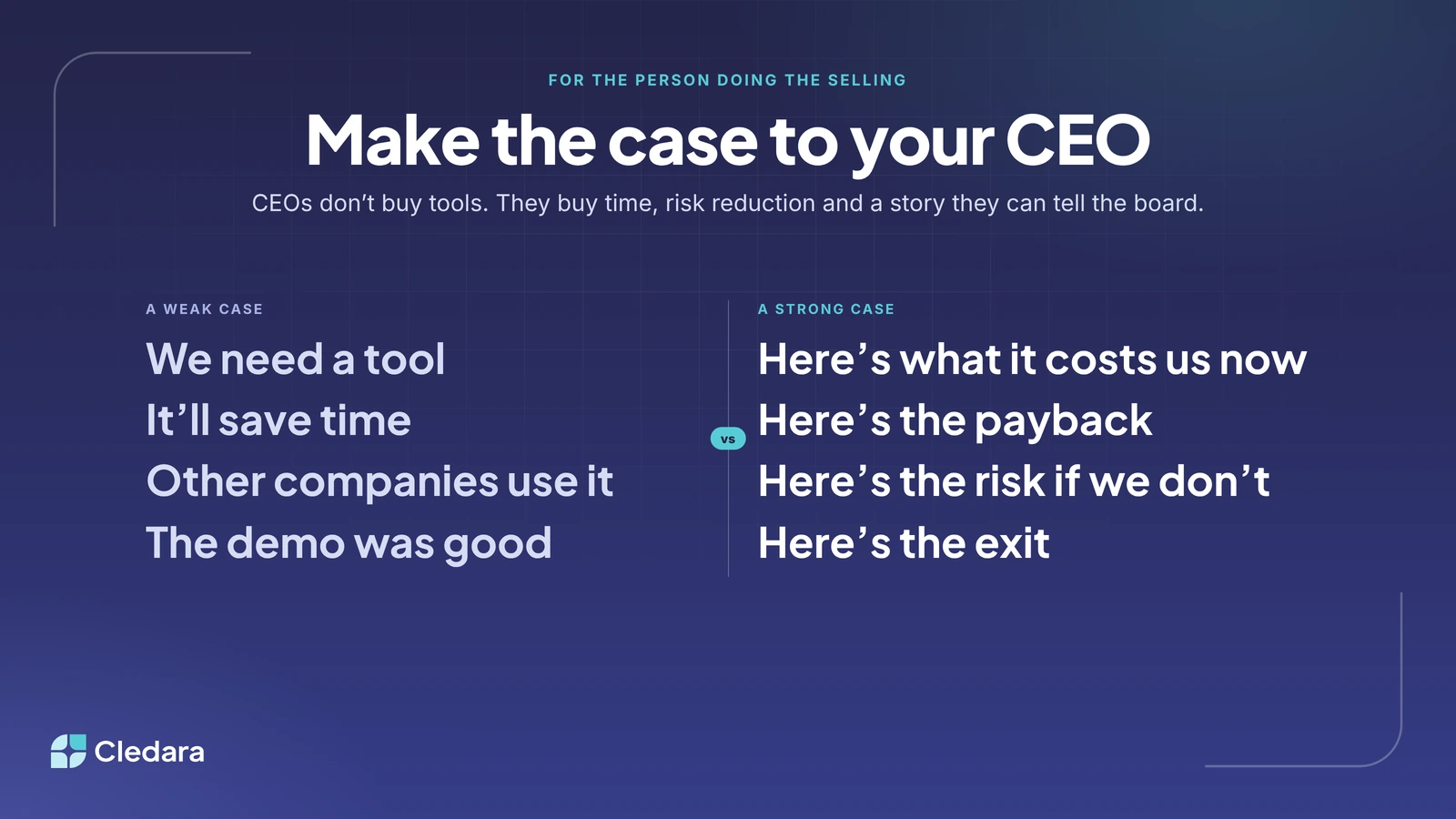
CEOs don't buy tools; they buy time, risk reduction and a story for the board. A strong business case for software subscription management fits on one page: the problem in numbers, the cost of doing nothing, what changes, the payback, the risk and exit, and a clear ask. You can collect every number in an afternoon from the bank feed and HR. Cledara customers save 23% of software spend on average and get 30+ hours a month back; put your own numbers next to those, answer the "too small" and "spreadsheet" objections in advance, and send a short email with a specific ask. The template is in the post.

Who Actually Owns Your Software? Fixing the Ownership Gap Behind Missed Renewals and Missing Invoices

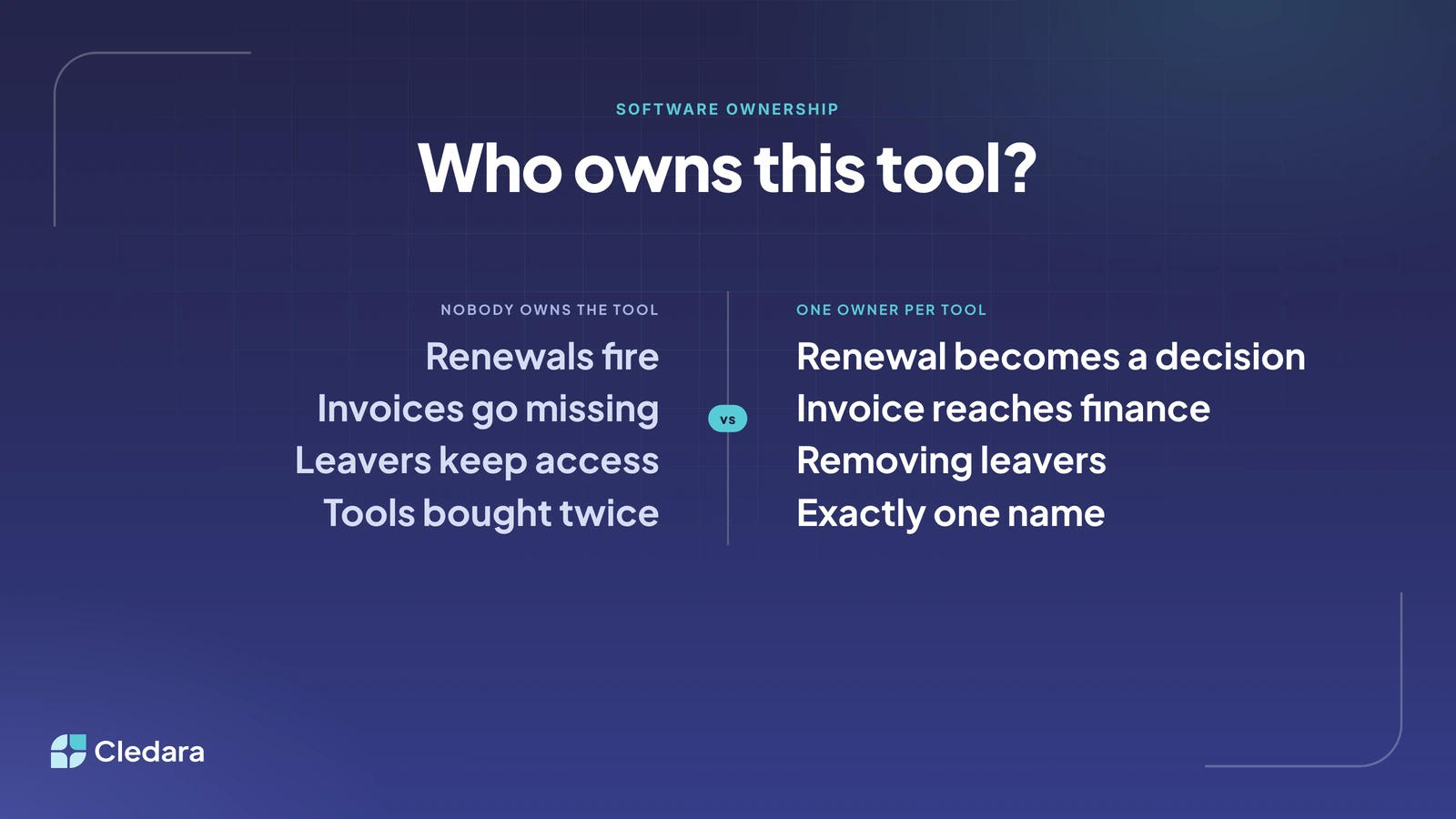
Software ownership means one named person is accountable for each tool: its users, cost, renewal and invoice. In most growing companies nobody has that job, because software moved from IT to every team while the idea of an owner stayed behind. The result is renewals that fire without a decision, invoices stuck behind someone's login, leavers who keep access and tools bought twice. The fix is a short ownership model: the budget holder owns the tool, finance owns the list and the process, IT owns security and access. Cledara data shows the median company pays for 32 software tools, so assign owners from the payment data, give them a 90-day renewal reminder, and reassign tools the week someone moves on.

Using Pleo and Cledara Together: Who Does What

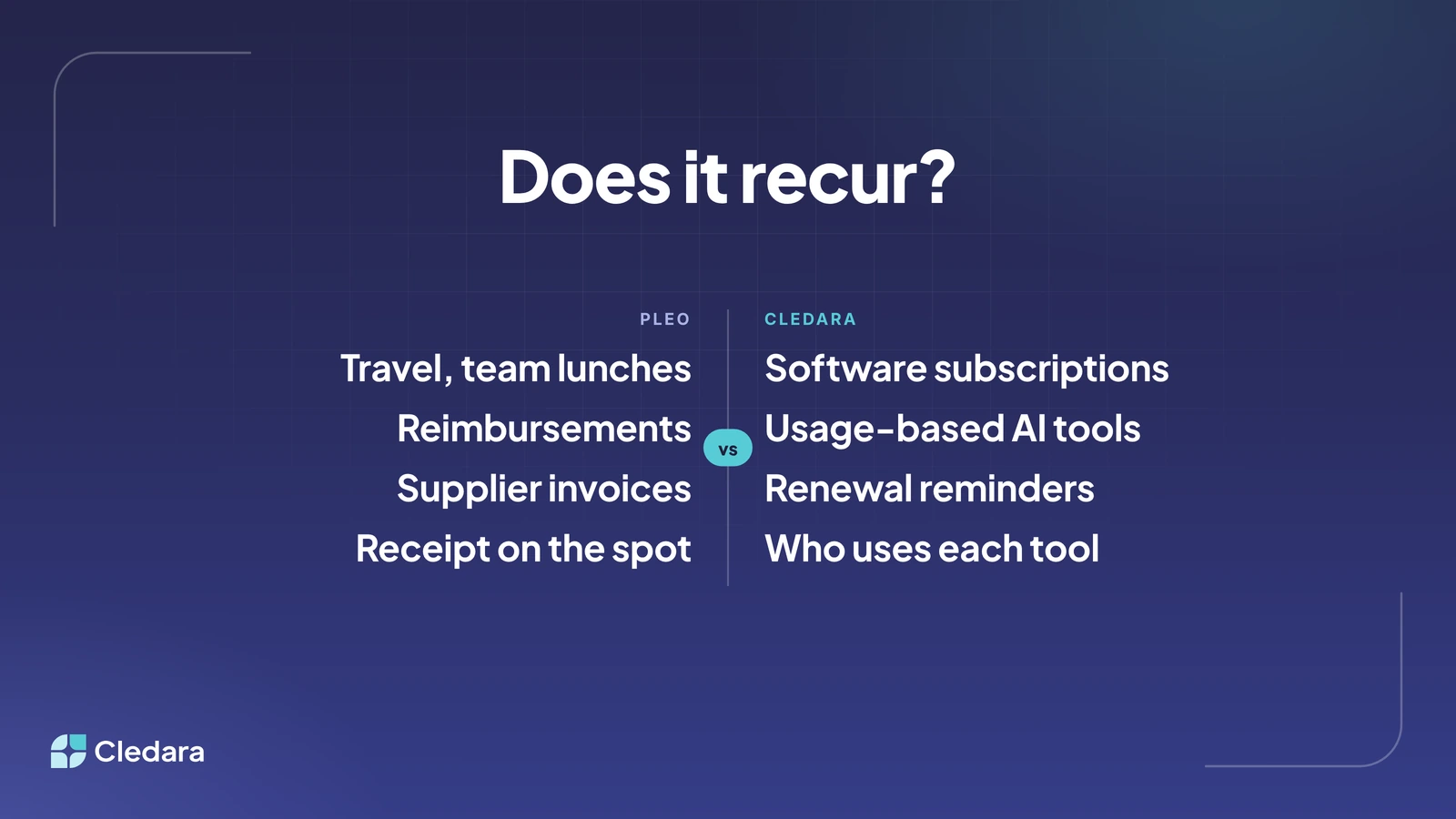
Pleo and Cledara do different jobs, and many finance teams run both. Pleo handles the spending people do: cards, receipts, mileage, reimbursements and supplier invoices. Cledara handles the spending your software does: every subscription with its owner, users, cost, renewal date and its own card, plus the admin inside each tool through Cledara Agent. The split comes down to one question for each payment, does it recur? If it does, it belongs in Cledara. Both sync to the same accounting system, so month-end stays in one place while the chasing goes away.

Should You Outsource Your SaaS Negotiations? Negotiate for Me or Keep the Relationship

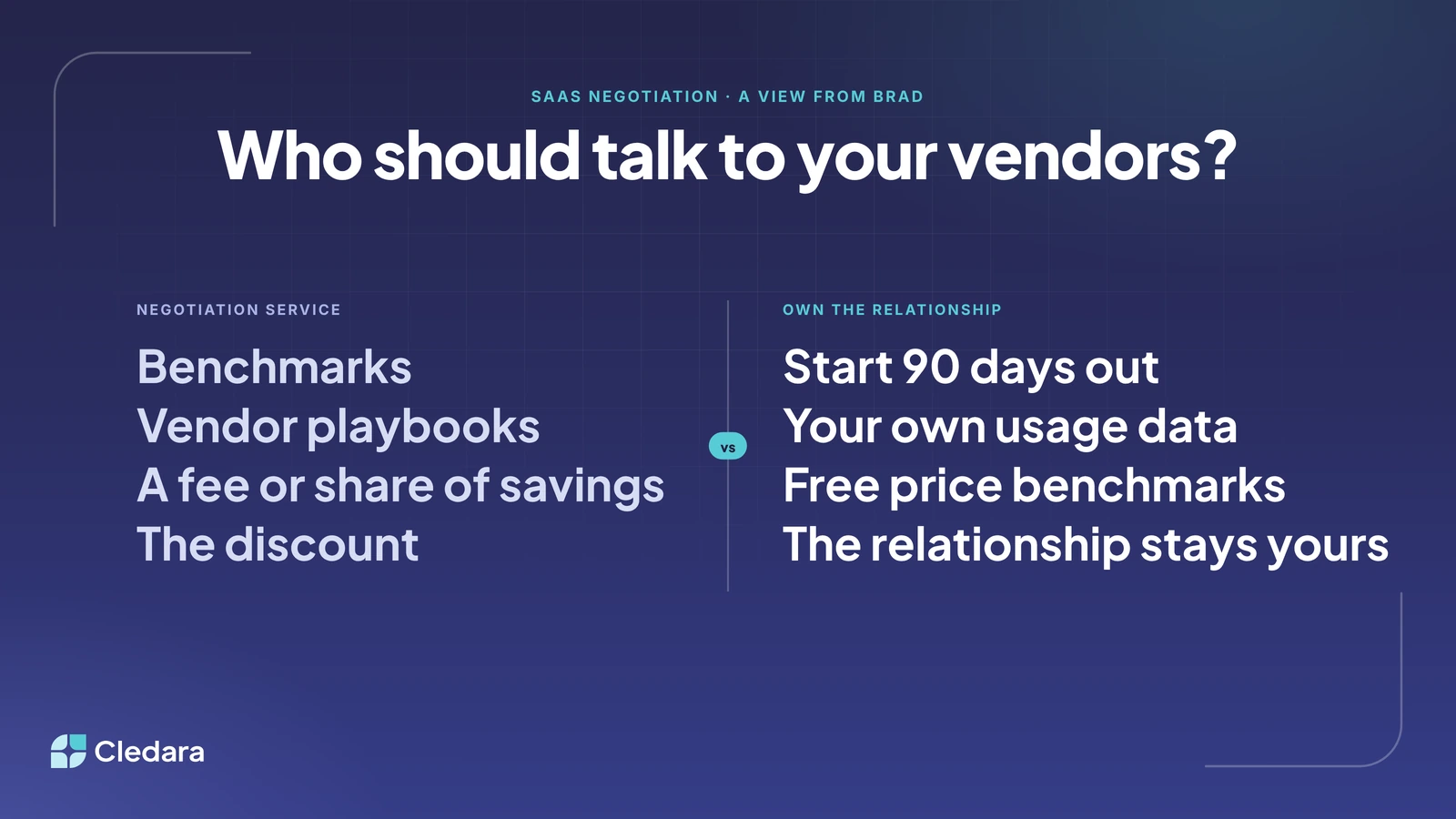
A SaaS negotiation service can win real discounts on large enterprise contracts, but the negotiation is a one-day event and the vendor relationship runs all year. For most growing companies the better answer is to keep the conversation yourself and hand the preparation to software. Cledara data shows timing matters more than skill: companies that start renewals 90 days out save about 49% on average, against 19% for those that start later. Free price benchmarks at data.cledara.com and a copilot that drafts the renewal email give finance most of what a service offers, without giving up the relationship.

SaaS Management Pricing: Flat Fee, Per User or Per Transaction?

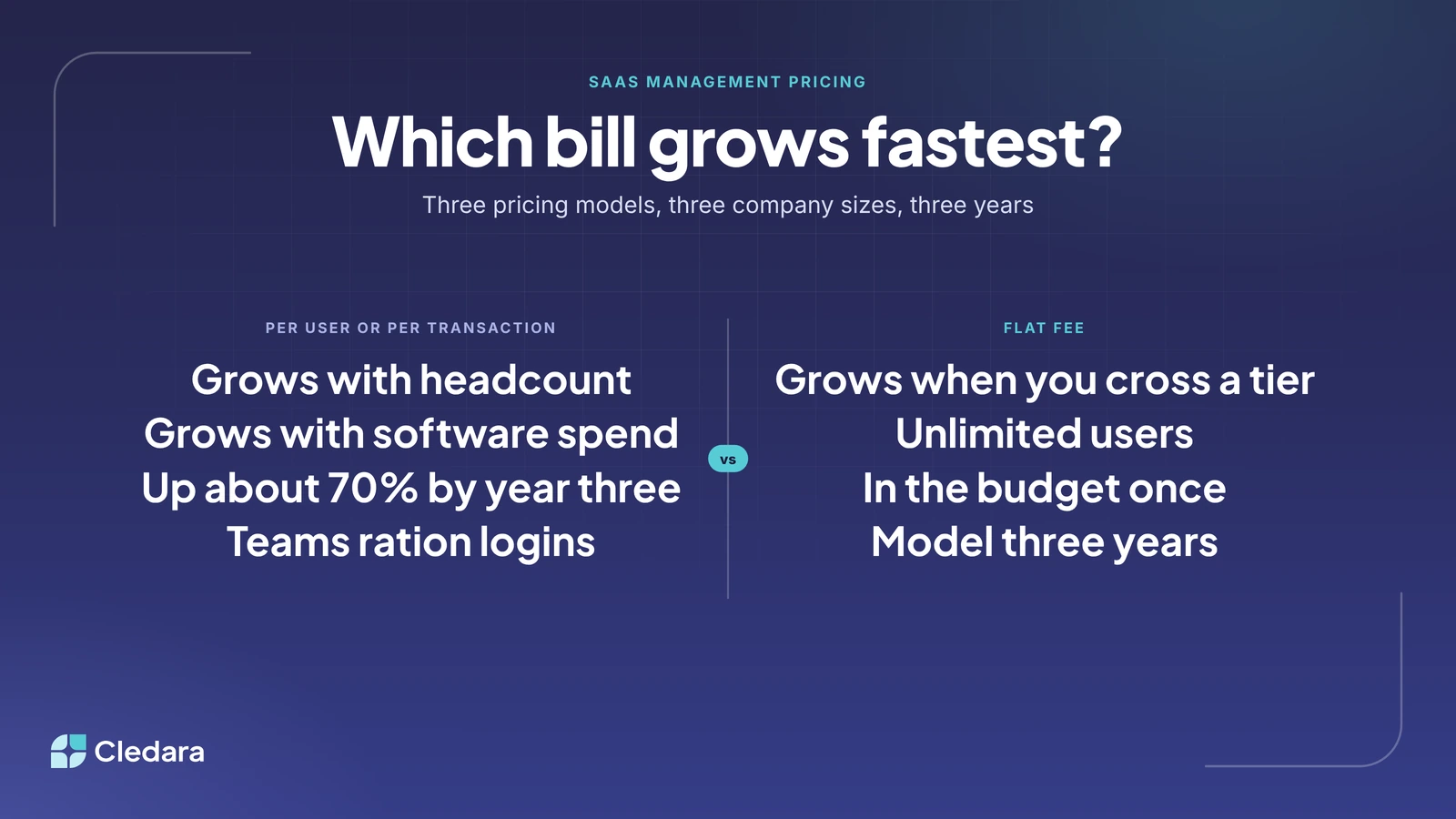
SaaS management pricing comes in three shapes. Per-user pricing grows with headcount, per-transaction or percentage-of-spend pricing grows with software spend, and a flat fee grows only when you cross an application tier. In an illustrative three-year model, the smallest company pays least on a percentage model while the largest pays less than half as much on a flat fee as on per-user pricing. The right model is the one indexed to whatever grows slowest in your business, which for most scaling companies is the number of applications. Add implementation, card, FX and module fees before comparing quotes.

One Card Per Subscription: Virtual Cards for Subscriptions and When a Hard Limit Bites

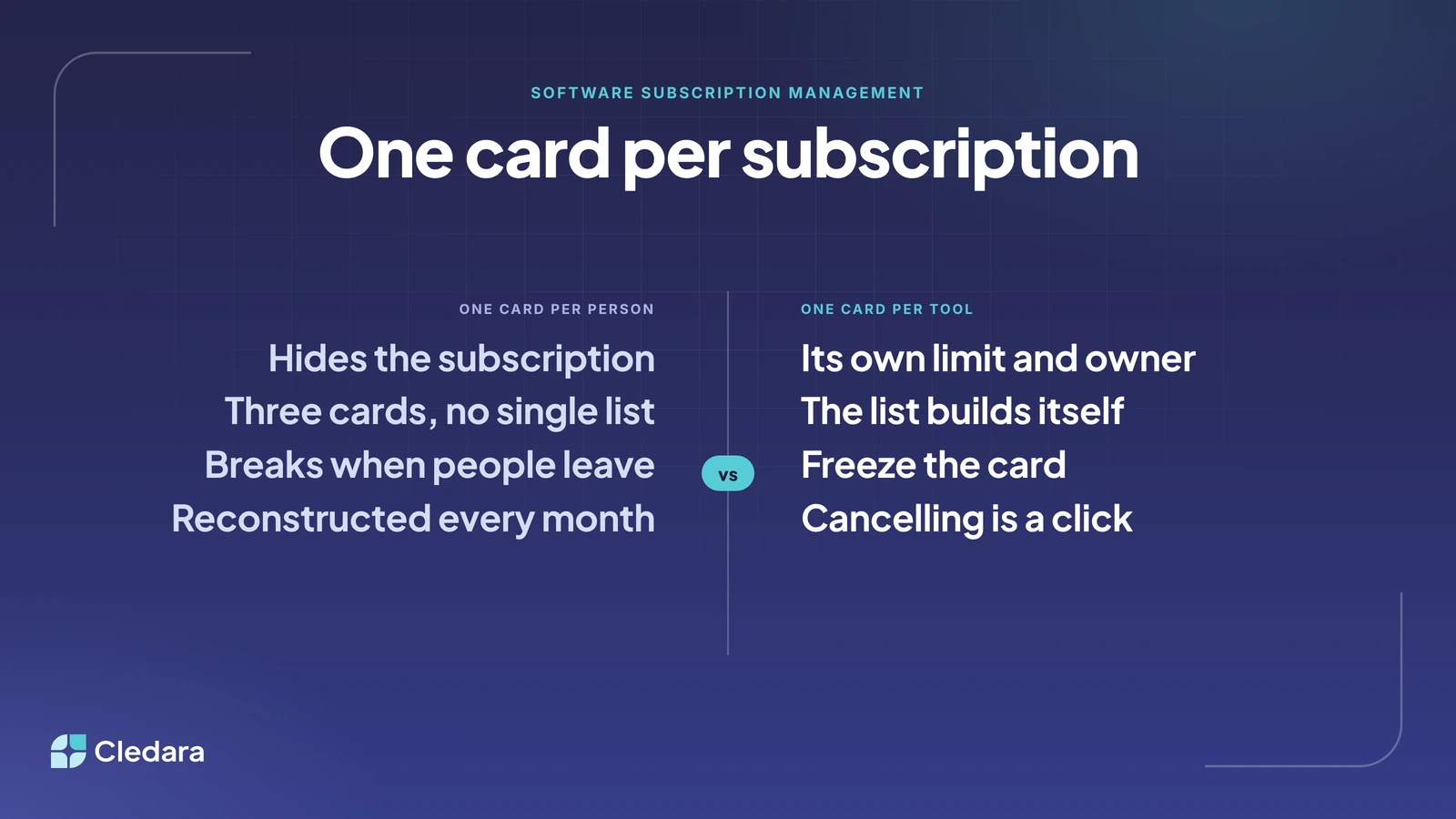
Giving every software subscription its own virtual card, with its own limit and owner, turns a pile of statement lines into a live list of what you pay for. It stops tools failing when a cardholder leaves and makes cancelling a click. The one judgement call is the limit: fixed limits suit seat-based tools with predictable bills, while cloud, advertising and AI tools that charge as usage builds need soft limits with alerts, because a declined payment there is an outage rather than a saving. Cledara data shows about 77% of UK software spend runs on soft limits, and AI-native usage subscriptions pay on average every 5.6 days.

How to Track Anthropic, OpenAI and Cursor Spend in Cledara

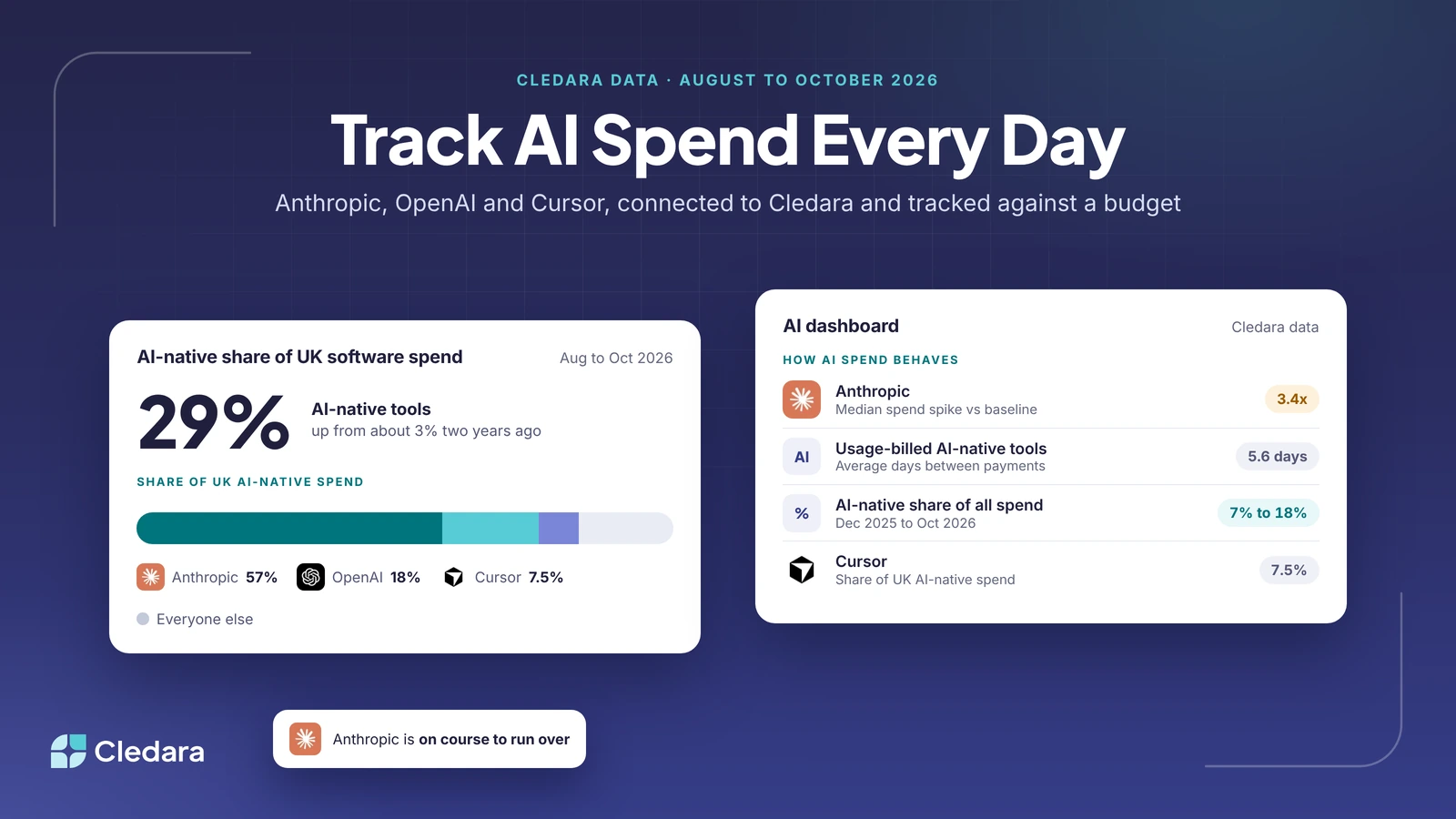
Cledara connects directly to the OpenAI, Anthropic and Cursor developer accounts with a read-only admin key, then tracks usage every day against a budget you set. Each account appears as its own application with a named owner, and finance and that owner are warned before spend runs over, so the conversation happens before the bill. Cledara data shows AI-native tools took about 29% of UK software spend in the three months to October 2026, usage-billed AI subscriptions pay roughly every 5.6 days, and the median Anthropic spend spike was 3.4 times the baseline. This post covers the setup steps, what finance sees, and how to set an AI budget that holds.

Offboarding Is a Finance Problem: What Leavers Cost in Unused Software Seats

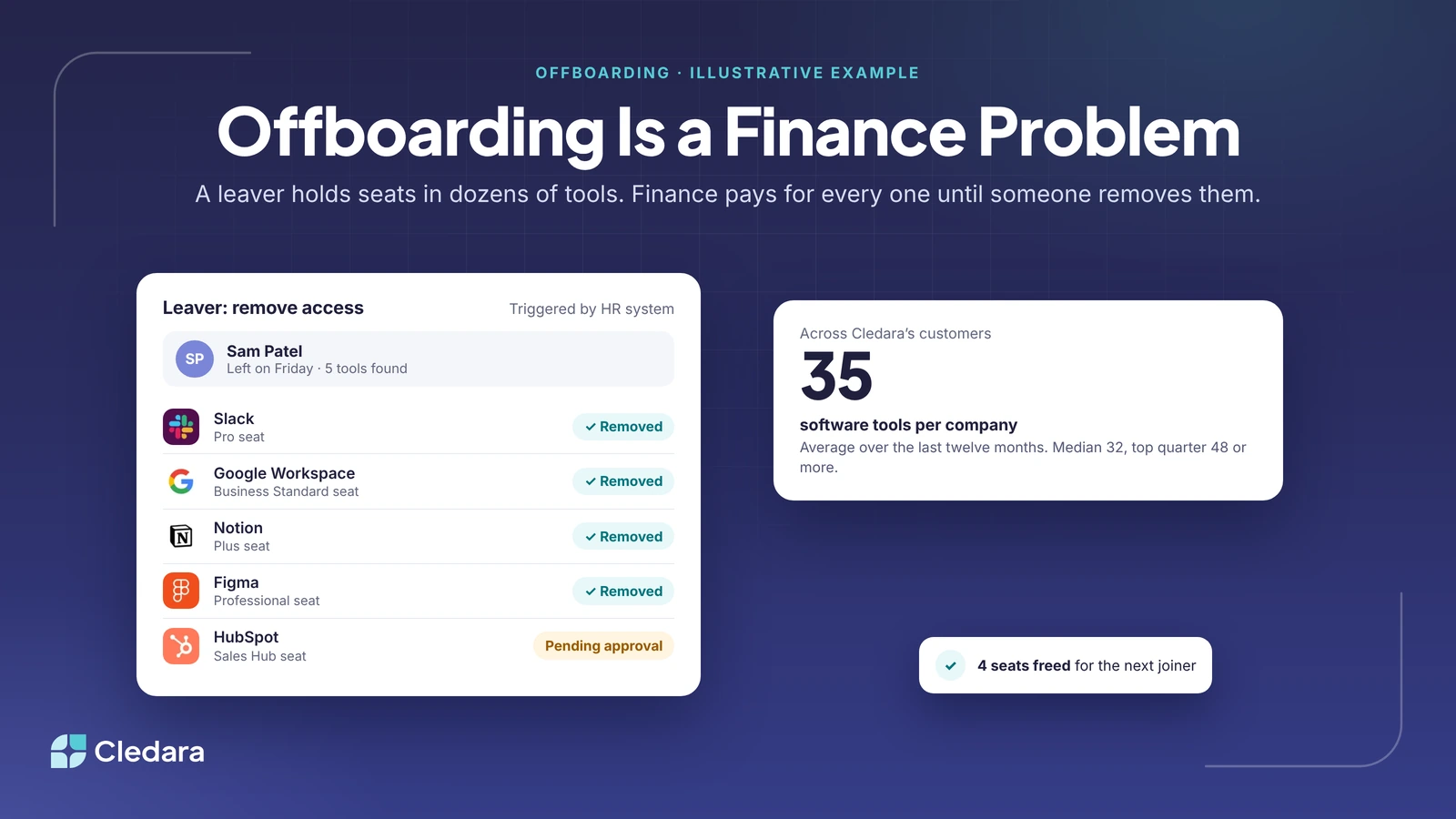
Offboarding software licences has become a finance problem because finance is the team that sees the invoice. The average company on Cledara pays for about 35 software tools, so a leaver typically holds seats in dozens of them, and a June 2026 survey found 48% of former employees still had SaaS access months after leaving. The fix is a five-step leaver checklist that finance owns alongside IT: make the HR system the trigger, keep one list of who has access to what, never tie a subscription to a person's card, reclaim seats on day one and reconcile paid seats against headcount every month. Automated, a leaver becomes a budget event rather than a scramble.

How Many Software Tools Does a 50-Person Company Actually Use?

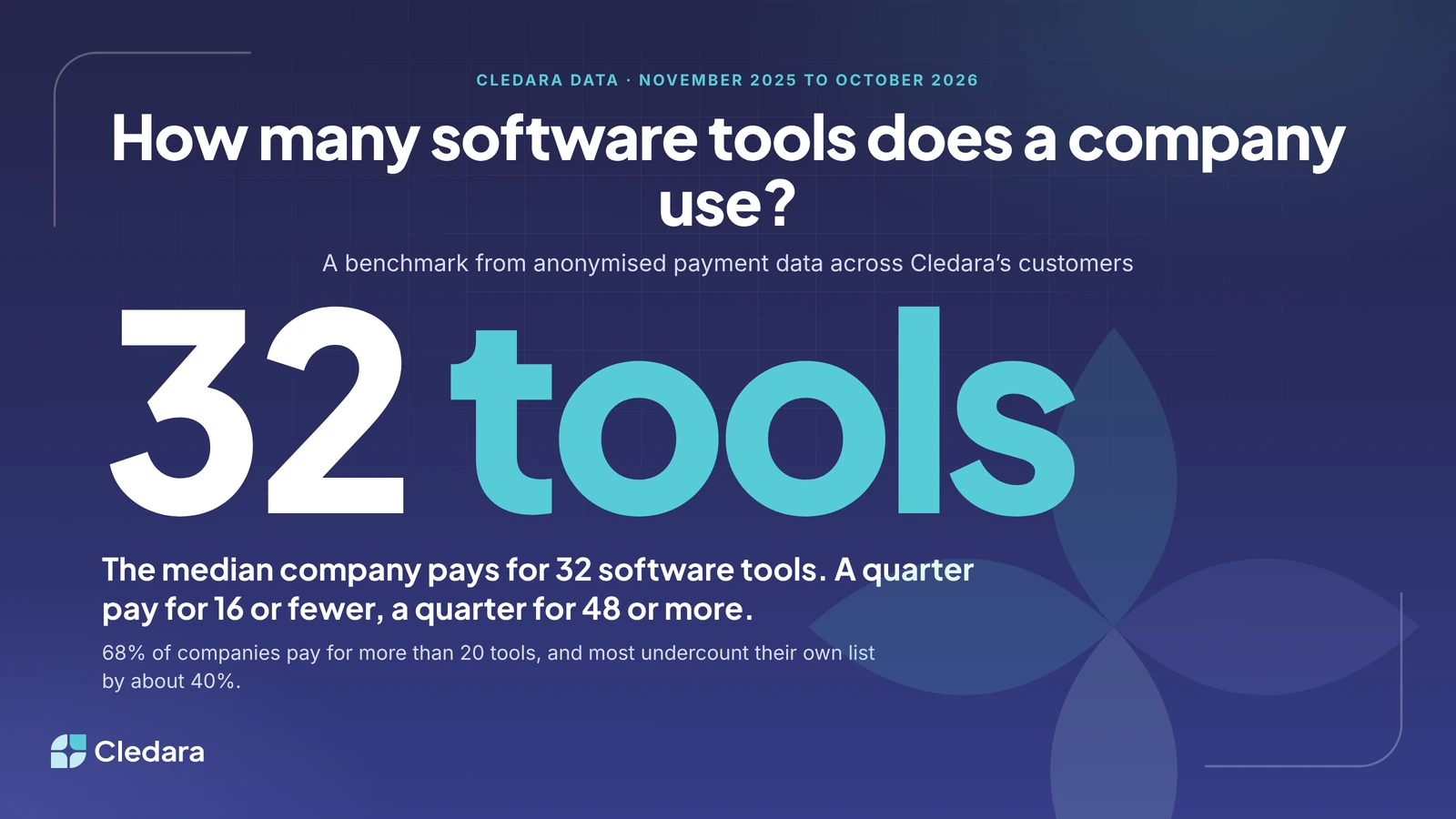
The median company on Cledara pays for 32 software tools, with the middle half between 16 and 48. Around 68% of companies pay for more than 20 tools and 23% pay for more than 50. US companies run slightly bigger stacks (median 37) than the UK (34) or the EEA (28). Most companies undercount their own tools by about 40%, because nobody owns the full list, most tools bill monthly, and AI subscriptions often start on personal cards. A 50-person company with around 30 tools is normal; the job is to build the real list from payments and give every tool an owner.

Is Cledara Worth It With 15 Tools? An Honest Sizing Guide

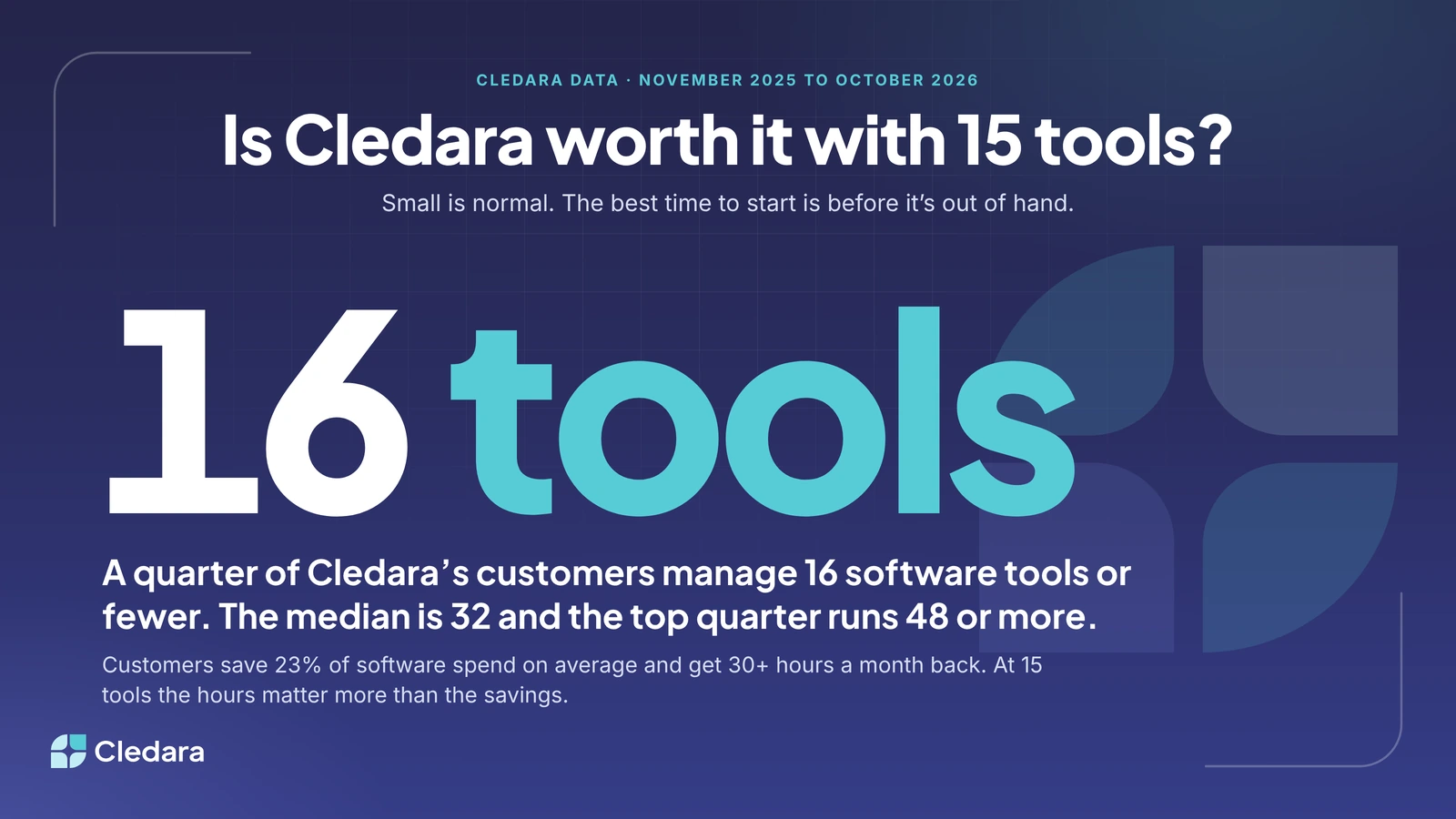
At 15 tools, a spreadsheet can work until it doesn't. A quarter of Cledara's customers manage 16 software tools or fewer, so small is normal. Fifteen monthly tools still means around 180 payments and invoices a year, plus renewals, new starters and leavers to handle. A spreadsheet is enough while one person buys everything and nobody has left recently; that list gets shorter every quarter at a growing company. The cheapest time to start is before it's out of hand, when there's nothing to untangle. Customers save 23% on software spend on average and get 30+ hours a month back.

Newsletter

Software spend insights for finance teams

The best new guides, spend data and practical ideas from the Cledara blog, straight to your inbox.

  • Guides on managing software subscriptions and renewals
  • Data on what companies spend on software and AI
  • Comparisons of the tools finance teams use

Prefer LinkedIn? Follow the newsletter there.

Software and AI management for finance teams

Software that runs itself.

Cledara manages every software subscription and does the admin for you, from invoices and renewals to new starters and leavers. You approve, Cledara does the rest.

4.6 on G21,000+ customersSOC 2 Type II